

Direct deposit itself only takes a few minutes to fill out. The wait comes afterward, when your payroll team and your bank confirm the account and route your first deposit. That gap can feel longer than it is, especially when rent is due and you’re watching your bank app for a number that hasn’t moved yet.
Here’s the calm version. This guide covers what you need, what happens behind the scenes, what banks, apps and payroll providers actually publish about timing, and what to do if the money doesn’t show up. You’ll also see why the balance after your first deposit isn’t the same as what you can spend.
The short answer
How long does direct deposit take to set up? The form takes about five minutes. The first deposit usually arrives within one to two pay cycles.
On a biweekly schedule, that’s roughly two to four weeks from the day you hand over your details. On a monthly schedule, it could be longer. Some employers process changes fast enough to hit the very next payday. Others need a full cycle to update their records and test your account first.
Until the switch takes effect, many employers pay you another way. That’s usually a paper check for the first one or two cycles. Your employer decides this, not your bank.
One public example shows how the steps stack up. The University of Alaska says changes to banking details typically take up to two working days to process[1]. A mandatory two-day settlement period with the bank follows. That’s two separate waits: the employer’s, then the bank’s.
So plan for one to two pay cycles. If it shows up sooner, good. If it doesn’t, nothing is broken yet.
What you need before you start
Gather these before you open your employer’s onboarding portal or payroll form:
- Routing number: The nine-digit number that identifies your bank. It’s printed at the bottom left of a check and listed in your bank app.
- Account number: Your specific checking or savings account. Copy it from your bank app rather than typing it from memory.
- Account type: Checking or savings. Picking the wrong one is a common reason a deposit gets returned.
- A voided check or a direct deposit form: Many employers ask for one as proof. If you don’t have checks, most banks let you download a prefilled direct deposit form from the app or website.
- Split instructions (optional): If you want, say, $200 per paycheck sent to savings and the rest to checking, decide now.
Check your bank app’s account details screen for a “Direct deposit” or “Account and routing numbers” option. It often shows both numbers together. Some banks also offer a ready-made form there.
Look out for one detail. Some banks use a different routing number for direct deposits and wires than the one on your checks. Use the number your bank lists for direct deposit or ACH.
Before you hit submit, read each digit back once. One wrong digit is the main thing that turns a two-week wait into a five-week one.
Step by step: what happens between the form and the first deposit
Each employer, bank and payroll provider sets its own forms and screens. Follow the exact steps your employer gives you. The flow underneath is usually the same.
- You submit your details. You submit them through a payroll portal, an HR form or a paper sheet.
- Payroll enters them. Someone, or some system, adds your account to the next payroll run. If you submit after that run’s cut-off, you wait for the following one.
- An optional test entry may go out. This is the “prenote.” Nacha, the organization that writes the rules for ACH payments, allows a prenotification: a zero-dollar test entry that precedes the first live entry. It lets the receiving bank verify your account data.
- The waiting period runs. Under Nacha’s rules, if the bank sends no response by the end of the return period, the account is treated as open and valid. The rules set a short waiting period of banking days for this. Nacha’s minor rules guidance describes prenotes as used “prior to initiating the first credit or debit entry.”
- You’re paid another way in the meantime. Many employers cut a paper check for the first one or two cycles while this runs.
- The first live deposit goes out. It goes out on a regular payday, then settles with your bank.
Think of the prenote as knocking on a door before delivering a package. If nobody says “wrong address,” the delivery goes ahead next time. A prenote is optional, so not every employer uses one. When yours does, it adds at least one cycle of waiting.
How long the first deposit takes: what banks, apps and payroll providers publish
Here’s what each company says on its own website about a new direct deposit, as of October 2026. None of them gives an exact day count for every case. They can’t, because your employer controls most of the timing.
| Company | What it publishes about the first deposit (as of October 2026) |
|---|---|
| ADP (payroll) | Anywhere from one day to a few weeks, depending on the provider |
| Chase | Setup usually takes up to two pay cycles |
| Citizens | 1-2 pay periods before Paid Early applies |
| Regions | Changes may take up to one to two pay cycles |
| Venmo | Up to two pay cycles |
| PayPal | Within two pay cycles |
| Cash App | First deposit may take longer to become available depending on your employer |
The pattern is clear. Expect one to two pay cycles, and expect your employer to be the deciding factor. Each line comes from the company’s own page: ADP, Chase, Citizens, Regions, Venmo, PayPal, Cash App.
Early pay features often don’t apply to your first deposit. Citizens says so directly. If you’re counting on getting paid two days early, read which banks offer early direct deposit and how it works and plan with the normal payday date until the feature kicks in.
If you’re starting a new job, the gap may stretch further: a pay cycle in arrears, plus the setup window. This guide on surviving the gap before your first paycheck walks through the math.
Checking it worked, and what to do if it did not land
Start with your pay stub. Most payroll portals show how you were paid: “Direct deposit” with the last four digits of your account, or “Check.” If the stub says check, the switch hasn’t taken effect yet. That’s normal for the first one or two cycles.
If the stub shows direct deposit, look at your bank app on payday. You may first see the deposit as pending. Here’s what a pending direct deposit means and when you can spend it. Timing also varies by bank, so check posting times bank by bank in 2026 before assuming anything’s wrong.
If payday passes and nothing arrives, work through it in this order:
- Confirm the date. Was it actually a payday under your new schedule?
- Read the last four digits on your stub against your bank account.
- Ask payroll whether the deposit was sent, on what date, and whether anything came back as returned.
- Call your bank with the payroll amount and date. Ask whether an entry was received or rejected.
A wrong account number usually means the money is returned to your employer, not lost. It takes time to come back, but it comes back. For a fuller checklist, here’s what to check in the next hour when direct deposit didn’t hit.
Once it lands: what is actually safe to spend
The deposit hits. Your balance jumps. It’s tempting to read that number as yours to use. It isn’t, quite.
Some of that money is already promised to bills due before your next payday. The University of Alaska points out that direct deposit means no waiting for a check to clear. That’s true, but faster access doesn’t change what’s already owed.
Here’s the arithmetic with a simple example:
- Balance after deposit: $2,400
- Minus bills due before next payday: rent $1,350, phone $65, car insurance $140 = $1,555
- Minus planned savings: $150
- Minus a cushion you choose: $200
- What’s left to spend: $495
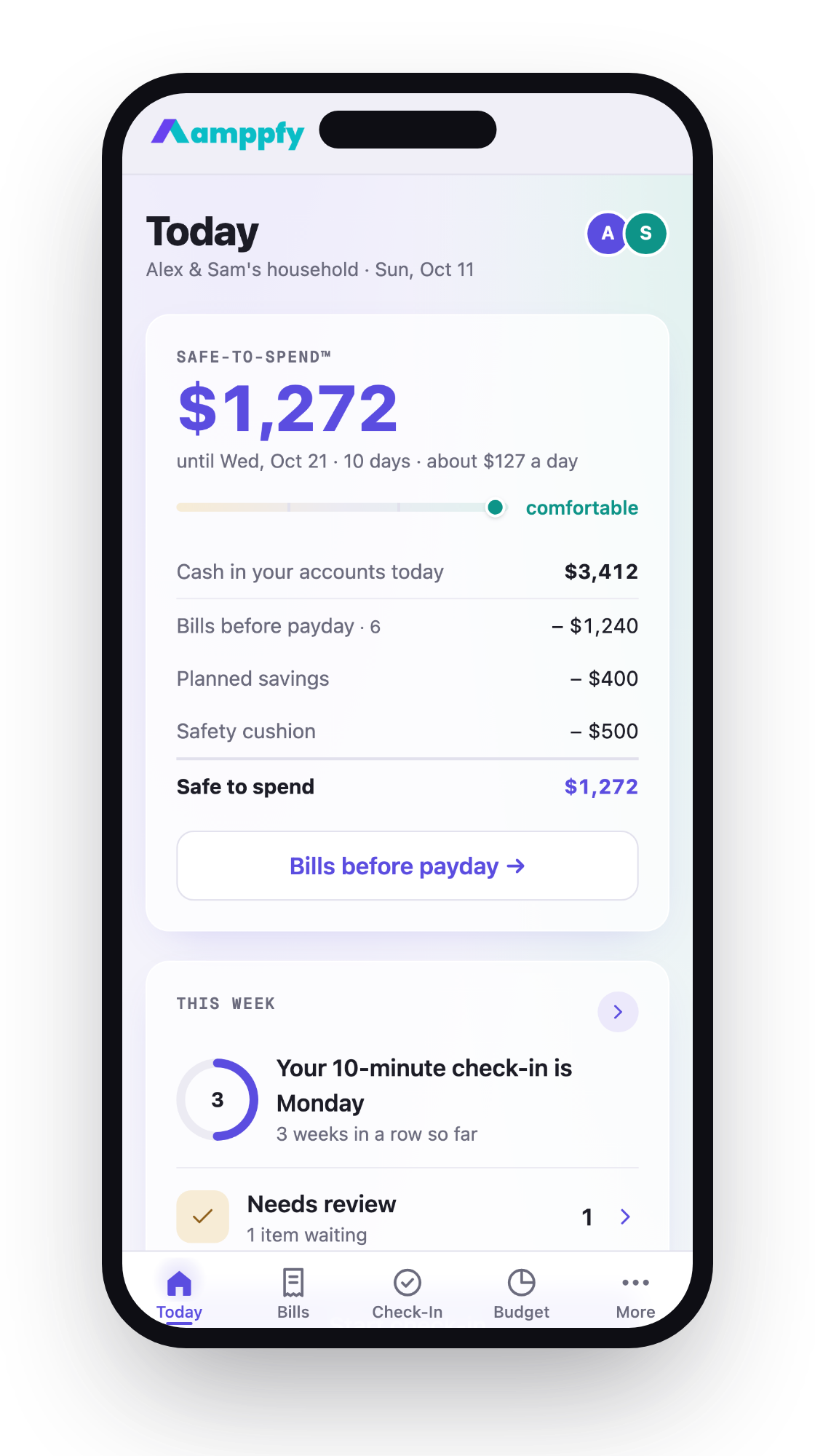
That’s $2,400 − $1,555 − $150 − $200 = $495. The $2,400 was real. The $495 is the number you can actually use.
This matters most around a first deposit. If you were paid by check for a cycle or two, bills may have bunched up. Do the subtraction once, on payday, and the rest of the cycle gets calmer.
For the full walkthrough of every route (employer form, your bank’s pre-filled form, or a government payment), see how to set up direct deposit.
FAQ
Can I get paid on my next payday if I submit the form today?
Possibly, if you submit before your employer’s payroll cut-off and they don’t send a prenote. Ask payroll for the cut-off date. Otherwise, plan for one to two pay cycles.
Why did I get a paper check after I set up direct deposit?
Your employer was probably still verifying the account, often with a zero-dollar prenote. Paper checks for the first one or two cycles are common. Your employer decides this, not your bank.
Does changing banks restart the wait?
Usually, yes. A new account means new details to enter and verify. Keep your old account open until the first deposit lands in the new one. That way nothing bounces in between.
Will early direct deposit apply to my first paycheck?
Often not. Citizens, for example, says 1-2 pay periods pass before Paid Early applies, as of October 2026. Check your bank’s own page and plan around the normal payday until then.
Setting up direct deposit is five minutes of typing and one to two pay cycles of waiting. Gather your numbers, read them back once, and expect a paper check or two in the meantime. If a payday passes without a deposit, check your stub, then payroll, then your bank.
When the first deposit lands, remember the order. Bills due before the next payday come out first. What’s left after bills, savings and a cushion is the real number. Amppfy shows that Safe-to-Spend™ number for you, with the four lines of math printed underneath. You type in your balances; it does the subtraction. If you’d like to try it this payday, open Amppfy on iPhone or the web and give it ten minutes.