
Thanksgiving is one of those meals where the grocery receipt can quietly spiral past $200 before you’ve even thought about dessert. The real stress isn’t the cooking: it’s figuring out how to pay for it all without wrecking the rest of November. Planning your thanksgiving dinner budget around your actual payday turns a vague “we’ll figure it out” into a concrete plan you can follow. This guide walks through the math, the timing, and a few tricks that keep the table full and your checking account intact.
Estimating the Meal Before You Shop
Before you open a single grocery app, write down what you’re actually making. A menu is a spending plan in disguise. Every dish you commit to is a line item, and every line item has a price.
Build a Dish-by-Dish Cost List
Start with your proteins, sides, and desserts. Then estimate each one using last year’s prices or a quick scan of your store’s current weekly ad. A simple table keeps it honest:
| Dish | Key Ingredients | Estimated Cost |
|---|---|---|
| Turkey (14 lb) | Whole bird, butter, herbs | $28 |
| Mashed potatoes | 5 lb potatoes, cream, butter | $9 |
| Stuffing | Bread, celery, onion, broth | $7 |
| Green bean casserole | Beans, cream of mushroom, onions | $8 |
| Cranberry sauce | Fresh cranberries, sugar | $5 |
| Dinner rolls | Store-bought pack | $4 |
| Pumpkin pie | Canned pumpkin, pie crust, spices | $8 |
| Drinks & extras | Sparkling cider, coffee, gravy | $12 |
| Total | $81 |
Your total will vary by guest count and region, but the exercise matters more than precision. According to the American Farm Bureau Federation’s 2025 Thanksgiving survey, the average cost for a classic dinner for ten was about $58, though that figure only covers a narrow basket of staples. Most hosts spend well beyond that once drinks, appetizers, and extra sides enter the picture.
Knowing the number before you shop gives you a ceiling. If the estimate lands at $120, you know exactly what you’re working with. No surprises at checkout.
Which Payday Covers the Big Shop
Timing is everything here. Thanksgiving falls on a Thursday, and most grocery shopping happens the weekend before. That means you need the cash available by that Saturday or Sunday at the latest.
Map Your Pay Dates to the Calendar
Pull up November’s calendar and mark your paydays. If you’re paid biweekly, one check likely lands between November 7-14 and another around November 21-28. If you’re paid on the 1st and 15th, the November 15 check is your Thanksgiving check.
Here’s the key question: will your regular bills eat that paycheck before you can shop? Rent, car payments, insurance, and subscriptions don’t pause for holidays. Subtract those obligations first.
A quick example: $2,800 paycheck on November 14, minus $1,100 in rent, minus $340 in bills due before the next check, minus $200 in savings you don’t want to skip. That leaves $1,160. Your $120 Thanksgiving grocery run fits. But you wouldn’t know that without doing the subtraction.
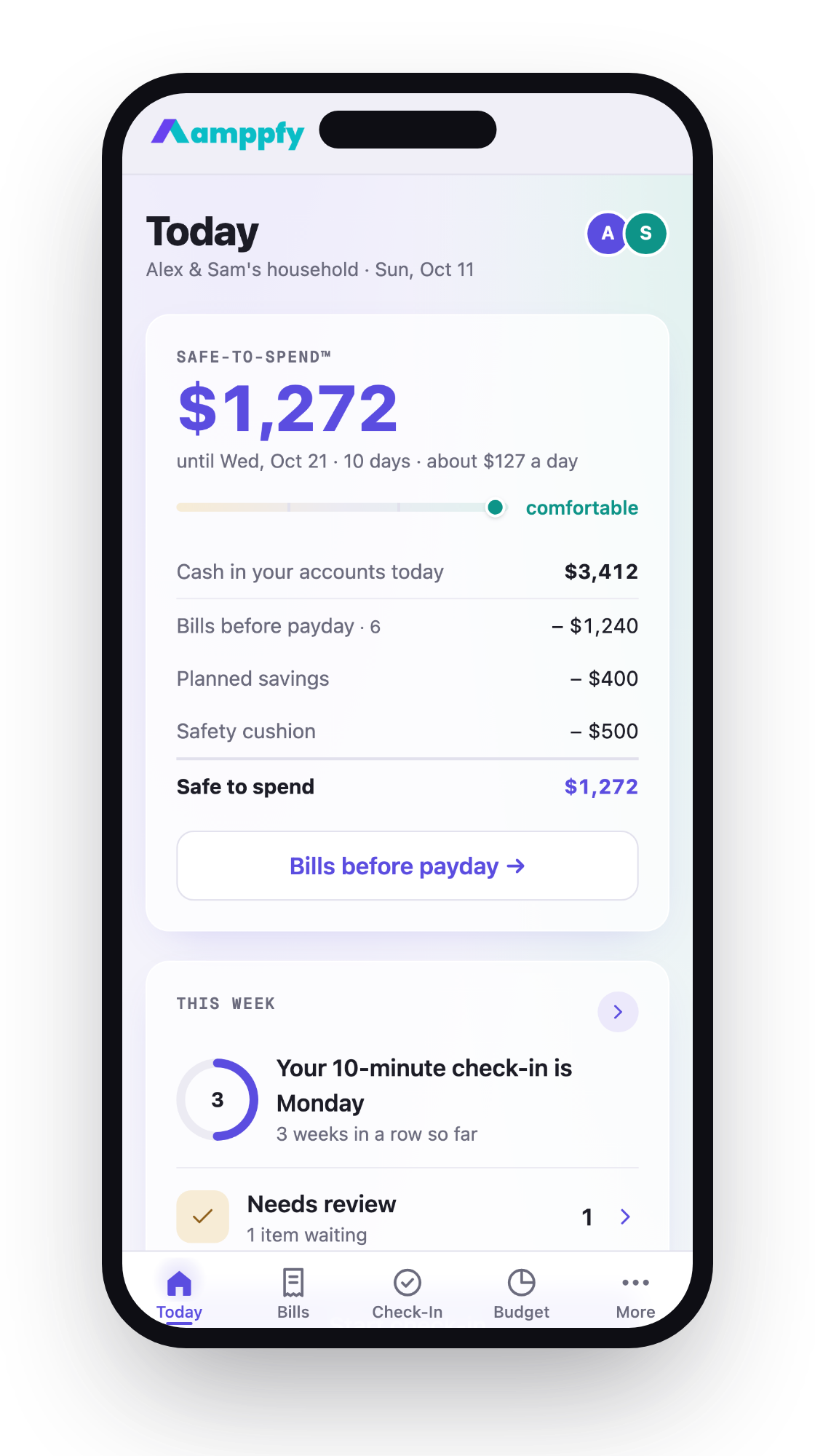
If you use Amppfy, this is exactly what the Safe-to-Spend™ number shows: $2,800 cash − $1,100 rent − $340 bills − $200 savings − $300 cushion = $860. One glance tells you whether the big shop fits or whether you need to shift something around.
The worst outcome is assuming you can afford it, shopping on credit, and then scrambling when the electric bill hits three days later. Knowing which paycheck funds the meal, and what’s left after fixed costs, removes that guesswork.
Splitting the Cost with Guests
You don’t have to fund the entire table yourself. Most guests expect to contribute, and asking isn’t awkward if you do it early and clearly.
How to Ask Without Making It Weird
Send a group text or message at least two weeks before the meal. Frame it as coordination, not charity. Something like: “I’m handling the turkey and mashed potatoes. Who wants to bring a side or dessert?” People will volunteer for what they’re comfortable making and spending on.
A potluck-style split can cut your personal cost by 40-60%. If your estimated total is $120 and four guests each bring a dish worth $15-20, you’re down to $50-70 out of pocket.
For couples who share finances, this is also a good moment to decide whose account covers the host dishes. If you and a partner both see the same Safe-to-Spend™ number, the conversation is faster: you’re looking at one figure, not two separate bank balances that may or may not account for upcoming bills.
What If Guests Offer Cash Instead
Some people prefer to Venmo you $20 rather than cook. That’s fine. Just make sure you receive it before you shop, not after. A promise of reimbursement doesn’t help at the register. Set a friendly deadline: “If you’d rather chip in cash, just send it by the weekend before so I can include your dish in my shopping run.”
Here’s a simple split for a $120 meal with six adults:
| Contributor | Brings | Estimated Value |
|---|---|---|
| You (host) | Turkey, potatoes, gravy | $45 |
| Guest 1 | Stuffing and rolls | $11 |
| Guest 2 | Green bean casserole | $8 |
| Guest 3 | Cranberry sauce + appetizer | $14 |
| Guest 4 | Pumpkin pie | $10 |
| Guest 5 | Drinks and ice | $15 |
| Total covered | $103 |
That leaves you with a $45 grocery bill instead of $120. A real difference when you’re stretching a paycheck.
Shopping in Two Trips
One massive cart on the Sunday before Thanksgiving is stressful and expensive. Two smaller trips spread the cost across pay periods and reduce impulse buys.
Trip One: Non-Perishables (7-10 Days Before)
Buy shelf-stable items early. Canned goods, broth, dried herbs, baking supplies, sparkling cider, coffee, and paper products all keep fine for a week or more. This trip typically runs $30-50 and can come out of an earlier paycheck.
Watch for pre-Thanksgiving sales that start the first week of November. Many stores discount canned pumpkin, cranberry sauce, and stuffing mix as loss leaders. Buying these items a week early at sale price saves a few dollars per item, which adds up across eight to ten products.
Trip Two: Perishables (2-3 Days Before)
Fresh turkey, butter, cream, celery, fresh cranberries, and pie crust go in the second trip. These are the items that need refrigeration and freshness. This trip is usually the bigger one, $50-80 depending on your menu, and lines up with the paycheck closest to Thanksgiving.
Splitting your shopping this way does two things. First, it keeps each trip under a manageable dollar amount. Second, it forces you to plan. You’re less likely to toss random extras into the cart when you’re working from a specific list for that trip.
A practical timeline:
- November 15-17: Trip one (non-perishables, sale items)
- November 22-24: Trip two (fresh produce, turkey, dairy)
If your budget for Thanksgiving dinner sits tight against your other November expenses, this two-trip approach gives you breathing room between purchases.
Leftovers as Part of Next Week’s Food Plan
Thanksgiving leftovers aren’t just a bonus: they’re next week’s grocery savings. A 14-pound turkey yields enough meat for four to five additional meals. That’s real money you don’t spend the following week.
Stretch the Turkey Into Five Meals
- Turkey sandwiches (2 lunches)
- Turkey soup with leftover vegetables and broth (2 dinners)
- Turkey quesadillas or wraps (1 dinner)
Leftover mashed potatoes become shepherd’s pie filling. Cranberry sauce works as a glaze for chicken later in the week. Stuffing reheats as a side for any protein.
If you plan for this ahead of time, you can reduce your grocery spending for the week after Thanksgiving by $40-60. That matters because December brings its own expenses, and a lighter grocery week in late November creates a buffer.
Think of your Thanksgiving meal as a bulk-cooking session that happens to be a holiday. The upfront cost is higher than a normal dinner, but the per-meal cost across the following week drops significantly. A $120 Thanksgiving spread that feeds ten people on Thursday and then covers five more meals for your household brings the per-serving cost down to roughly $4-5. That’s cheaper than most fast-casual lunches.
Don’t let leftovers sit in the fridge until they’re questionable. Portion and freeze turkey meat within two days. Label containers with the date. A freezer bag of sliced turkey and a container of broth can become soup in January if you don’t get to it this week.
Frequently Asked Questions
How much should I budget for Thanksgiving dinner for 10 people?
A classic spread for ten typically costs between $60 and $130, depending on where you live and what you serve. The American Farm Bureau Federation’s 2025 survey pegged the core basket at around $58, but that excludes appetizers, drinks, and extra sides most hosts add. Plan for $100-130 if you’re covering everything yourself, or $45-70 if guests bring dishes.
Should I buy a frozen or fresh turkey to save money?
Frozen turkeys are almost always cheaper per pound, and many stores offer them at steep discounts or even free with a minimum purchase in early November. A frozen 14-pound bird runs $15-25 at most grocery chains. Fresh turkeys cost $2-4 per pound more. The tradeoff is thaw time: a frozen turkey needs about 24 hours per 5 pounds in the refrigerator, so plan accordingly.
How do I avoid going over budget at the grocery store?
Write your list by dish, not by aisle. Check your pantry for items you already have: spices, flour, sugar, and oil are common duplicates. Stick to the list, skip name brands on canned goods, and shop the store’s weekly ad for sale items. If you’ve already calculated what’s safe to spend before your next paycheck, you know your hard ceiling before you walk in.
Is it worth cooking from scratch or buying pre-made sides?
Scratch cooking is cheaper for most dishes. A homemade green bean casserole costs about $8 versus $12-15 for a pre-made version. But pre-made pies and dinner rolls are often close in price to homemade and save significant time. Pick two or three dishes to make from scratch and buy the rest ready-made if your schedule is tight.
Make Thanksgiving Work for Your Wallet
A good Thanksgiving dinner doesn’t require a big credit card bill in December. It requires a plan: estimate the meal, check which paycheck covers it, let guests pitch in, shop in two trips, and treat leftovers as next week’s meals. Each step is small. Together, they keep the holiday from denting your finances.
If you want to see exactly what’s safe to spend before your next payday, without logging into your bank, get Amppfy free. Enter your balances, bills, and payday once: about ten minutes: and the number stays current with a quick weekly check-in. It’s one less thing to stress about while you’re brining a turkey.