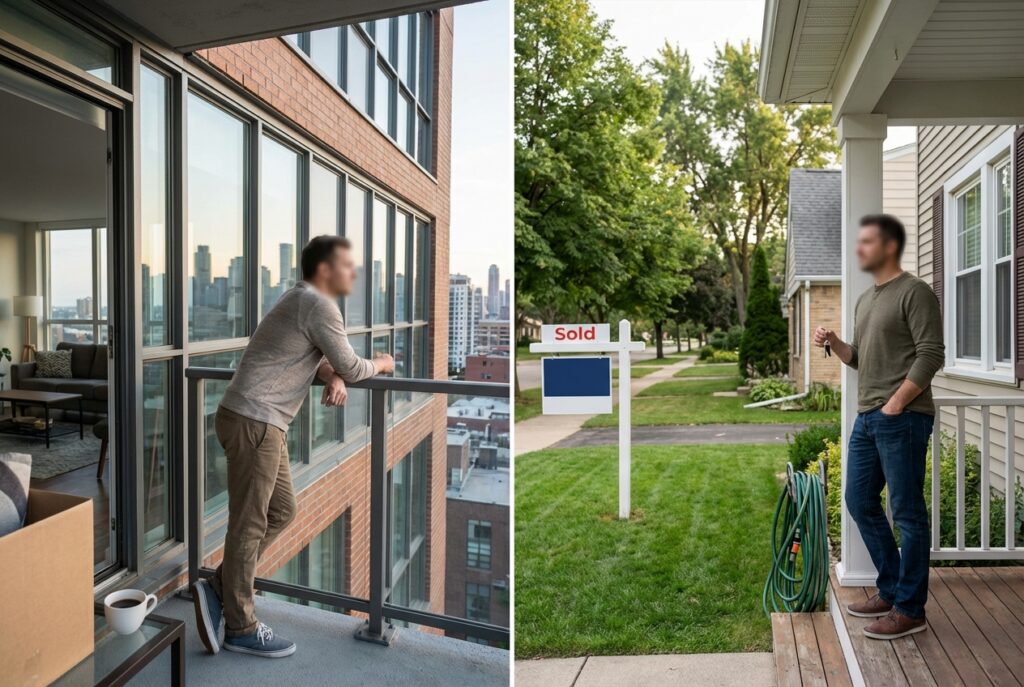
The question of whether renting is better than buying has sparked more heated debates than almost any other personal finance topic. Your parents probably told you that buying a home is the smartest financial move you'll ever make. Meanwhile, financial gurus on social media insist that renting and investing the difference will make you wealthier in the long run. The truth? Both camps are right, and both are wrong, depending entirely on your circumstances.
I've watched friends buy homes at the perfect time and build substantial wealth. I've also seen others become house-poor, trapped in properties they couldn't afford to maintain or sell. The rent versus buy decision isn't about following universal rules. It's about understanding the complete financial picture and matching it to your specific situation. This breakdown will give you the framework to make that call with confidence, stripping away the emotional arguments and focusing on what the numbers actually say.
The Evolving Economics of Homeownership vs. Renting
The financial landscape around housing has shifted dramatically over the past two decades. What worked for your parents' generation doesn't automatically apply today. Interest rates, home prices, and rental markets have all evolved in ways that change the fundamental math of this decision.
The True Cost of Buying Beyond the Mortgage
Most people dramatically underestimate what homeownership actually costs. Your mortgage payment is just the beginning of a much longer list of expenses that can catch new homeowners off guard.
Consider these often-overlooked costs:
- Property taxes typically run 1% to 2% of your home's value annually
- Homeowner's insurance averages $1,500 to $3,000 per year depending on location
- Maintenance costs roughly 1% to 3% of your home's value each year
- HOA fees can add $200 to $500 monthly in many communities
- Closing costs eat up 2% to 5% of the purchase price upfront
A $400,000 home with a $2,200 monthly mortgage payment might actually cost you $3,500 or more when you factor in everything. That $300,000 home you can barely afford on paper becomes genuinely unaffordable once you add property taxes, insurance, and the inevitable repairs.
The roof will need replacing. The HVAC system will fail during the hottest week of summer. The water heater will die at the worst possible moment. These aren't possibilities. They're certainties that many first-time buyers fail to budget for.
Opportunity Costs and the Power of Reinvesting Rent Savings
Here's where the math gets interesting. When you buy a home, you're tying up a massive amount of capital in a single, illiquid asset. That down payment sitting in your house could have been invested elsewhere.
The stock market has historically returned around 10% annually before inflation. Real estate appreciation varies wildly by market but averages closer to 3% to 4% nationally over long periods. If you're putting $80,000 down on a house instead of investing it, you're making a bet that your local real estate market will outperform diversified stock investments.
Sometimes that bet pays off spectacularly. People who bought in Austin, Texas in 2015 saw their home values double. People who bought in Detroit in 2005 experienced the opposite. The opportunity cost calculation requires you to honestly assess your local market conditions and your alternative investment discipline.
Financial Advantages of the Modern Renter
Renting often gets dismissed as throwing money away. That characterization misses some significant financial benefits that renters enjoy, particularly in high-cost markets where the math heavily favors renting.
Predictable Monthly Expenses and Maintenance Liquidity
Your landlord's 3 AM phone call about a burst pipe is their problem, not yours. That peace of mind has real financial value that's easy to overlook until you're staring at a $15,000 foundation repair bill.
Renters benefit from:
- Fixed monthly housing costs for the duration of their lease
- Zero responsibility for major repairs or replacements
- No property tax increases eating into their budget
- Freedom from HOA special assessments
- Predictable utility costs in many apartment buildings
This predictability allows renters to maintain more liquid emergency funds and invest more aggressively. When your housing costs are truly fixed, you can take calculated risks elsewhere in your financial life.
The liquidity advantage is particularly valuable early in your career. Having accessible cash for opportunities, whether that's starting a business, going back to school, or relocating for a dream job, provides flexibility that equity locked in a house simply cannot match.
Geographic Mobility and Career Agility
The average American changes jobs every 4.1 years. Many career-advancing moves require relocation. Homeowners face a brutal choice when opportunity knocks from another city: sell the house (potentially at a loss, definitely with significant transaction costs) or pass on the opportunity.
Renters can chase career growth without the housing anchor. That flexibility has compounding career benefits that rarely show up in rent-versus-buy calculators. The promotion you took because you could relocate might be worth far more over your lifetime than any equity you'd have built staying put.
Young professionals in particular should weigh this heavily. Your highest earning years likely lie ahead, and geographic flexibility during your 20s and 30s can dramatically affect your lifetime earnings trajectory.
The Wealth-Building Potential of Owning Real Estate
Despite everything I've said about renting's advantages, homeownership remains one of the most reliable wealth-building tools available to middle-class Americans. The numbers bear this out: the median homeowner's net worth is roughly 40 times higher than the median renter's.
Equity Accumulation and Forced Savings
Most people are terrible at saving money. We know we should invest more, but that new car, vacation, or gadget always seems more pressing. Mortgage payments function as forced savings, building equity whether you feel motivated to save or not.
Each mortgage payment splits between interest and principal. Early in your loan, most goes to interest. But over time, more and more goes toward principal, building your equity stake in the property. After 15 years of payments on a 30-year mortgage, you'll own roughly 30% of your home outright.
This forced savings mechanism explains much of the homeowner wealth advantage. Renters who diligently invest their savings can absolutely come out ahead. But most don't. The behavioral aspect of homeownership, making that payment every month because you have to, builds wealth for people who would otherwise spend that money.
Tax Incentives and Long-Term Inflation Protection
Homeowners enjoy several tax advantages that can significantly reduce their effective housing costs:
- Mortgage interest deduction for those who itemize
- Property tax deduction up to $10,000 annually
- Capital gains exclusion of $250,000 ($500,000 for married couples) when selling
- Potential deductions for home office use
The inflation protection aspect deserves special attention. Your fixed-rate mortgage payment stays constant while rents typically increase 3% to 5% annually. After 10 years of inflation, your housing costs remain frozen at 2024 dollars while your renting neighbors pay 2034 prices.
This inflation hedge becomes increasingly valuable over long holding periods. A 30-year homeowner effectively locks in housing costs from three decades ago, which can represent enormous savings compared to renters who've experienced 30 years of rent increases.
Lifestyle Factors and Emotional ROI
Money isn't everything. The rent-versus-buy decision involves quality of life factors that don't show up on spreadsheets but matter enormously to your daily happiness.
The Freedom to Customize vs. the Burden of Responsibility
Homeownership means you can paint walls any color, renovate the kitchen, or build a deck without asking permission. That freedom to customize your space has real value for people who want their home to reflect their personality and needs.
Consider what matters to you:
- Can you install the home gym or workshop you've always wanted?
- Do you want to modify spaces for aging parents or growing children?
- Is having a garden or specific landscaping important to you?
- Do you need to make accessibility modifications?
The flip side of this freedom is responsibility. Every decision about your home falls on your shoulders. Every repair, every upgrade, every maintenance task is yours to handle or hire out. Some people find this empowering. Others find it exhausting.
Renters trade customization freedom for freedom from responsibility. Neither choice is objectively better. It depends entirely on what kind of freedom matters more to you.
Psychological Stability and Community Roots
Research consistently shows that homeowners report higher levels of life satisfaction and community involvement. Part of this is selection bias: people who buy homes tend to be more settled in life generally. But part of it reflects genuine benefits of stability.
Homeownership creates roots. You're more likely to know your neighbors, participate in local organizations, and invest in your community when you own property there. Your children attend the same schools with the same friends year after year. These social connections have value that's difficult to quantify but easy to feel.
The psychological security of knowing no landlord can decide not to renew your lease provides peace of mind that many homeowners cite as their primary motivation for buying. That stability becomes increasingly important as you age and your tolerance for upheaval decreases.
Market Indicators That Dictate Your Best Move
The right answer to whether renting is better than buying depends heavily on your local market conditions. National statistics mean nothing when you're deciding about a specific house in a specific city.
Analyzing the Price-to-Rent Ratio in Your Local Area
The price-to-rent ratio provides a quick sanity check on your local market. Divide the median home price by the annual rent for a comparable property. The resulting number tells you how many years of rent would equal the purchase price.
Here's how to interpret the results:
- Ratio below 15: Buying is likely favorable
- Ratio between 15 and 20: Closer to neutral; other factors should drive your decision
- Ratio above 20: Renting is likely favorable
- Ratio above 25: Buying is almost certainly a poor financial choice
San Francisco's price-to-rent ratio often exceeds 30, making renting the clear financial winner there. Many Midwest cities sit below 12, where buying makes overwhelming sense. Check your specific market before making assumptions based on national trends.
This ratio doesn't account for everything: appreciation potential, tax benefits, and personal circumstances all matter. But it provides a starting point for understanding whether local conditions favor buyers or renters.
Interest Rate Trends and Housing Inventory Cycles
Interest rates dramatically affect your buying power and the true cost of ownership. A 1% increase in mortgage rates reduces your purchasing power by roughly 10%. The difference between a 4% and 7% mortgage on a $400,000 home is over $700 per month.
Watch these market indicators:
- Federal Reserve policy signals about future rate directions
- Local housing inventory levels (low inventory favors sellers)
- Days on market trends (rising days suggests cooling demand)
- New construction permits (more supply eventually moderates prices)
- Local employment trends (job growth drives housing demand)
Timing the market perfectly is impossible, but understanding where you are in the cycle helps set realistic expectations. Buying at peak prices with peak interest rates maximizes your risk. Buying when either prices or rates are relatively low provides more margin for error.
The Final Verdict: A Framework for Your Decision
After examining all the factors, the ultimate breakdown comes down to a few key questions that only you can answer.
Buy if you plan to stay at least five to seven years, have stable income and employment, can afford the true total cost of ownership, and value stability and customization over flexibility. Buy if your local price-to-rent ratio suggests favorable conditions and you have a healthy emergency fund beyond your down payment.
Rent if you might relocate within five years, prefer flexibility over stability, live in a market with high price-to-rent ratios, or want to invest your down payment elsewhere. Rent if you value freedom from maintenance responsibilities or aren't ready for the financial commitment homeownership requires.
Neither choice is inherently superior. The rent-versus-buy question has no universal answer because your circumstances are unique. Run the numbers for your specific situation, be honest about your lifestyle preferences, and make the choice that aligns with your actual life rather than someone else's conventional wisdom.
Frequently Asked Questions
How long should I plan to stay in a home to make buying worthwhile?
Most financial advisors suggest a minimum of five years, though seven is safer. This timeframe allows you to recoup the substantial transaction costs of buying (closing costs, moving expenses) and selling (agent commissions, repairs, staging). In markets with slower appreciation, you might need even longer to break even compared to renting.
Should I buy a home if I have student loan debt?
It depends on the debt amount, interest rate, and your overall financial picture. Generally, you should have your debt-to-income ratio below 43% to qualify for most mortgages. More importantly, ensure you can comfortably afford mortgage payments while making progress on your loans. Don't stretch your housing budget so thin that you're only making minimum loan payments for decades.
Is it smarter to buy a starter home or rent until I can afford my forever home?
Starter homes make sense if you'll stay long enough to build equity and your local market is affordable. However, buying and selling within a few years often costs more in transaction fees than you'll gain in equity. If your forever home is five or more years away, a starter home can work. If it's closer to three years, renting probably makes more financial sense.
How much should I have saved before buying a home?
Beyond your down payment (ideally 20% to avoid PMI, though many programs accept less), you should have closing costs (2% to 5% of purchase price), moving expenses, and an emergency fund covering six months of total housing costs including mortgage, taxes, insurance, and estimated maintenance. Many first-time buyers underestimate these additional needs and find themselves house-poor immediately after closing.