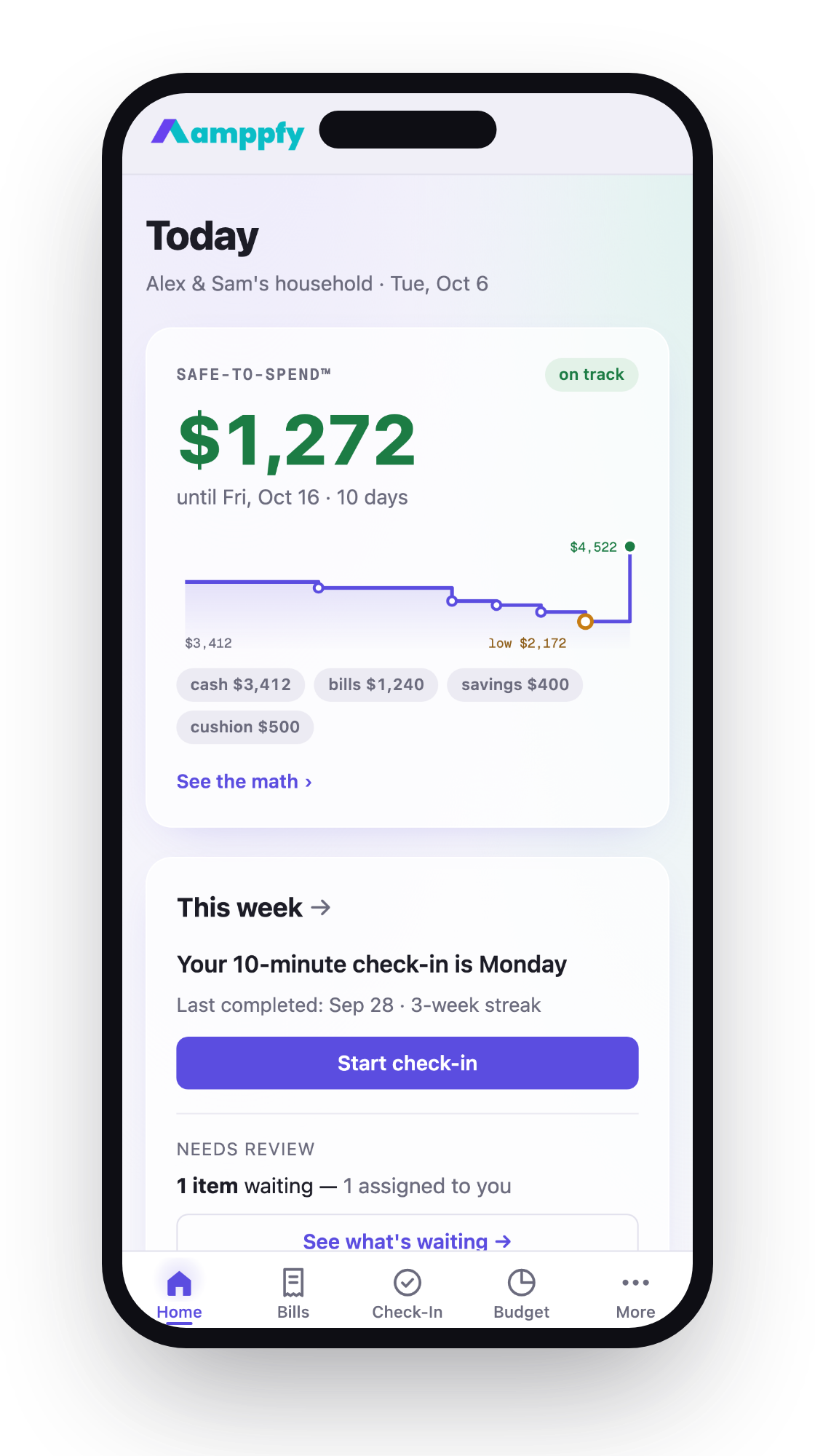
Every service member’s budget runs on two dates: the 1st and the 15th. Knowing exactly when those deposits hit your account, especially when weekends or holidays shift them earlier, is the difference between a smooth month and scrambling to cover a bill. This guide lays out the full 2027 pay calendar so you can plan rent, car payments, and savings goals around real deposit dates. For the budgeting side, see Military Pay Dates and Bills: Budgeting Around the 1st and 15th. If you’re already mapping your bills to paydays, a tool like Amppfy can show you one Safe-to-Spend™ number that accounts for every bill due before your next check.
How Active-Duty Pay Dates Work
The Defense Finance and Accounting Service (DFAS) pays active-duty members twice a month. Your mid-month check covers the 1st through the 15th. Your end-of-month check covers the 16th through the last day. That’s 24 paychecks a year, every year.
The rule for shifted dates is simple. If the 1st or 15th falls on a weekend or federal holiday, pay moves to the last business day before it[1]. A Saturday payday means you get paid Friday. A Sunday payday means you also get paid Friday. If a holiday lands on your payday, same thing: the deposit shifts earlier.
Early Deposits from Military Banks
Your bank can make the shift even earlier. USAA, for example, often posts funds up to two business days ahead of the official date[2]. So a Monday payday could show up in your account the previous Thursday or Friday.
Navy Federal works a bit differently. Members with a Free Active Duty Checking account receive pay one business day early[3], while standard checking accounts post on the official DFAS date. Check your account type if you’re not sure which applies to you.
These early-post dates aren’t guaranteed by DFAS. They depend on your bank’s processing policies. But they’re consistent enough that most military families treat them as reliable for bill timing.
All 24 Paydays in 2027
Here’s every scheduled payday for active-duty service members in 2027. The “Official Date” column shows the 1st or 15th. The “Paid On” column shows when you’ll actually get paid after weekend and holiday shifts. The January 1, 2027 payday lands in late December 2026, and the January 1, 2028 payday lands in late December 2027, so 24 deposits still arrive during 2027.
| Month | Official Date | Paid On |
|---|---|---|
| January | Fri, Jan 1 (New Year’s Day) | Thu, Dec 31, 2026 |
| Fri, Jan 15 | Fri, Jan 15 | |
| February | Mon, Feb 1 | Mon, Feb 1 |
| Mon, Feb 15 (Washington’s Birthday) | Fri, Feb 12 | |
| March | Mon, Mar 1 | Mon, Mar 1 |
| Mon, Mar 15 | Mon, Mar 15 | |
| April | Thu, Apr 1 | Thu, Apr 1 |
| Thu, Apr 15 | Thu, Apr 15 | |
| May | Sat, May 1 | Fri, Apr 30 |
| Sat, May 15 | Fri, May 14 | |
| June | Tue, Jun 1 | Tue, Jun 1 |
| Tue, Jun 15 | Tue, Jun 15 | |
| July | Thu, Jul 1 | Thu, Jul 1 |
| Thu, Jul 15 | Thu, Jul 15 | |
| August | Sun, Aug 1 | Fri, Jul 30 |
| Sun, Aug 15 | Fri, Aug 13 | |
| September | Wed, Sep 1 | Wed, Sep 1 |
| Wed, Sep 15 | Wed, Sep 15 | |
| October | Fri, Oct 1 | Fri, Oct 1 |
| Fri, Oct 15 | Fri, Oct 15 | |
| November | Mon, Nov 1 | Mon, Nov 1 |
| Mon, Nov 15 | Mon, Nov 15 | |
| December | Wed, Dec 1 | Wed, Dec 1 |
| Wed, Dec 15 | Wed, Dec 15 | |
| January 2028 | Sat, Jan 1, 2028 | Fri, Dec 31, 2027 (a federal holiday with banks open; DFAS may pay Thu, Dec 30) |
That last row matters. December 2027 has three paydays, not two. We’ll cover why below.
Paydays That Land Early Because of Weekends and Holidays
Most months in 2027 are straightforward: the 1st and 15th both land on weekdays. But several months shift your deposit earlier, and those shifts can catch you off guard if you’re not tracking them.
Here are the months with adjusted paydays:
| Month | Official Date | Shifts To | Reason |
|---|---|---|---|
| January | Fri, Jan 1 | Thu, Dec 31, 2026 | New Year’s Day |
| February | Mon, Feb 15 | Fri, Feb 12 | Washington’s Birthday |
| May | Sat, May 1 | Fri, Apr 30 | Weekend |
| May | Sat, May 15 | Fri, May 14 | Weekend |
| August | Sun, Aug 1 | Fri, Jul 30 | Weekend |
| August | Sun, Aug 15 | Fri, Aug 13 | Weekend |
| December | Sat, Jan 1, 2028 | Fri, Dec 31 (or Thu, Dec 30) | Weekend; Dec 31 is the observed New Year’s Day holiday, banks open |
May and August are the months where both paydays shift. In May, both paydays move to the preceding Friday. That means your May 1 check hits on April 30, and your May 15 check arrives on May 14. If you have bills auto-drafted on the 1st, make sure you’ve already accounted for the deposit landing a day early.
August does the same thing. Both the 1st and 15th fall on Sundays, so deposits move to the prior Fridays. Your Aug 1 check posts on July 30, which means July has a three-payday feel even though the third deposit technically belongs to August.
If you bank with USAA or Navy Federal, your early-post dates could push these deposits even further ahead. A Friday adjusted payday at USAA might show up Wednesday or Thursday. That’s helpful, but it also means you need to resist spending the money before the bills it’s meant to cover actually come due.
The Double-Payday December and a Lean January
December 2027 is unusual. You’ll receive three paychecks instead of two: Dec 1, Dec 15, and Dec 31 (or Thursday, Dec 30 if DFAS treats the observed New Year’s holiday as a non-pay day; check the DFAS calendar). That third check on December 31 exists because January 1, 2028, falls on a Saturday, pushing the payment to the last business day of 2027.
That sounds like a bonus, but it’s not extra money. It’s your January 1 paycheck arriving early. The result: January 2028 will likely have only one payday, around January 14, 2028. That’s a long stretch from December 31 to mid-January with no second deposit. The same thing happened at the start of 2027: the January 1 pay arrived Thursday, December 31, 2026, so January 2027 has a single payday, Friday, January 15.
How to Prepare for the Gap
The gap between December 31 and mid-January 2028 is roughly two weeks, but it feels longer because holiday spending tends to drain accounts. Here’s how to handle it:
- Set aside your December 31 check specifically for January bills. Treat it like a January deposit, not a December windfall.
- Pay your January rent or mortgage from the December 31 check before you touch any of it for other spending.
- If you use Amppfy, your Safe-to-Spend™ number already subtracts bills due before your next payday, so you’ll see exactly what’s left after January obligations are covered.
A 2025 Blue Star Families survey found that 68% of active-duty families consider two incomes vitally important[4] to their financial well-being. A lean January hits harder when a spouse is between jobs or underemployed. Planning for it now, months ahead, removes the stress.
What About Tax Implications
Three checks in December don’t add pay. The December 31 deposit is your January 1, 2028 pay arriving early, and the 2027 year started the same way. If you track income by tax year, check your year-end LES and W-2 to see which year each early deposit is reported in.
Splitting Bills Across the Two Mid-Month Checks
Two paychecks a month creates a natural split. Some bills land in the first half of the month. Others hit in the second half. The goal is to balance your obligations so neither check is wiped out while the other sits fat.
Sort Your Bills by Due Date
Start by listing every recurring bill with its due date. Then assign each one to the paycheck that arrives before it’s due:
| Paycheck | Covers Bills Due | Common Bills |
|---|---|---|
| 1st of month | 1st through 14th | Rent/mortgage, car insurance, streaming services |
| 15th of month | 15th through end of month | Car payment, utilities, phone bill, subscriptions |
If one paycheck is overloaded, call your lender or provider and ask to shift the due date. Most companies will move a due date once per year with a simple request. Spreading your obligations evenly across both checks keeps cash flow predictable.
A Worked Example
Say your base pay deposits $1,706 per check after taxes and deductions. Here’s what a balanced split might look like:
- Check 1 (1st): $1,706 cash – $850 rent – $200 car insurance – $150 savings = $506 left
- Check 2 (15th): $1,706 cash – $400 car payment – $180 utilities – $75 phone – $150 savings = $901 left
That $506 and $901 are your breathing room for groceries, gas, and everything else. Knowing those numbers before each payday removes guesswork. You’re not checking your bank app five times a day wondering if you can afford dinner out.
When Both Partners Are on Military Pay
Dual-military couples get four checks a month. That’s more deposits to track but also more flexibility. Assign shared bills to one person’s check and keep the other’s check for individual expenses and savings. The key is agreeing on who covers what and sticking to it.
Frequently Asked Questions
Does DFAS ever pay late?
DFAS has a strong track record of on-time payments. Delays are rare and usually tied to system maintenance or a new service member’s initial pay setup. If your first paycheck after enlisting or PCSing is late, contact your unit’s finance office. Subsequent payments almost always run on schedule.
Will my BAH and BAS arrive on the same dates?
Yes. Basic Allowance for Housing and Basic Allowance for Subsistence are included in your regular mid-month and end-of-month pay deposits. They aren’t separate transactions. You’ll see them as line items on your Leave and Earnings Statement, but the money arrives in one lump deposit.
Can I change my direct deposit split between two banks?
You can. MyPay lets you split your deposit across multiple accounts. Many service members send a fixed amount to a savings account and the rest to checking. This is a simple way to automate savings without thinking about it each payday.
How do I know if my bank posts early?
Check with your bank directly. USAA and Navy Federal both offer early posting for military accounts, but the exact timing depends on your account type. Your bank’s app or website will usually show pending deposits a day or two before the official DFAS date.
Plan Your 2027 Paydays Now
The 2027 pay calendar has a few curveballs: two months where both paydays shift to Fridays, and a three-check December that borrows from January 2028. None of these are problems if you see them coming. Print the table above, pin it somewhere visible, and match your bills to each check.
If you want one number that tells you what’s safe to spend between paydays, get Amppfy free on iPhone or the web. Enter your balances, bills, and pay dates once, about ten minutes, and your Safe-to-Spend™ number updates every time you check in. It’s a calmer way to handle the 1st-and-15th rhythm all year long.