Your SNAP benefits hit your EBT card on a specific day each month, but that day isn’t the same for everyone. Each state picks its own schedule, and your household’s place in that schedule depends on factors like your case number or last name. Knowing when your deposit arrives, and planning meals around that rhythm, can stretch your grocery budget further than any coupon. This guide covers how states decide those dates, how to look yours up, and how to build a weekly food plan that keeps your kitchen stocked all month.
How states set SNAP issuance dates
No single federal rule dictates the exact day your benefits appear. Federal rules leave the issuance schedule largely to each state, so the method varies from state to state.
Most states stagger deposits across multiple days. A state might spread issuance over the first ten days of the month, assigning you a day based on the last digit of your case number or Social Security number. Other states use alphabetical groupings tied to your last name. A few smaller states load all benefits on a single day.
Why staggering matters
Staggering exists for practical reasons. If every household in a large state received benefits on the same morning, grocery stores would face extreme rushes. Shelves would empty. Lines would stretch. Staggering smooths demand for retailers and gives you a better shopping experience with fuller shelves and shorter waits.
The schedule can change
States occasionally adjust their issuance calendars. A policy update, a system migration, or even a federal emergency declaration can shift your deposit date. Your date from last year may not be your date this year. Check annually, or whenever you get a notice from your state agency.
In short: your state controls the calendar, and your position on it is assigned, not chosen. That makes it worth confirming your exact date rather than guessing.
How to find your own date
There are a few reliable ways to confirm when your SNAP deposit lands each month.
- Your state’s SNAP agency website. Every state publishes an issuance schedule, usually as a PDF or simple chart. The USDA’s SNAP State Directory of Resources links to every state agency, or search for your state’s Department of Social Services, Department of Human Services, or equivalent agency. Look for “EBT issuance schedule” or “benefit deposit calendar.”
- Your EBT card’s customer service line. The number on the back of your card connects you to an automated system. It can tell you your current balance and, in most states, your next deposit date.
- Your state’s benefits portal or app. Many states offer online accounts where you can view your case details, including your assigned issuance day.
- Your caseworker. If you’re unsure after checking online, a quick call to your local SNAP office can confirm your schedule.
What to look for
Your assigned date usually repeats each month. If your state assigns you to the 5th, your benefits will generally appear on the 5th every month. Many states load benefits on weekends and holidays too, while others use a nearby business day. Your state’s schedule will say which.
Write your deposit day on a calendar, digital or paper. Pair it with your payday if you also work. Seeing both dates in one view helps you plan grocery runs and avoid gaps. Amppfy’s month calendar marks your lowest-cash day, which can be useful if you’re juggling SNAP timing alongside a paycheck cycle: amppfy.com/app/.
Making a monthly benefit last the month
For many households, the benefit works out to only a few dollars per person per day. That’s tight. Stretching it across 30 days takes a plan, not just willpower.
Week-by-week shopping instead of one big haul
A single massive grocery trip on deposit day feels productive, but it often leads to waste. Fresh produce spoils. Impulse buys sneak in. A better approach: split your benefit into four weekly budgets.
| Week | Focus | Example items |
|---|---|---|
| Week 1 | Proteins and staples | Chicken thighs, rice, dried beans, eggs, cooking oil |
| Week 2 | Produce and dairy | Frozen vegetables, fresh fruit on sale, milk, cheese |
| Week 3 | Replenish staples, add variety | Pasta, canned tomatoes, oats, peanut butter |
| Week 4 | Fill gaps with pantry meals | Use what’s on hand, buy only bread, eggs, or one fresh item |
This pattern keeps your fridge stocked without front-loading all spending into the first week.
Anchor meals around cheap proteins
Dried beans, eggs, canned tuna, and whole chickens give you the most protein per dollar. Build two or three meals each week around these anchors, then fill in with grains and whatever vegetables are on sale. A pound of dried black beans costs under $2 and yields about eight servings.
Use your freezer as a savings account
Buy marked-down meat and freeze it immediately. Cook a double batch of soup or chili and freeze half. Your freezer is the best tool for turning week-one abundance into week-four meals.
Groceries between SNAP and payday
If you work and receive SNAP, you likely have two money events each month: your deposit date and your payday. The gap between them can feel like a tightrope. Here’s how to handle it.
First, figure out the calendar distance between the two dates. If your SNAP loads on the 3rd and you get paid on the 15th, that’s a 12-day stretch where SNAP covers groceries and your paycheck hasn’t arrived yet. After payday, you might use cash for groceries and save SNAP dollars for later in the month.
A simple split strategy
- SNAP-only weeks: Use benefits for all groceries. Stick to your weekly food budget from the table above.
- Cash-available weeks: After payday, use cash for fresh items, snacks, or anything SNAP doesn’t cover (like household supplies). Let your EBT balance carry forward.
- Overlap days: If SNAP and payday land close together, resist the urge to double-spend. Treat the overlap as a chance to build a small pantry buffer.
What if there’s a gap?
Sometimes the math doesn’t work and you’re short on both SNAP balance and cash in the final days before one or the other reloads. A few practical steps:
- Check your pantry and freezer first. You probably have more food than you think.
- Visit a local food pantry. Feeding America’s food bank locator searches by zip code.
- Plan a “pantry clean-out” meal night once a week. Rice, beans, canned vegetables, and a spice you already own make a full dinner.
The goal isn’t perfection. It’s closing the gap between your two income sources so neither week feels empty.
A weekly food number that holds
The most useful thing you can do is calculate one number: your weekly grocery budget. Not a monthly lump sum. A weekly figure you can check against every time you shop.
Here’s the math. Take your total monthly SNAP benefit. Add any cash you plan to spend on groceries from your paycheck. Divide by four.
Example: $250 SNAP + $100 cash = $350 monthly grocery budget. $350 / 4 = $87.50 per week.
That $87.50 is your number. Write it on a sticky note. Put it in your phone. Every shopping trip, you’re aiming to stay at or under that figure.
Why weekly works better than monthly
A monthly number is abstract. You can’t feel $350 slipping away over 30 days. But $87.50 at the register? That’s concrete. You see it, you feel it, and you adjust in real time. If you spend $95 one week, you know next week’s target drops to $80.
Tracking without the hassle
You don’t need a spreadsheet. A notes app on your phone works. After each grocery run, jot down the total. Compare it to your weekly number. That’s it: maybe two minutes of effort.
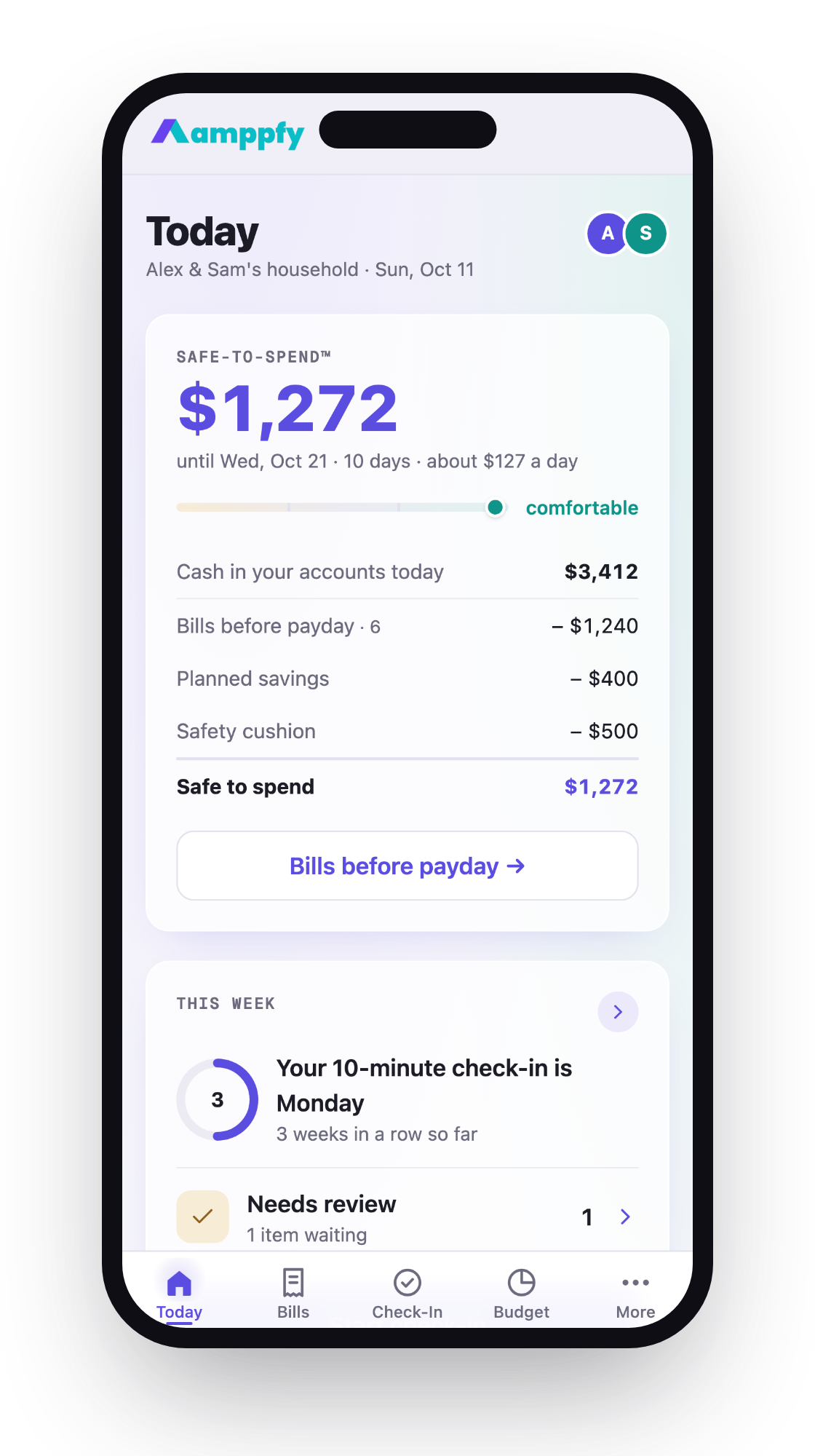
If you’re also tracking bills, payday, and savings goals alongside groceries, Amppfy can show you a single Safe-to-Spend™ number that accounts for everything due before your next paycheck. It takes about ten minutes to set up and a quick weekly check-in to keep current.
Meal planning on a weekly budget
Once you know your number, build meals backward from it:
- Pick three proteins for the week (chicken, beans, eggs).
- Choose two grains (rice, pasta).
- Add two to three vegetables, prioritizing whatever’s on sale or in season.
- Fill in with pantry staples you already have.
This approach keeps variety in your meals without blowing past your weekly cap.
Frequently Asked Questions
Do SNAP deposit dates change from month to month?
Your assigned day generally stays the same each month. If your state assigns you to the 8th, expect benefits on the 8th every month. Some states shift a date that lands on a weekend or holiday, and many don’t, so check your state’s schedule. States can also change schedules with advance notice, so check your state agency’s site at least once a year.
Can I choose my SNAP deposit date?
No. Your state assigns your date based on a formula, typically your case number, SSN, or last name. You can’t request a different day. If your assigned date creates a hardship, contact your caseworker to discuss your situation, but a date change isn’t guaranteed.
What happens if my SNAP deposit doesn’t arrive on the expected day?
Call the number on the back of your EBT card first. The automated system will confirm your balance and whether a deposit posted. If nothing shows, contact your state SNAP office. Delays can happen due to system maintenance or processing errors, and your state office can tell you when to expect the deposit.
Do unused SNAP benefits roll over to the next month?
Yes. Any balance left on your EBT card carries forward. Benefits that go unused for several months can be removed from the account, so ask your state agency how long yours stay available. This is why building a small buffer on your card, even $10 or $20, can help smooth out tight weeks.
Your deposit date is a planning tool, not just a calendar entry
Knowing when your SNAP benefits arrive gives you a starting point for the whole month’s grocery plan. Pair that date with your payday, set a weekly food number, and shop with a short list built around cheap proteins and sale produce. The rhythm gets easier after the first month or two.
If you want one place to see your grocery cash alongside bills, savings, and your next paycheck, Amppfy is free on iPhone and the web. Enter your balances and bills once, about ten minutes, and you’ll always know what’s safe to spend before payday. Get Amppfy free.