Railroad retirement annuity payments follow a predictable monthly schedule, but the specific dates shift each year based on weekends and federal holidays. If you’re planning your 2027 household budget around these deposits, knowing exactly when your check hits matters. A single day’s difference can mean a late bill or an overdraft fee you didn’t need. Here’s what you need to know about railroad retirement payment dates for 2027 so you can plan with confidence, not guesswork.
How RRB Annuity Payments Are Scheduled
The Railroad Retirement Board follows a straightforward rule. Your annuity payment lands on the first business day of the month[1] following the month it covers. That means your January annuity arrives on the first business day of February, your February annuity on the first business day of March, and so on. Every payment is made in arrears.
This schedule applies to all regular RRB annuity types: employee retirement, spouse, and survivor benefits. The RRB doesn’t offer biweekly or weekly payment options the way some employer payrolls do. You get one deposit per month, twelve times a year.
How the Arrears System Works
Think of it like getting paid for last month’s work. You earn the benefit in January, but the money shows up in February. This one-month lag catches some new retirees off guard, especially in the first few months after filing. If you retire at the end of December 2026, your first annuity payment won’t arrive until February 2027 at the earliest, covering January.
The “first business day” rule also means the calendar matters. If the first of the month falls on a Saturday, Sunday, or federal holiday, the payment shifts. That’s where the month-by-month schedule below becomes useful.
Every 2027 Payment Date
The RRB publishes its official payment schedule[2] each year. Below is the expected 2027 schedule showing which month each payment covers and when you should see it in your account. All dates reflect the first business day of the listed payment month.
| Benefit Month | Payment Arrives |
|---|---|
| December 2026 | Monday, January 4, 2027 |
| January 2027 | Monday, February 1, 2027 |
| February 2027 | Monday, March 1, 2027 |
| March 2027 | Thursday, April 1, 2027 |
| April 2027 | Monday, May 3, 2027 |
| May 2027 | Tuesday, June 1, 2027 |
| June 2027 | Thursday, July 1, 2027 |
| July 2027 | Monday, August 2, 2027 |
| August 2027 | Wednesday, September 1, 2027 |
| September 2027 | Friday, October 1, 2027 |
| October 2027 | Monday, November 1, 2027 |
| November 2027 | Wednesday, December 1, 2027 |
*Confirm all dates against the RRB’s published schedule closer to each month, as federal holiday declarations can shift a payment date.
Note that the January 4, May 3, and August 2 dates come a few days after the 1st: RRB pays on the first business day, so payments move later, not earlier, when the 1st is a holiday or weekend. Keep this table somewhere you’ll actually see it: taped to the fridge, saved in your phone’s notes, or entered as recurring calendar reminders.
Early Deposits Around Weekends and Holidays
Your bank might post your annuity before the official date. Many financial institutions post monthly benefits prior to the official date as a customer courtesy. This is a bank-level decision, not an RRB policy.
When Early Posting Happens
Early deposits typically show up one business day before the scheduled date. If your payment is due on a Monday, some banks will credit it the preceding Friday. Credit unions are especially known for this practice. But don’t count on it unless your bank has done it consistently for several months in a row.
Key 2027 Holidays That Could Shift Timing
Federal holidays close government payment systems. Here are the ones most likely to affect your 2027 deposits:
- New Year’s Day (January 1): Falls on a Friday, pushing the December 2026 benefit to Monday, January 4.
- Independence Day (July 4): Falls on a Sunday, observed Monday July 5. Your June benefit still arrives July 1.
- Labor Day (September 6): Falls on a Monday. No impact since the payment date is September 1.
- Christmas (December 25): Falls on a Saturday. No impact on the December 1 payment.
The safest approach: treat the official RRB date as your planning date. If your bank posts early, that’s a bonus, not a guarantee.
Budgeting a Once-a-Month Check
Getting paid once a month requires a different mindset than biweekly paychecks. You can’t split rent across two pay periods. Every dollar from that single deposit has to stretch roughly 28 to 32 days, and longer around the New Year.
A Simple Monthly Framework
Start by listing your fixed costs: housing, insurance premiums, utilities, prescriptions, and any debt payments. Subtract those from your annuity amount. What’s left is your flexible spending for groceries, transportation, and everything else.
Here’s what that math looks like in practice:
$2,800 annuity – $1,100 housing – $320 insurance – $180 utilities – $200 prescriptions = $1,000 for everything else
That $1,000 has to last the full month. Divide it by 4 to get a weekly spending target of $250. This rough weekly number is your guardrail.
Timing Bills to Match Your Payment
If you can, schedule your biggest bills for the first week of the month, right after your annuity arrives. This prevents the slow drain that leaves you short by week three. Call your utility company, insurance provider, or lender and ask to move your due date. Most will accommodate the request.
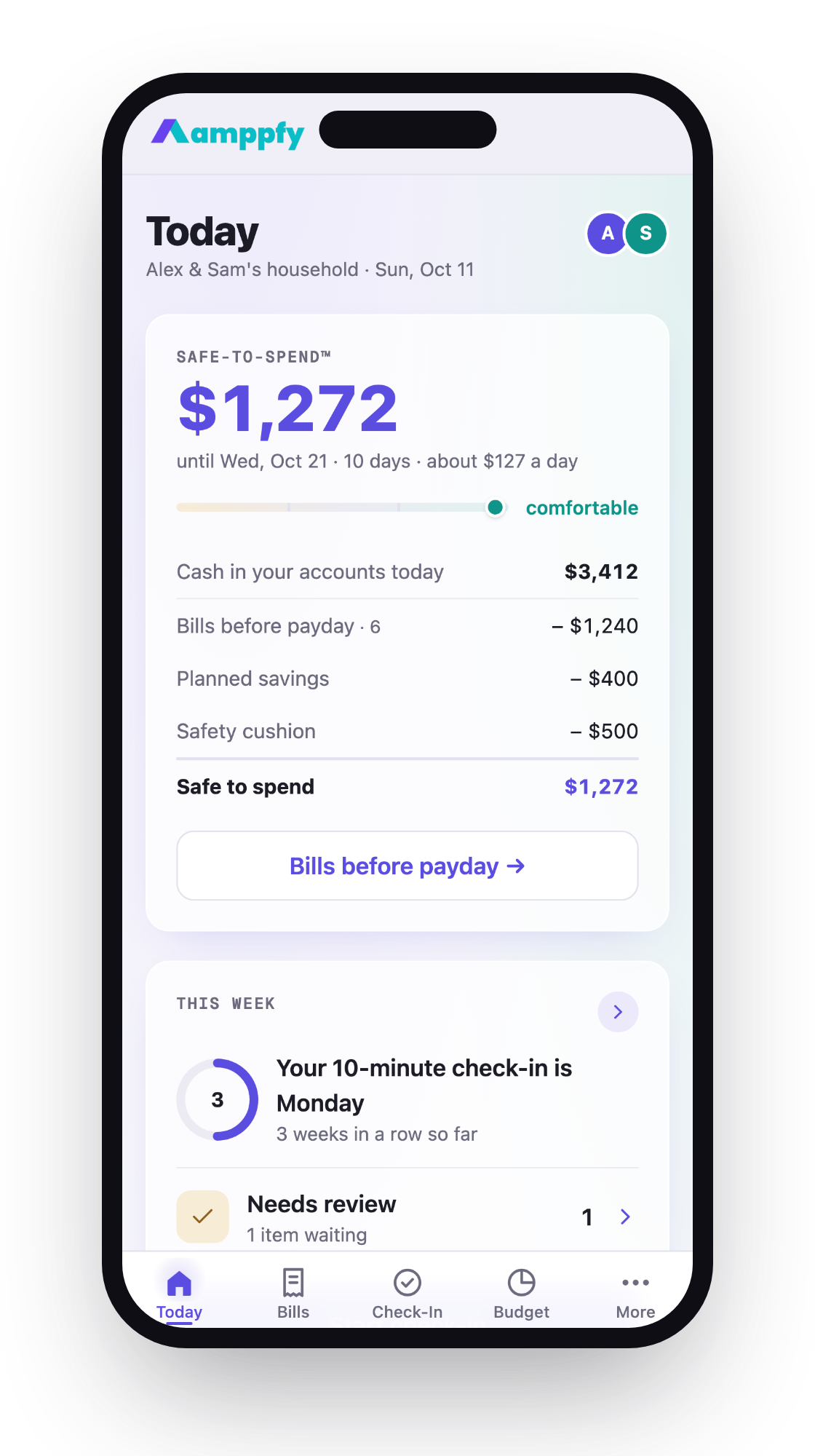
An app like Amppfy can help here. Enter your annuity as your payday, plug in your bills and a cushion amount, and your Safe-to-Spend™ number shows what’s actually available after everything due is accounted for. That single number: $2,800 cash – $1,800 bills – $200 savings – $300 cushion = $500: removes the mental math you’d otherwise do every time you open your wallet.
Coordinating With a Spouse’s Payments
If both you and your spouse receive RRB annuities, you’re both on the same first-business-day schedule. That means both deposits land on the same date each month. This simplifies planning but also concentrates all your household income into one day.
When One Spouse Gets Social Security Instead
Things get trickier when one partner receives an RRB annuity and the other receives Social Security. Social Security payments follow a different schedule based on the recipient’s birth date:
- Born 1st-10th: Payment on the second Wednesday of the month
- Born 11th-20th: Payment on the third Wednesday
- Born 21st-31st: Payment on the fourth Wednesday
This staggering means your household might receive income on two different dates each month. That’s actually an advantage for cash flow. You can assign certain bills to each payment date, spreading the load more evenly.
Dual Railroad Families
For households where both partners are railroad retirees, both checks arrive on the same day. The Tier II portion of each annuity increases[3] by 32.5% of the CPI-W rise, so both of you benefit from cost-of-living adjustments. Keep in mind that if either spouse also receives Social Security, the Tier I COLA increase may be offset to prevent duplicate adjustments.
If you’re managing two RRB payments plus household bills together, having one shared view of what’s safe to spend helps. Amppfy lets partners see the same Safe-to-Spend™ number while keeping individual account balances private: useful when you share bills but not every dollar.
A Quick Note on RMDs
If either you or your spouse turned 73 in 2026, the deadline for your first Required Minimum Distribution is April 1, 2027[4]. That withdrawal could affect your tax situation and change how much of your annuity you actually keep. Plan for it now rather than scrambling in March.
Frequently Asked Questions
What happens if my RRB payment doesn’t arrive on the scheduled date?
Wait one full business day past the expected date before contacting the RRB. Banks occasionally experience processing delays that resolve within 24 hours. If the payment still hasn’t posted, call the RRB at 1-877-772-5772. Have your claim number ready. The RRB can confirm whether the payment was issued and trace it if needed.
Can I change my RRB payment to direct deposit mid-year?
Yes. You can switch to direct deposit or change your bank information at any time by contacting the RRB or submitting the change through their online services. The switch typically takes one to two payment cycles to process, so your next check might still go to the old account or arrive as a paper check during the transition.
Do RRB annuity payments include a COLA increase each year?
They do. The Tier I portion of your annuity follows the same cost-of-living adjustment as Social Security. The Tier II portion uses a separate formula tied to 32.5% of the CPI-W increase. The COLA takes effect with the December 2026 benefit, so the payment arriving Monday, January 4, 2027 should be the first to reflect it.
Is my RRB annuity taxable?
Portions of your RRB annuity are subject to federal income tax. Tier I benefits are taxed the same way as Social Security benefits, meaning up to 85% may be taxable depending on your combined income. Tier II benefits are taxed as private pensions. You’ll receive Form RRB-1099 (or RRB-1099-R for Tier II) each January for the prior tax year.
Plan Once, Check Monthly
Knowing your 2027 RRB payment schedule removes one source of uncertainty from your monthly finances. Print or save the table above, set calendar reminders for each payment date, and align your bills to hit after your deposit arrives. If your spouse is on a different payment schedule, use that gap to your advantage by splitting bills across both dates.
You don’t need to re-plan every month. Spend ten minutes setting up your bills and payday once, and you’ll know your Safe-to-Spend™ number before each deposit even lands. Get Amppfy free on iPhone or the web: enter your balances, your annuity date, and your bills, and the number stays current with a quick weekly check-in.