How to Save Money on Groceries Every Week Without Extreme Couponing
Grocery bills have a way of creeping up when you’re not paying attention. One week you’re spending $150, the next it’s $200, and you’re left wondering where the extra $50 went. The truth is, most people leave serious money on the table every single shopping trip without realizing it. Smart shopping isn’t about clipping coupons for hours or eating rice and beans forever. It’s about making small, strategic decisions that compound into real savings over time.
The average American household spends roughly $270 per week on groceries, according to recent USDA data. That’s over $14,000 annually. Even a 20% reduction through smarter habits puts nearly $3,000 back in your pocket each year. That’s a vacation, an emergency fund boost, or simply less financial stress every month.
What separates people who consistently save on groceries from those who don’t is neither willpower nor sacrifice. It’s systems. The families spending less aren’t necessarily eating worse or spending more time shopping. They’ve just built habits that make saving automatic. This guide breaks down five practical steps that actually work for saving money on groceries every week, from planning your meals strategically to timing your shopping trips for maximum impact. None of this requires extreme couponing or giving up the foods you love.
Mastering the Art of Strategic Meal Planning
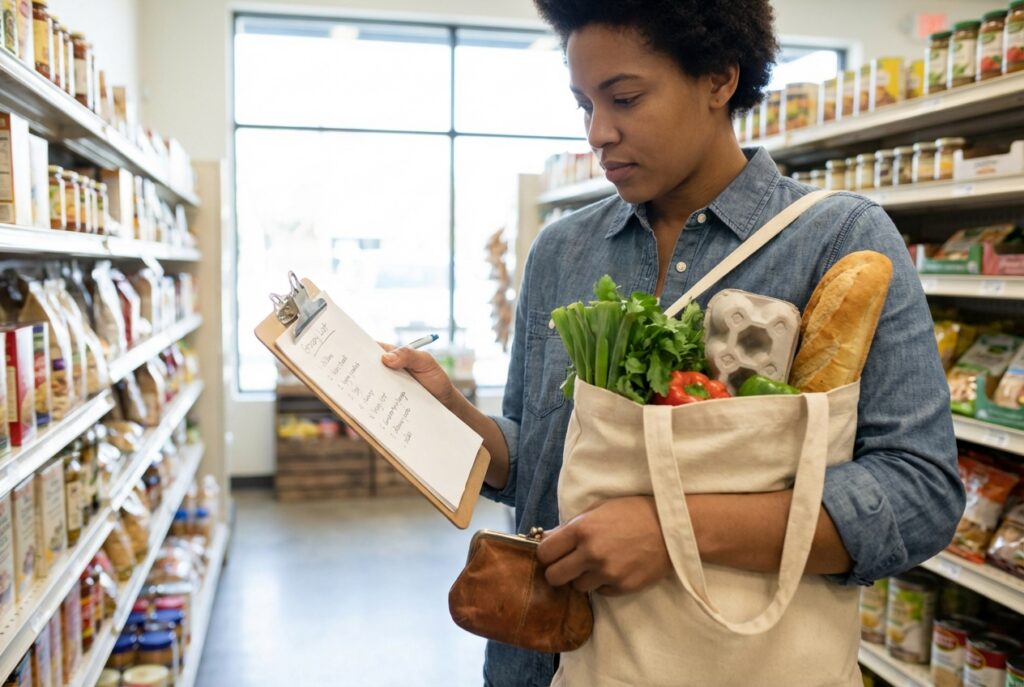
Meal planning sounds tedious until you realize it’s the single most impactful change you can make to your grocery budget. Without a plan, you’re essentially wandering into a store and hoping for the best. You buy ingredients that don’t go together, forget key items, and end up ordering takeout because nothing in your fridge makes a complete meal.
The magic of meal planning isn’t just about knowing what you’ll eat. It’s about eliminating the three biggest budget killers: impulse purchases, food waste, and emergency takeout runs. A family that meal plans typically saves 20-30% compared to one that shops without a list. That’s not a guess; it’s a pattern that shows up consistently in household spending data.
Start simple. You don’t need to plan every meal for the next month. Even planning five dinners for the coming week transforms your shopping efficiency. Build your plan around what’s on sale, what’s in season, and what you already have at home.
Inventory Check: Shop Your Pantry First
Before you write a single item on your grocery list, spend ten minutes going through your pantry, fridge, and freezer. This step alone can cut your weekly bill by $20-40 because most households have significant food they’ve forgotten about.
Here’s what to look for during your inventory check:
- Proteins in the freezer that need to be used before they get freezer burn
- Canned goods and dry staples are approaching their best-by dates
- Fresh produce that needs to be eaten within the next few days
- Condiments and sauces that can form the base of meals
- Grains, pasta, and rice that can serve as meal foundations
I’ve seen people buy a third can of diced tomatoes when two were already sitting in the back of the pantry. Multiply that across dozens of items over months, and you’re looking at hundreds of dollars in duplicate purchases.
Create a simple system: keep a running list on your phone of what’s in your freezer and pantry. Update it when you add or remove items. This takes seconds and prevents those “I thought we were out of this” moments at the store.
» Boost your savings effortlessly each month: Micro Savings Tricks That Add $50 to $200 A Month Without Pain Guide
Building a Menu Around Seasonal Produce
Seasonal produce isn’t just fresher and tastier; it’s dramatically cheaper. Buying strawberries in January means paying premium prices for fruit shipped from thousands of miles away. Buying them in June means getting better berries for half the cost.
The price difference is substantial. Asparagus in spring costs around $2-3 per pound. In winter, expect $5-7 for the same amount. Tomatoes in summer run $1-2 per pound locally; in February, you’re paying $4 or more for pale, flavorless versions.
Build your weekly menu around what’s currently in season:
- Spring: asparagus, peas, spinach, strawberries, artichokes
- Summer: tomatoes, corn, zucchini, berries, peppers, stone fruits
- Fall: squash, apples, pears, Brussels sprouts, sweet potatoes
- Winter: citrus, cabbage, root vegetables, kale, leeks
Check your store’s weekly ad before planning meals. If chicken thighs are on sale for $1.99 per pound, plan two chicken dinners that week. If ground beef is discounted, make tacos one night and meatballs another. Let the sales guide your menu rather than fighting against them.
» Reach your travel goals faster with smarter saving: Savings Account Hacks Travel Goals Guide
Leveraging Digital Coupons and Loyalty Programs
The coupon game has changed dramatically. Nobody needs to spend Sunday afternoons cutting paper coupons from newspapers anymore. Digital coupons load directly to your store loyalty card with a single tap, and the savings are often better than traditional paper coupons ever were.
Most major grocery chains now offer apps that combine loyalty rewards, digital coupons, and personalized deals based on your shopping history. If you’re not using these tools, you’re leaving money on the table every single trip. The average shopper who actively uses store apps saves $15-25 per week compared to those who don’t.
The key is making this a habit rather than an occasional effort. Spend five minutes before each shopping trip loading relevant coupons to your card. It becomes automatic after a few weeks.
Maximizing Savings with Store-Specific Apps
Every major grocery chain has an app, and they’re all competing to give you reasons to use them. Kroger, Safeway, Publix, Walmart, Target, and Albertsons: each offers digital coupons, weekly deals, and loyalty rewards through their apps.
Here’s how to maximize each trip:
- Download your primary store’s app and create an account linked to your loyalty card
- Browse the weekly digital coupons every Sunday or Monday when new deals drop
- Load coupons for items already on your list, plus staples you regularly buy
- Check for personalized offers based on your purchase history, as these are often the best deals
- Look for bonus point promotions that translate to fuel savings or future discounts
Some stores offer additional savings for online orders picked up curbside. Walmart and Target frequently discount items by an extra 5-10% for pickup orders. This also eliminates impulse purchases since you’re not walking the aisles.
Don’t overlook store-specific fuel programs. Kroger’s fuel points, for example, can save you up to $1 per gallon at their gas stations. If you’re filling a 15-gallon tank, that’s $15 in savings from grocery purchases you were making anyway.
Stacking Rebates with Third-Party Cashback Tools
Beyond store apps, third-party cashback apps let you earn additional savings on top of store coupons and sales. This is where smart shoppers really pull ahead.
The most popular cashback apps include Ibotta, Checkout 51, and Fetch Rewards. Each works slightly differently:
- Ibotta offers specific rebates on products you select before shopping, then you scan your receipt afterward
- Fetch Rewards gives points for any receipt you scan, with bonuses for specific brands
- Checkout 51 provides weekly rebates similar to Ibotta
The real power comes from stacking. Buy a product that’s on sale, use a digital store coupon, then submit the receipt to a cashback app. You’ve now saved three times on a single item. A box of cereal with a regular price of $4.99 might cost you $1.50 after combining a sale price, a store coupon, and an Ibotta rebate.
Set aside five minutes weekly to browse these apps and add offers for products you actually buy. Don’t let rebates drive you to purchase things you wouldn’t otherwise buy, as that defeats the purpose.
Smart Shopping Tactics Inside the Aisles
Your behavior inside the store matters as much as your preparation before arriving. Grocery stores are designed by experts in consumer psychology to maximize your spending. The layout, the lighting, the product placement: everything is calculated to encourage impulse purchases.
Understanding these tactics helps you resist them. The most expensive items sit at eye level. Essential staples like milk and eggs are placed at the back, forcing you to walk past tempting displays. End caps look like sales but often aren’t. Checkout lanes are lined with high-margin impulse items.
Armed with this knowledge, you can navigate the store strategically rather than reactively.
The Power of Generic and Store Brands
Store brands have come a long way from the generic white-label products of decades past. Major retailers now invest heavily in their private-label lines, and blind taste tests consistently show consumers can’t tell the difference between store brands and name brands for most products.
The savings are substantial. Store brands typically cost 20-40% less than their name-brand equivalents. On a $200 weekly grocery bill, switching to store brands where possible could save $40-80 weekly, or over $2,000 annually.
Products where store brands are virtually identical to name brands:
- Pantry staples like flour, sugar, salt, and cooking oil
- Canned vegetables, beans, and tomatoes
- Dairy products, including milk, butter, and cheese
- Frozen fruits and vegetables
- Over-the-counter medications, which are FDA-regulated to contain identical active ingredients
- Cleaning supplies and paper products
Some categories are worth paying for name brands if you have strong preferences: specialty items, certain snacks, or products where you’ve noticed a quality difference. But for most everyday items, store brands deliver equal quality at significantly lower prices.
Decoding Unit Pricing for Maximum Value
The price tag on the shelf tells only part of the story. The unit price, usually displayed in smaller text, reveals the true cost comparison between different sizes and brands.
Unit pricing shows the cost per ounce, per pound, or per count, allowing apples-to-apples comparisons. A 10-ounce jar of peanut butter for $3.50 might seem cheaper than an 18-ounce jar for $5.99, but the unit prices tell a different story: $0.35 per ounce versus $0.33 per ounce. The larger jar is actually the better deal.
This matters most for:
- Comparing different package sizes of the same product
- Evaluating whether bulk buying actually saves money
- Choosing between brands at different price points
- Deciding between fresh, frozen, and canned versions
Bigger isn’t always better. Sometimes, smaller packages are on sale, making them temporarily cheaper per unit. Always check the unit price rather than assuming bulk is the better value.
Reducing Food Waste Through Proper Storage
Americans throw away roughly 30-40% of the food they purchase. That’s not just an environmental issue; it’s a direct hit to your budget. If you’re spending $200 weekly on groceries and wasting a third of it, you’re essentially throwing away $65 every week.
Proper storage extends the life of your food significantly. Storing herbs correctly or incorrectly can mean the difference between fresh basil lasting three days or two weeks. Multiply that across your entire refrigerator, and the savings add up quickly.
Extending the Life of Fresh Produce
Different fruits and vegetables require different storage conditions. Getting this wrong causes premature spoilage; getting it right keeps produce fresh far longer than you might expect.
Key storage principles:
- Store ethylene-producing fruits like apples, bananas, and avocados separately from ethylene-sensitive vegetables like leafy greens and broccoli
- Keep potatoes, onions, and garlic in cool, dark places outside the refrigerator, but store them separately since they accelerate each other’s spoilage
- Wrap celery in aluminum foil to keep it crisp for weeks instead of days
- Store fresh herbs like flowers: stems in water, loosely covered with a plastic bag
- Don’t wash berries until you’re ready to eat them, as moisture accelerates mold growth
Invest in proper storage containers. Glass containers with airtight seals keep food fresh longer than flimsy plastic bags. Specialized produce storage containers with ventilation can extend the life of berries and greens by a week or more.
Consider your refrigerator’s zones. The crisper drawers maintain different humidity levels for a reason. High-humidity drawers work best for leafy greens and vegetables. Low-humidity drawers suit fruits and items prone to moisture damage.
Creative Ways to Repurpose Leftovers
Leftovers don’t have to mean eating the same meal twice. With a little creativity, yesterday’s dinner becomes today’s completely different lunch.
Transformation ideas that prevent food waste:
- Roasted vegetables become frittata fillings, grain bowl toppings, or blended into soup
- Leftover rice transforms into fried rice, rice pudding, or crispy rice cakes
- Cooked chicken works in tacos, salads, sandwiches, or pasta dishes
- Stale bread makes breadcrumbs, croutons, bread pudding, or French toast
- Overripe bananas are perfect for banana bread, smoothies, or frozen treats
Keep a “use it up” meal in your weekly rotation. One night per week, challenge yourself to create dinner entirely from leftovers and items that need to be used. This prevents the slow accumulation of forgotten food that eventually gets thrown away.
Freeze strategically. When you realize you won’t use something before it spoils, freeze it immediately rather than waiting. Cooked grains, chopped vegetables, and most proteins freeze well and can be pulled out for future meals.
Optimizing Your Shopping Schedule and Frequency
When and how often you shop affects your spending more than most people realize. The conventional wisdom of one big weekly shopping trip isn’t always the most economical approach. Similarly, daily trips to the store almost guarantee overspending through accumulated impulse purchases.
Finding your optimal shopping rhythm depends on your household size, storage capacity, and self-control in stores. But some principles apply universally.
Avoiding Impulse Buys with Mid-Week Trips
A single large shopping trip seems efficient, but often leads to overbuying. You purchase more than you need because you’re planning for an entire week, and some of that food inevitably goes to waste.
Consider splitting your shopping into two strategic trips:
- A main trip early in the week covers proteins, dairy, pantry staples, and produce that lasts well. A shorter mid-week trip replenishes fresh items like bread, quick-spoiling produce, and anything you ran out of. This approach reduces waste because you’re buying perishables closer to when you’ll use them.
- The mid-week trip works only if you maintain discipline. Go with a specific short list and stick to it. Don’t browse. Don’t wander into unplanned aisles. Get what you need and leave.
- Timing matters too. Shopping on Wednesday or Thursday often means better deals as stores discount items before the weekend rush. Early-morning or late-evening trips mean shorter lines and less crowded aisles, reducing the time you spend in the store and the temptation to browse.
Never shop hungry. This advice is repeated constantly because it’s consistently true. Shopping on an empty stomach increases impulse purchases by 60% or more. Eat something before you go, even if it’s just a small snack.
Making Savings Automatic
The real secret to saving money on groceries every week isn’t any single trick. It’s building systems that make smart choices automatic. When meal planning becomes your Sunday evening routine, when checking the store app happens naturally before each trip, and when you instinctively reach for store brands: that’s when savings happen without effort.
Start with one change this week. Maybe it’s doing a pantry inventory before your next shopping trip, or downloading your grocery store’s app. Once that becomes a habit, add another. Small changes compound into significant savings over time.
Your grocery budget is one of the most controllable expenses in your household. Unlike rent or car payments, you have direct control over how much you spend on food each week. The strategies outlined here aren’t about deprivation or sacrifice. They’re about spending smarter so you get more value from every dollar. That extra money in your pocket each month can go toward goals that actually matter to you, whether that’s paying down debt, building savings, or simply having more financial breathing room.
Frequently Asked Questions
Most households can reduce their grocery spending by 20-30% through consistent application of these techniques. On a $250 weekly budget, that’s $50-75 saved per week, or $2,600-3,900 annually. The biggest gains come from meal planning, reducing food waste, and switching to store brands. You won’t see dramatic results in the first week, but after a month of building these habits, the savings become obvious in your bank account.
Not always, which is why checking unit prices matters so much. Bulk buying saves money only when you actually use the product before it expires and when the unit price is genuinely lower. Warehouse stores like Costco offer great deals on many items, but their sizes can lead to waste for smaller households. Calculate the unit price and honestly assess whether you’ll use the quantity before assuming bulk is better.
The old-school extreme couponing approach isn’t necessary. Spend five minutes before each trip loading digital coupons to your store app and checking one cashback app like Ibotta. Focus on coupons for items already on your list rather than buying things just because you have a coupon. This minimal time investment captures most of the savings without the hours of work.
Most stores release new weekly ads on Wednesday, making Wednesday and Thursday good days to catch fresh sales before popular items sell out. However, shopping on Monday or Tuesday can score clearance deals as stores discount items from the previous week’s sale. For produce specifically, ask your store when they receive fresh shipments and shop shortly after for the best selection and longest shelf life.