Close Menu

    Subscribe to Updates

    Get the latest creative news from FooBar about art, design and business.

    What's Hot

    A Household Budget That Builds Itself From Your Bills

    October 3, 2026

    Budget Categories You Can Skip (and the Few That Matter)

    October 2, 2026

    Living on Last Month’s Income: How a One-Month Buffer Changes Everything

    October 2, 2026
    Facebook X (Twitter) Instagram
    Amppfy
    • AppNew
      • Amppfy on iPhone — one clear number with the math under itYour number, in your pocketFree on iPhone, with the same account on the web.
        • Download on the App Store
        • Prefer the web? Sign up free ›
      • The app
        • OverviewOne clear number for what’s safe to spend before payday
        • Safe-to-Spend™The four-line math, always shown
        • Weekly check-inTen minutes a week keeps it honest
      • Features
        • Bills & paydaysEvery bill and payday on one calendar
        • GoalsSavings that fund themselves first
        • For couplesTwo logins, one number you both trust
        • SubscriptionsWhat you pay monthly, and what cancelling gives back
        • Calendar & heads-upsYour month at a glance, a heads-up before bills land
        • Net worth & payday nudgeThe whole picture, month by month
        • BudgetWhere the month’s money goes, month by month
      • Trust & help
        • Security & privacyJust your balances, optional two-step verification
        • Help centerSetup, the number, check-ins, FAQ
        • Open the web appSame account, any browser
    • Personal Finance
      • Money Basics
        • How to Master Money Management
        • Psychology of Money Habits
        • How to Set Financial Goals
        • Money Management for Every Life Stage
        • Beyond Budgeting: Advanced Money Skills
        • Financial Literacy
        • Money Management
        • Know Your Money
        • Cash Flow
      • Financial Wellness
        • Understand Your Money Relationship
        • Build a Healthy Money Mindset
        • 7 Money Tips for Financial Freedom
        • Take the Money Health Quiz
        • Monthly Financial Reviews
        • Money Habits
        • Money Mindset
        • Financial Goals
        • Financial Independence
      • Side Hustles & Extra Income
        • 8 Realistic Side Hustles
        • How to Make Money Online
        • Passive Income Ideas That Work
        • Passive Income 101: Ideas That Scale
        • Spot a Bad Passive Income Deal
        • Start Freelance Writing: First $1,000
        • Budgeting with Irregular Income
        • Side Hustle Ideas
        • Passive Income
        • Gig Economy
      • Major Money Decisions
        • Plan a Major Purchase Without Debt
        • Car Buying: Save, Finance, or Lease?
        • Used Car Buying & Negotiation Tips
        • What to Save For vs. Finance
        • Life Insurance 101: Coverage Needs
        • Term vs. Whole Life Insurance
        • Buying a Car
        • Major Purchase Planning
        • Home Improvement
        • Life Insurance
      • Money Tools & Calculators
        • Net Worth Calculator
        • Cost of Living Calculator
        • Compound Interest Calculator
        • Monthly Budget Calculator
        • Savings Goal Calculator
        • Emergency Fund Calculator
        • Savings Calculator
        • Do Money Management Tools Work?
        • Spend Tracking
        • Net Worth
    • Savings
      • Budgeting Tips
        • The 50/30/20 Rule Explained
        • How to Make a Monthly Budget
        • How to Budget Money in 5 Steps
        • The Envelope Method Explained
        • Best Budgeting Apps Compared
        • Common Budgeting Mistakes
        • Budgeting for Couples
        • Start a Budget
        • Budget Methods
        • 50/30/20 Budgeting
      • Ways to Save
        • Save $500 This Month
        • 14 Ways to Cut Monthly Expenses
        • How to Save Money on Groceries
        • Lower Your Utility Bills
        • Budget Swaps for Big Purchases
        • Save Money on Car Insurance
        • Cut Expenses
        • Groceries Savings
        • Smart Saving Strategies
      • Emergency Fund
        • How Much Emergency Fund to Save
        • How to Build an Emergency Fund
        • Start a Rainy Day Fund
        • Sinking Funds vs. Emergency Fund
        • Emergency Fund Essentials
        • Where to Keep Your Emergency Fund
        • Best Emergency Fund Tips
        • Emergency Savings
        • Emergency Buffer
      • Savings Goals & Plans
        • How to Create a Savings Plan
        • How to Set Savings Goals
        • Track Spending Without Spreadsheets
        • 529 College Savings on a Budget
        • Saving During a Recession
        • Budget a Debt-Free Vacation
        • Vacation Budgeting
        • Family Budgeting
        • Savings Goals
        • Recession Saving
      • Savings Tools & Planning
        • Budget Calculator
        • Savings Goal Calculator
        • Emergency Fund Calculator
        • Savings Calculator
        • Compound Interest Calculator
        • Savings Buckets
        • Sinking Funds
        • Maximize Your Savings
        • Savings Tips
        • Savvy Saver
    • Debt
      • Get Out of Debt
        • Debt Snowball vs. Avalanche
        • Pay Off Credit Card Debt Fast
        • Beginner’s Credit Card Payoff Plan
        • Build a Debt Payoff Calendar
        • Use Windfalls to Crush Debt
        • Debt Free Journey
        • Debt Payoff
        • Credit Card Debt
      • Student & Auto Loans
        • Student Loans 101
        • Get Out of Student Loan Debt
        • Income-Driven Repayment Plans
        • Best Student Loan Repayment Option
        • Auto Loans: Shop & Save on Interest
        • Pay Off Your Auto Loan Early
        • Student Loans
        • Auto Loans
        • Auto Loan Debt
      • Debt Consolidation
        • Debt Consolidation Pros & Cons
        • Is Consolidating Debt Right for You?
        • Balance Transfers to Pay Off Debt
        • HELOC to Pay Off Credit Cards
        • 401(k) Rollover to Pay Down Debt
        • How to Refinance a Personal Loan
        • Before You Take a Personal Loan
        • Personal Loans
        • Personal Loan Refinance
      • Managing Debt
        • Navigating Medical Debt
        • Budgeting with a High-Interest Loan
        • Build a Debt-Repayment Fund
        • Debt Payoff for Single Parents
        • Save for a Wedding Without Debt
        • Medical Debt
        • Single Parent Debt
        • Personal Loan Debt
      • Debt Relief & Protection
        • When Bankruptcy Is an Option
        • Avoid Predatory Lenders & Scams
        • Negotiate with Creditors: Scripts
        • Budgeting Around Wage Garnishment
        • Debt Relief
        • Bankruptcy
        • Creditor Negotiation
        • Predatory Lenders
        • Wage Garnishment
    • Credit
      • Credit Scores
        • Credit Score 101
        • Check & Improve Your Credit Score
        • Credit Utilization: A Simple Fix
        • Check Your Credit Score Free
        • Rebuild Credit After a Setback
        • How Credit Scores Are Calculated
        • What Credit Scores Mean
        • Credit Health
      • Credit Reports
        • Read & Dispute Your Credit Report
        • Dispute Template That Works
        • How Long Negative Marks Last
        • Remove Negative Items
        • What to Expect as Items Age Off
        • Understanding Credit Utilization
        • Credit Basics
        • Checking Your Credit Score
      • Building Credit
        • Best Starter Credit Cards
        • Secured vs. Unsecured Cards
        • Secured Cards & Credit-Builder Loans
        • Build Credit as a Gig Worker
        • Boost Your Score Before a Mortgage
        • Borrow Now vs. Wait
        • Build Credit
        • Credit Cards for Beginners
        • Credit for Gig Workers
      • Credit Cards
        • Best Rewards Credit Cards
        • Credit Card Hacks: Intro APRs
        • Balance Transfers Explained
        • Earn Rewards Without Debt
        • Responsible Card Use & Rewards Tips
        • Lost or Stolen Card: What to Do
        • Credit Card Rewards
        • Balance Transfer Cards
      • Credit Protection & Safety
        • Identity Theft Checklist
        • Truth About Credit Freezes
        • How to Freeze & Thaw Your Credit
        • Credit Monitoring vs. Freezes
        • Credit Protection
        • Credit Freeze
        • Fraud Awareness
        • Financial Safety
    • Investing
      • Start Investing
        • Investing 101: Beginner’s Guide
        • Start Investing with $100
        • Start with $50/Month
        • Scared of the Market? Start Here
        • Open a Brokerage Account
        • Invest While Paying Down Debt
        • How to Start Investing
        • Start with Little Money
        • Fear of Investing
      • Investing Strategy
        • Roth IRA vs. Traditional IRA
        • Dollar-Cost Averaging Explained
        • DCA vs. Lump-Sum Investing
        • 5 Simple Starter Portfolios
        • Asset Allocation Beyond 60/40
        • How to Rebalance Your Portfolio
        • Diversify Your Portfolio
        • Investing Mistakes to Avoid
        • Investment Strategies
        • Diversification
      • Stocks
        • How the Stock Market Works
        • How to Make Money in Stocks
        • How to Read Stock Charts
        • Analyze Stocks in 5 Steps
        • P/E Ratio for Beginners
        • Bullish vs. Bearish Explained
        • How Stock Trading Works
        • Stock Market Basics
        • Stock Analysis
        • Stock Trading Strategies
      • Funds & Wealth Building
        • Beginner’s Guide to Index Funds
        • Best S&P 500 Index Funds
        • Mutual Funds vs. ETFs
        • How to Invest in ETFs
        • Dividend Investing for Beginners
        • Build a Dividend Income Stream
        • Maximize Your 401(k) Match
        • Build a Retirement Portfolio
        • Index Funds
        • Dividend Investing
      • Brokerages & Platforms
        • Vanguard vs. Fidelity
        • Fidelity vs. Schwab
        • Robinhood vs. E*Trade
        • Robo-Advisors vs. Human Advisors
        • Robo-Advisor or DIY Investing?
        • How Brokerage Fees Affect Returns
        • Manage Multiple Brokerage Accounts
        • Brokerages
        • Investment Platforms
        • Robo Advisors
    • Home
      • Home Buying
        • First-Time Homebuyer Checklist
        • How Much Down Payment You Need
        • How Much Home Can You Afford?
        • Renting vs. Buying
        • True Costs of Homeownership
        • Qualify as a First-Time Buyer
        • Buying a Fixer-Upper
        • First-Time Home Buyer
        • Home Affordability
      • Mortgage
        • First-Time Buyer’s Mortgage Guide
        • Fixed vs. Adjustable Mortgage
        • How to Refinance a Mortgage
        • Mortgage Payoff Strategies
        • Winning in a High-Rate Market
        • Mortgage Amortization Calculator
        • Down Payment Assistance Programs
        • Mastering Refinance Rate Locks
        • Mortgage Rates
        • Mortgage Refinance
        • Debt-to-Income Calculator
      • Real Estate Investing
        • Real Estate Crowdfunding Platforms
        • Rental Property Cash Flow
        • REITs for Passive Income
        • REITs vs. Direct Ownership
        • Fix-and-Flip Opportunities
        • Airbnb & Short-Term Rental ROI
        • Buying a Multi-Family Property
        • 1031 Exchange to Defer Taxes
        • Real Estate Investing
        • Rental Property
      • Home Insurance
        • Homeowners Insurance Guide
        • Compare Home Insurance Quotes
        • Best Home Insurance Companies
        • Choose Your Deductible
        • Renters vs. Homeowners Insurance
        • File a Property Insurance Claim
        • Home Insurance Coverage Basics
        • Home Insurance Rates
        • Home Insurance Claims
      • Home Equity & Ownership
        • Smart Ways to Use Home Equity
        • Save for a Down Payment
        • Down Payment Strategies
        • Estimate Property Appreciation
        • Home Equity
        • HELOC Payoff Strategy
        • Home Down Payment
        • Home Ownership
        • Home Renovation
    • Bank
      • Banking Basics
        • Open Your First Bank Account
        • Online Banks vs. Traditional Banks
        • How to Avoid Bank Fees
        • How to Switch Banks
        • Read Your Bank Statement
        • Second-Chance Checking Accounts
        • Get Better Rates from Your Bank
        • Banking Basics
        • How to Choose a Bank
        • Compare Banks
      • Checking Accounts
        • Best Checking Accounts
        • Choose the Right Checking Account
        • Overdraft Protection Guide
        • Stop Paying Overdraft Fees
        • The True Cost of Checking Fees
        • Mobile Check Deposits
        • How Long Checks Take to Clear
        • Checking Accounts
        • Best Checking Account
      • Savings Accounts & CDs
        • High-Yield Savings Explained
        • Best High-Yield Savings Account
        • Savings Accounts vs. CDs
        • What Is a CD?
        • Money Market vs. Savings Account
        • HYSA vs. Treasury Bills
        • How Savings Interest Is Calculated
        • Savings Account Minimum Balances
        • Savings Account
      • Bank Smarter
        • Top Banks for High-APY Savings
        • How Much Cash in Each Account
        • How Many Savings Accounts to Have
        • Managing Multiple Bank Accounts
        • Where to Put Your Money
        • When to Save vs. When to Invest
        • Savings Account Fees to Avoid
        • Banking Tips
        • Digital Banking
      • Banking Safety & Security
        • Set Up Bank Account Alerts
        • Avoid Check Scams
        • Missing Debit Card: Next Steps
        • When to Stop a Check Payment
        • Bank Fees
        • Debit Cards
        • Joint Bank Accounts
        • Banking How-To Guides
    • Tax
      • Tax Filing
        • Tax Filing for Beginners
        • How to File Freelance Taxes
        • Choose the Right Tax Software
        • Change Withholding Mid-Year
        • Handling Back Taxes
        • Year-End Tax Checklist
        • How to File Taxes
        • Tax Filing Basics
        • Tax Tips
      • Deductions & Credits
        • Tax Deductions 101
        • Tax Credits vs. Deductions
        • Child Tax Credit Explained
        • Child & Dependent Care Credit
        • Claim the Saver’s Credit
        • Moving Expense Deductions
        • Tax Deductions
        • Tax Credits
        • Child Tax Credits
      • Tax Strategy
        • Avoid Audit-Triggering Mistakes
        • Capital Gains Taxes Explained
        • IRA Tax Rules
        • Tax Basics for New Investors
        • Minimize Taxes for Your Heirs
        • Capital Gains Taxes
        • Retirement Taxes
        • Adjusted Gross Income
      • Tax Savings
        • Use an HSA to Lower Your Tax Bill
        • HSA: The Triple Tax Advantage
        • 529 Plans for Education Savings
        • Max the Match, Then What?
        • Tax Savings
        • Tax Refunds
        • Tax Bill
        • HSA
      • Gig & Life Situation Taxes
        • Freelancer & Gig Worker Taxes
        • Side-Gig Income & Your Taxes
        • Tax Strategies for Side Hustles
        • Taxes for Life Situations
        • Freelance Taxes
        • Gig Work Taxes
        • Child Tax
        • Dependent Care Credit
    • Sign In
    • Sign Up
    Amppfy
    Home » Budgeting and Saving » The Real Cost of a Pet: Budgeting Food, Vet Visits, and Surprises
    Budgeting and Saving

    The Real Cost of a Pet: Budgeting Food, Vet Visits, and Surprises

    Split your pet's costs into monthly, annual, and emergency buckets before you bring the animal home.
    Thomas T.By Thomas T.October 2, 2026Updated:October 2, 20269 Mins Read
    Facebook Twitter LinkedIn Email Copy Link
    The Real Cost of a Pet: Budgeting Food, Vet Visits, and Surprises
    Share
    Facebook Twitter LinkedIn Email Copy Link

    A puppy doesn’t hand you an invoice. Neither does a senior cat with a suddenly swollen paw. But every pet carries a price tag that stretches far past the adoption fee. Most people guess low, sometimes by thousands of dollars a year. Setting up a pet costs budget before you bring an animal home is the single best thing you can do for your wallet and your pet’s quality of life. This short guide breaks the numbers into monthly, annual, and emergency buckets so you can fit them into your regular bills and still know what’s safe to spend before payday.

    Monthly costs: food, litter, insurance, medication

    Your biggest recurring pet expense is food. A medium-sized dog eating a mid-tier kibble runs about $60 to $90 a month in 2026. A cat on a mix of wet and dry food costs $40 to $70. Premium or prescription diets push those numbers higher, sometimes double.

    After food, the costs depend on species.

    Amppfy app icon

    Amppfy

    Free on iPhone and the web

    Know what’s safe to spend before payday

    Your balances, bills, and payday. Ten minutes to one clear number, with the math shown under it. Learn more ›

    Download on the App Store

    Prefer the web? Sign up free ›

    Free  ·  No credit card  ·  Just your balances

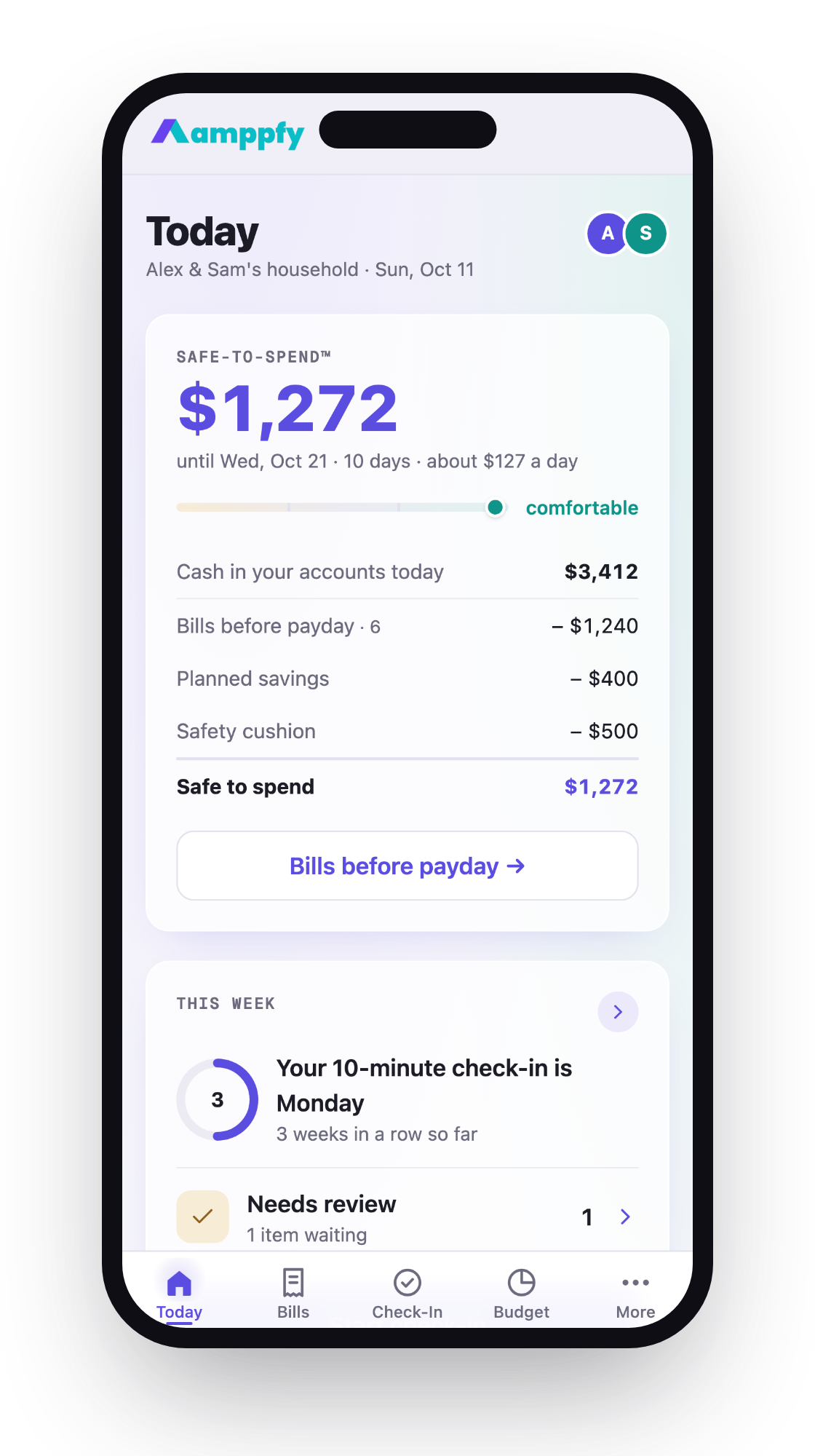
    Amppfy dashboard on an iPhone showing the Safe-to-Spend™ number with the math under it
    Monthly expense Dog (medium, healthy) Cat (indoor)
    Food $60 – $90 $40 – $70
    Treats and chews $15 – $25 $10 – $15
    Litter n/a $15 – $30
    Flea/tick/heartworm prevention $20 – $40 $15 – $25
    Pet insurance $40 – $70 $25 – $45
    Grooming $0 – $80 (breed-dependent) $0 – $10
    Subtotal $135 – $305 $105 – $195

    Pet insurance is optional, but it changes the math on emergencies. A plan with a $500 deductible and 80% reimbursement typically costs $40 to $70 a month for a dog. If your dog ever needs surgery, that premium pays for itself in a single claim. Skip insurance and you’ll want a larger emergency fund instead.

    Medication is the wild card. A healthy young pet may need nothing beyond prevention. An older dog on joint supplements or thyroid meds can add $30 to $60 a month. Ask your vet for a generic option whenever one exists.

    The point here is simple: add up your monthly pet line items the same way you’d list your phone bill or streaming subscriptions. They recur. They belong on the list.

    Annual costs: vaccines, licenses, checkups

    Some pet expenses hit once a year, and they’re easy to forget until the bill arrives.

    Vaccines and wellness exams

    A standard annual wellness visit for a dog runs $250 to $400, including core vaccines, a fecal test, and heartworm screening. Cats typically cost $150 to $250 for a similar visit. Puppies and kittens need a series of boosters in year one, which can push the first-year total to $400 to $600.

    Licensing and registration

    Most U.S. cities require a dog license. Fees range from $10 to $50 a year, with discounts for spayed or neutered animals. Cat licensing is less common but growing. Check your city’s animal services page for exact amounts.

    Dental cleaning

    Veterinary dental cleanings require anesthesia and typically cost $300 to $700 for dogs and $250 to $500 for cats. Not every pet needs one every year, but many do after age three. Your vet will flag it during the wellness exam.

    A quick way to handle annual costs: divide the total by 12 and set that amount aside each month. If your dog’s annual expenses total roughly $600, that’s $50 a month tucked into a dedicated savings goal. When the bill arrives, the money is already waiting.

    This approach turns a surprise into a line item. No scrambling, no credit card debt, just a predictable transfer.

    A vet fund for the visit you did not plan

    Routine care is predictable. Emergencies are not. A dog that swallows a sock, a cat with a urinary blockage, a torn ACL at the dog park: these visits start at $1,000 and can climb past $5,000.

    According to the American Kennel Club’s 2024 survey of pet owners, the average unexpected vet bill for dogs was around $1,500. That’s a number most households can’t absorb from a single paycheck.

    How to build a vet emergency fund

    • Pick a target. $1,500 is a reasonable starting point for one pet. $2,500 if you have two.
    • Set a timeline. Saving $125 a month gets you to $1,500 in a year.
    • Keep it separate. A savings goal earmarked for vet emergencies prevents you from accidentally spending it on something else.
    • Replenish after use. If you dip into the fund, restart the monthly contribution.

    If you carry pet insurance, your emergency fund can be smaller because insurance covers a large portion of surgical and hospitalization costs. Without insurance, the fund needs to be bigger. Choose one strategy or combine both, but don’t skip both.

    The worst financial outcome isn’t the vet bill itself. It’s making a medical decision for your pet based on what’s in your checking account that morning. A dedicated fund removes that pressure.

    Fitting pet costs into your bills-before-payday list

    Pet expenses aren’t optional once you have a pet. They’re fixed obligations, right alongside rent, utilities, and groceries. The trick is treating them that way.

    Step 1: List every pet cost by due date

    Write down each recurring pet expense and when it hits. Monthly food purchases, quarterly flea prevention, annual vaccines. Put them on the same list as your electric bill and car insurance.

    Step 2: Subtract them before you spend

    Your safe spending number should already account for pet costs. Here’s what that looks like:

    $3,800 paycheck – $1,600 rent/utilities – $180 pet costs – $400 savings goals – $300 cushion = $1,320 Safe-to-Spend

    That $180 covers monthly food, treats, prevention, and the $50-a-month set-aside for annual vet bills. The cushion absorbs small surprises. Your vet emergency fund handles the big ones.

    Step 3: Automate what you can

    Set up auto-ship for pet food and prevention meds. You’ll often save 5% to 10% through retailers like Chewy or your vet’s online pharmacy. Auto-ship also removes the temptation to “skip a month” when cash feels tight.

    Amppfy can help here. Enter your pet costs as recurring bills, and the app subtracts them before showing your Safe-to-Spend™ number. You see what’s actually available after every obligation is covered, pets included. The bills feature rolls charges forward automatically, so nothing falls off your radar.

    Couples sharing pet responsibilities get the same view. Both partners see the same number without duplicating the work.

    A worked example for a dog and a cat

    Meet Jamie and Alex. They earn a combined $7,200 a month after taxes, paid biweekly. They have a two-year-old Labrador mix and a four-year-old domestic shorthair cat.

    Their monthly pet budget

    Expense Dog Cat Total
    Food $75 $50 $125
    Treats $20 $10 $30
    Litter – $20 $20
    Flea/tick/heartworm $30 $18 $48
    Pet insurance $55 $30 $85
    Annual vet set-aside $35 $20 $55
    Monthly total $215 $148 $363

    That $363 goes on their bills list, right between the internet bill and the car payment.

    Their Safe-to-Spend math

    $7,200 income – $2,400 housing – $363 pet costs – $800 other bills – $600 savings goals – $400 cushion = $2,637 Safe-to-Spend

    Jamie and Alex know they have $2,637 for groceries, gas, dining out, and everything else until the next pay cycle. Pet costs are already handled. No guessing required.

    Their emergency vet fund

    They aim for $2,500 total. They saved $200 a month for a year and hit their target. Now they contribute $50 a month to keep it topped off. Because they carry insurance on both pets, they’re comfortable with that balance. A $3,000 emergency surgery would cost them roughly $1,100 out of pocket after the deductible and 80% reimbursement.

    This example shows how a budgeting plan for pet costs fits into a normal household. The numbers are specific to Jamie and Alex, but the structure works for anyone. Swap in your own income, your own pet, and your own bills.

    Frequently asked questions about budgeting for pet costs

    How much should I budget for a pet per month?
    Plan for $135 to $305 a month for a dog and $105 to $195 for a cat, based on 2026 averages. These ranges cover food, prevention meds, treats, and pet insurance. Your actual number depends on your pet’s size, age, and health. Add a monthly set-aside for annual vet visits and you’ll avoid most surprises.

    Is pet insurance worth it?
    It depends on your risk tolerance and savings. Insurance makes the most sense for young pets (lower premiums, longer coverage window) and breeds prone to expensive conditions like hip dysplasia or cancer. If you’d struggle to pay a $3,000 vet bill out of pocket, insurance is worth the $30 to $70 monthly premium. If you can self-insure with a well-funded emergency account, you might skip it.

    What’s the biggest hidden cost of pet ownership?
    Dental care. Many pet owners don’t realize their dog or cat needs professional dental cleaning under anesthesia, and it costs $300 to $700 per session. Dental disease can lead to infections and organ damage if left untreated, so this isn’t an expense you can ignore indefinitely. Ask your vet to check your pet’s teeth at every annual visit.

    How do I budget for a pet if I get paid biweekly?
    Divide your monthly pet costs by two and subtract that amount from each paycheck. If your pets cost $363 a month, that’s roughly $182 per pay period. Treat it like any other bill: subtract it before deciding what’s available to spend. In months with a third paycheck, the extra pay can go toward your vet emergency fund or a stockpile of food and supplies.

    Making pet costs part of your plan, not an afterthought

    Pets cost real money every single month. The numbers aren’t scary when you see them in advance. They’re only painful when they show up unplanned. Write down every recurring pet expense. Set aside a monthly slice for annual vet bills. Build an emergency fund or carry insurance, or both. Then subtract all of it before you decide what’s available to spend.

    If you want one place to see that math, Amppfy shows your Safe-to-Spend number after bills, savings, and your cushion are already subtracted. Add your pet costs as bills, and they’re covered before you touch a dollar. Take 10 minutes this week to list your pet expenses and plug them into your budget. Your pet, and your checking account, will be better for it.


    Amppfy app icon

    Amppfy

    Free on iPhone and the web

    Know what’s safe to spend before payday

    Your balances, bills, and payday. Ten minutes to one clear number, with the math shown under it. Learn more ›

    Download on the App Store

    Prefer the web? Sign up free ›

    Free  ·  No credit card  ·  Just your balances

    Amppfy dashboard on an iPhone showing the Safe-to-Spend™ number with the math under it
    budgeting tips emergency buffer Family Budgeting Family Costs Monthly Budget Sinking Funds Smart Spending
    Share. Facebook Twitter LinkedIn Email Copy Link
    Previous ArticleYour Teen’s First Paycheck: A Simple Budget to Start Good Habits
    Next Article Birthdays, Weddings, and Gifts: A Year-Round Plan So They Stop Surprising You
    Thomas T.

    Thomas is a Personal Finance Writer and Financial Content Strategist with over 10 years of experience helping individuals make smarter financial decisions. He specializes in topics such as budgeting, debt management, saving strategies, and financial behavior, translating complex financial concepts into clear, actionable guidance. His work focuses on empowering readers to build sustainable financial habits and confidently navigate their financial lives, combining data-driven insights with practical, real-world advice.

    More Like This

    A Household Budget That Builds Itself From Your Bills

    By Thomas T.October 3, 2026

    Living on Last Month’s Income: How a One-Month Buffer Changes Everything

    By Thomas T.October 2, 2026

    Budget Categories You Can Skip (and the Few That Matter)

    By Thomas T.October 2, 2026
    Amppfy app icon

    Amppfy

    Free on iPhone and the web

    Know what’s safe to spend before payday

    Your balances, bills, and payday. Ten minutes to one clear number.

    Download on the App Store

    Prefer the web? Sign up free ›

    Amppfy dashboard on an iPhone showing the Safe to Spend number with the math under it
    Helpful Resources

    A Household Budget That Builds Itself From Your Bills

    October 3, 2026

    Living on Last Month’s Income: How a One-Month Buffer Changes Everything

    October 2, 2026

    Budget Categories You Can Skip (and the Few That Matter)

    October 2, 2026

    Fun Money for Each Partner: How Much, Where It Comes From, and Why It Helps

    October 2, 2026

    Financial Clarity. Everyday Confidence.

    Facebook X (Twitter) YouTube LinkedIn
    Calculators

    Emergency Fund Calculator

    Compound Interest Calculator

    Interest Rate Calculator

    Net Worth Calculator

    Mortgage Calculator

    How Much Home Can I Afford

    Debt-to-Income Ratio Calculator

    Cost of Living Calculator

    Savings Calculator

    Savings Goal Calculator

    Monthly Budget Calculator

    Latest Resources

    A Household Budget That Builds Itself From Your Bills

    October 3, 2026

    Budget Categories You Can Skip (and the Few That Matter)

    October 2, 2026

    Living on Last Month’s Income: How a One-Month Buffer Changes Everything

    October 2, 2026

    Fun Money for Each Partner: How Much, Where It Comes From, and Why It Helps

    October 2, 2026
    About & Legal

    About Amppfy

    Documentation

    Editorial Policy

    EULA

    Terms of Use

    Acceptable Use Policy

    Privacy Policy

    Cookie Policy

    Disclaimer

    Do Not Sell or Share My Personal Information

    Acceptable Use Policy

    Disclaimer: Amppfy is committed to keeping its information transparent, accurate, and up-to-date. The information on Amppfy is provided for educational and informational purposes only and should NOT be considered financial, investment, tax, or legal advice. You should consult a qualified financial professional before making any financial decisions. This information may differ from what you find on the specific product or service provider’s website. All information, content, software, tools, products, or services on Amppfy are presented without warranty or guarantee. Please review the specific provider’s terms and conditions when evaluating products or services. By accessing Amppfy or using our AI generator tools, you acknowledge that you have read, understood, and agreed to our EULA, Terms of Use, Acceptable Use Policy, Privacy Policy, Cookie Policy, and Disclaimer. Amppfy.com uses cookies. For more information, visit Amppfy’s Cookie Policy. Amppfy may be compensated through third-party advertisers and affiliates. For more information, visit Amppfy’s Disclaimer.

    Copyright© 2026 Amppfy | All Rights Reserved

    Type above and press Enter to search. Press Esc to cancel.

    Advertiser Disclosure: Products may include affiliate links related to financial products or services. We may earn a commission at no additional cost to you. Our content remains independent and focused on helping you make informed financial decisions.
    Fact Checked
    Financial Disclaimer

    This content is for informational and educational purposes only and should not be considered financial advice. Personal finance decisions—including budgeting, saving, investing, credit, mortgages, taxes, and debt management—depend on your individual circumstances. Always consult a qualified financial professional before making financial decisions.

    Editorial Standards and Content Integrity

    Our editorial process ensures accuracy, clarity, and trust across all personal finance topics, including budgeting, saving, investing, and debt management. Content is created using credible sources such as government agencies, academic research, and established financial institutions, and may incorporate insights from industry experts when relevant. Each article is reviewed for accuracy, timeliness, and relevance before publication and updated as needed to reflect changes in financial guidelines and best practices, with the goal of providing clear, evidence-based information to help readers make informed financial decisions.

    Learn more about our editorial policy and guideline.
    Amppfy app icon

    Amppfy

    Free on iPhone and the web

    Know what’s safe to spend before payday

    Download the app and enter your balances, bills, and payday. About ten minutes to one clear number: what’s safe to spend before payday.Your balances, bills, and payday. Ten minutes to one clear number. Learn more ›

    Download on the App Store
    Scan with your iPhone to get the app

    Free  ·  No credit card  ·  Just your balances

    Prefer the web? Sign up free ›