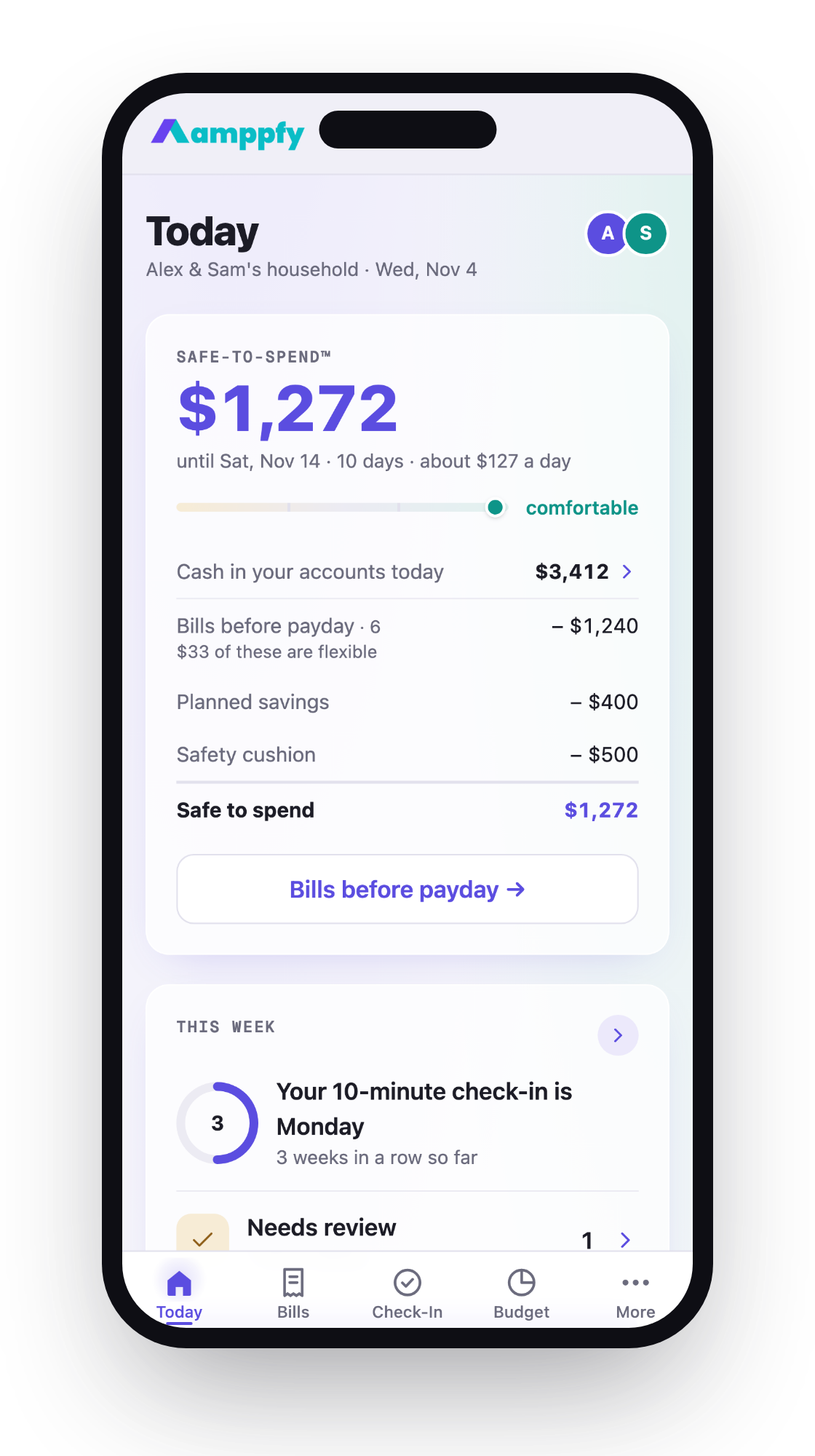


Your bank app shows a balance. It doesn’t tell you what’s actually free to use before payday. Many people want a budget on their phone, but they’d rather not hand over a bank username and password to get one.
That’s a reasonable choice. A budget app for Android without linking a bank account can do the job well, as long as you pick one whose upkeep fits your week. Some apps ask you to log every coffee and gas fill-up. Others ask for a few balances once a week. That difference matters more than any feature list.
This guide covers why people skip bank linking and what manual apps can and can’t do. It also compares five Android options with facts as of November 2026 and shows how much weekly effort each one needs. If you’re on iPhone too, or want the wider view, there’s a companion guide to budget apps without bank linking in 2026.
You’ll also get a 15-minute setup plan that works with any manual app. Then you can choose based on how your household actually runs.
Why some people skip bank linking on a phone
The reasons are usually ordinary. None of them call for worry.
- Privacy. Some people don’t want a third party holding their bank login. That’s a preference, not paranoia.
- A bank that doesn’t connect well. Smaller banks and credit unions sometimes sync poorly or not at all.
- Broken syncs. Connections drop. You re-link, wait, and find duplicate or missing transactions.
- Wanting to see the numbers yourself. Typing a balance means you’ve looked at it. That alone keeps you in touch with your money.
Manual entry has a quiet upside too. It makes it possible to include cash spending and choose which details to record. Cash from a side gig or a birthday card counts just as much as a direct deposit. An app that only reads your bank feed would miss it.
So if you’ve stopped using a budgeting app because sync kept breaking, you didn’t fail at budgeting. You picked a tool that needed a connection your bank couldn’t reliably provide. A manual app removes that weak link.
What manual budget apps can and cannot do
A manual budget app does exactly what you tell it. That’s the strength and the limit.
Here’s what one does well. It holds your categories, envelopes, or account balances. It does the arithmetic for you. It works when your bank’s servers don’t. Many run offline, and some keep data only on the device. Your figures stay as private as you want them.
Here’s what one can’t do. It won’t notice a purchase you forgot to enter. If you log transactions, a skipped day means a gap. Manual apps require consistent logging because forgotten purchases simply aren’t recorded. It also won’t pull in a refund or a surprise fee on its own.
The useful question isn’t “manual or linked.” It’s what kind of manual. The useful choice is between planning where money will go and keeping a record of where it went. Both approaches work without sharing your bank login.
That split shapes everything below:
- Record-keeping apps ask you to enter each transaction. You get a detailed history. You also get daily upkeep.
- Planning apps ask for balances, bills, and paydays. You get a forward-looking number. Upkeep is weekly, not daily.
Neither is wrong. One suits people who like detail. The other suits people who want an answer at a glance.
Manual budget apps for Android, compared
Below are five Android options. Every fact comes from each company’s own site or store listing as of November 2026. Where a company doesn’t publish something, the table says so.
| App | Price (as of Nov 2026) | What you type in | Bank linking | Partner sharing | Also on iPhone and web |
|---|---|---|---|---|---|
| Goodbudget | Free: 10 regular + 10 more envelopes, 1 account, 2 devices, 1 year of history. Premium $10/month or $80/year | Every transaction (or file import) | Paid tier only (transaction import on Premium) | Yes, sync and share across household devices | iPhone and web |
| EveryDollar | Free version “you can use as long as you want.” Premium $79.99/year ($6.67/month) or $17.99/month, 14-day trial | Every transaction | Paid tier only | Not published | Not published |
| Fudget | Free with in-app purchases. Fudget Plus $4.99/month, $19.99/year, $14.99 bi-yearly | Every transaction | None mentioned | Not published | iPhone; web not published |
| Money Manager | Free with in-app purchases. $2.49/month or $19.99/year | Every transaction | Listing mentions a debit-card connection that records expenses under an account | Not published | Not published |
| Amppfy | Free, no ads | Balances weekly | None | Yes, partner invite; private accounts stay private | iPhone and web |
A few notes on who each one fits:
Goodbudget uses the envelope method. You split income into envelopes and spend from them. It suits couples who like a shared, hands-on system. The free tier’s limits are generous for a simple household.
EveryDollar uses a zero-based method. Every dollar of income gets a job. It suits people who want to plan the whole month up front. The free version stays manual. Premium is the tier that connects a bank.
Fudget is the simplest of the group. You keep income and expense lists and “see what’s left.” It suits someone who wants a running tally and nothing more.
Money Manager, from Realbyte Inc., goes deeper. It offers double-entry bookkeeping, a monthly budget per category, a calendar view, receipt photos, and asset trend graphs. It suits detail-lovers who enjoy reviewing their spending.
Amppfy, the app behind this guide, takes the planning route. It starts with just your balances, bills, and paydays. It doesn’t import transactions.
How much upkeep each one needs per week
This is where these apps really differ. Price matters less than you’d think. Upkeep is what decides whether you’re still using the app in March.
Transaction-logging apps
Goodbudget’s free plan, EveryDollar’s free version, Fudget, and Money Manager all ask you to type each purchase. Count your typical week. Groceries twice, gas once, a few lunches, a streaming charge, a pharmacy run. That’s easily 15 to 25 entries.
At 20 to 30 seconds each, you’re looking at roughly 7 to 12 minutes a week. That’s spread across many small moments, every day. The time is manageable. The hard part is remembering, because a missed entry quietly throws off the total.
These apps work well if logging feels satisfying to you. Some people like the habit because it keeps every purchase in view.
Balance-entry apps
A balance-based app asks for something different. Once a week, you open each account and type its current balance. About 30 seconds per account.
Here’s the math. Checking, savings, and one credit card make three accounts. That’s 90 seconds of typing. Add a quick look at upcoming bills and goals, and the whole check-in runs about 10 minutes, once a week.
Your bank already records the transactions. You only copy the result. If you forget a coffee on Tuesday, nothing breaks. Your next balance already reflects it.
Which rhythm suits you
Ask yourself a simple question: would you rather do small tasks daily or one short task weekly? There’s no right answer. People who quit budgeting apps over upkeep often do better with the weekly rhythm.
Setting one up on Android in 15 minutes
This works with any manual app. Grab your phone, open your bank app in another tab, and start a timer.
- Write down your accounts and balances. Checking, savings, credit cards, and any cash you keep on hand. Use today’s figures. (About 3 minutes.)
- List your bills with due dates and amounts. Rent or mortgage, utilities, phone, insurance, subscriptions, loan payments. Check last month’s statement if you’re unsure. (About 6 minutes.)
- Add your paydays. Enter the next date and the frequency: weekly, every two weeks, twice a month. Add a partner’s paydays if you share bills. (About 2 minutes.)
- Pick a weekly check-in moment. Choose something you already do. Sunday coffee or Friday after work. Set a recurring reminder on your phone. (About 1 minute.)
Use the remaining few minutes to enter everything into your app. Whichever app you choose, these four inputs are the foundation.
In Amppfy, those four inputs become one number: Safe-to-Spend™. It’s available cash, minus bills due before payday, minus planned savings, minus a safety cushion you choose.
Here’s how that works with real figures:
- Available cash: $3,412
- Bills due before payday: −$1,240
- Planned savings: −$400
- Safety cushion: −$500
- Safe-to-Spend™: $1,272
The math is printed right under the number. You can always see why it says what it says.
Choosing one for your household
Start with how your money is set up, not with feature lists.
If you’re single and enjoy detail, Money Manager’s bookkeeping and graphs may suit you. If you just want a running list, Fudget keeps it plain.
If you share money with a partner, sharing matters most. Goodbudget syncs envelopes across household devices, which suits couples who budget together hands-on. Amppfy lets each partner log in separately and see the same number, while private accounts stay private. That fits hybrid setups where you share some bills but not everything.
If you want to plan every dollar before the month starts, EveryDollar’s zero-based approach fits. Expect to sit down at the start of each month to build the plan.
If you’re a single parent with little spare time, upkeep should drive your pick. A weekly balance check fits a full schedule better than daily logging. Look for heads-ups before bills, a calendar that shows your lowest-cash day, and a home-screen widget so the number is visible without opening the app.
If you’re coming back after quitting a budgeting app, ask why you left. Broken sync? Any manual app avoids that. Price hikes? Check the free tier limits in the table. Too much upkeep? Choose balances weekly over every transaction.
One honest test: try your top pick for two weeks. If you skip it twice, the rhythm doesn’t fit. Switch without guilt. The goal is a manual budget app on Android you’ll actually open, not the one with the longest feature list.
FAQ
Is a manual budget app less accurate?
Not if you keep it current. A balance you typed this week matches what your bank shows. Linked apps can be less accurate when syncs break or transactions duplicate. Accuracy depends on upkeep, not on the connection.
How often do I need to update it?
Transaction-logging apps work best with daily entries. Balance-based apps need one check-in a week, about 10 minutes. Update sooner after a large purchase or an unexpected bill.
Can two people use one manual budget on different phones?
Yes, with apps that support it. As of November 2026, Goodbudget syncs and shares across household devices, and Amppfy offers a partner invite with private accounts kept private. The other apps in this guide don’t publish partner sharing details.
What if my bank app already shows my balance?
Your bank app shows what’s in the account right now. It doesn’t subtract rent due Thursday or the savings you planned to move. A budget app adds those upcoming bills and goals, so you know what’s actually free to use before payday.
A calm way to start
You don’t need a bank connection to budget well on Android. You need a rhythm you’ll keep. Transaction apps like Goodbudget, EveryDollar, Fudget, and Money Manager give you a detailed record if you enjoy daily logging. A balance-based approach gives you a forward-looking answer for about 10 minutes a week.
Pick based on your household, your partner setup, and how much time you have. Then give it two honest weeks.
If you’d like to see your own Safe-to-Spend™ number before your next payday, Amppfy is free on Android, iPhone, and the web. Enter your balances, bills, and payday once, which takes about ten minutes, and the number stays current from there. Get Amppfy free and try it this week.