Your Social Security check doesn’t arrive on a random day. The SSA picks your payment Wednesday based on your birthday, and once you know the pattern, you can plan months ahead. Whether you’re helping a parent track deposits or coordinating household bills around a mid-month check, knowing the 2027 payment schedule removes the guesswork. Here’s how the dates break down, which months shift for holidays, and how to line up your bills so you’re never caught short.
How SSA Assigns Your Payment Wednesday
The Social Security Administration uses a simple rule: your birth date determines which Wednesday of the month you get paid. Your payment is determined by your birth date, the type of benefit, and the date you first began receiving payments[1].
Here’s the breakdown:
- Born on the 1st through the 10th: You’re paid on the second Wednesday of the month.
- Born on the 11th through the 20th: You’re paid on the third Wednesday.
- Born on the 21st through the 31st: You’re paid on the fourth Wednesday.
This system has been in place since 1997. It spreads out the SSA’s massive payment volume across three weeks instead of dumping everything on one day. The result is a predictable rhythm you can build your monthly plan around.
One exception: if you started collecting benefits before May 1997, or you receive both Social Security and SSI, you follow a different schedule entirely (more on that below). Everyone else falls into one of the three birthday groups above.
Your birth date never changes, so your payment Wednesday stays the same month after month, year after year. That consistency is the whole point. Once you identify your group, you can set calendar reminders, schedule autopay for bills, and stop wondering when the deposit will hit.
2027 Dates for Birthdays on the 1st to 10th, 11th to 20th, and 21st to 31st
Below are the expected payment Wednesdays for each birthday group in 2027. None of these Wednesdays is a federal holiday in 2027, so every date below is the actual payment date.
Birthday: 1st Through 10th (Second Wednesday)
| Month | Payment Date |
|---|---|
| January | January 13 |
| February | February 10 |
| March | March 10 |
| April | April 14 |
| May | May 12 |
| June | June 9 |
| July | July 14 |
| August | August 11 |
| September | September 8 |
| October | October 13 |
| November | November 10 |
| December | December 8 |
Birthday: 11th Through 20th (Third Wednesday)
| Month | Payment Date |
|---|---|
| January | January 20 |
| February | February 17 |
| March | March 17 |
| April | April 21 |
| May | May 19 |
| June | June 16 |
| July | July 21 |
| August | August 18 |
| September | September 15 |
| October | October 20 |
| November | November 17 |
| December | December 15 |
Birthday: 21st Through 31st (Fourth Wednesday)
| Month | Payment Date |
|---|---|
| January | January 27 |
| February | February 24 |
| March | March 24 |
| April | April 28 |
| May | May 26 |
| June | June 23 |
| July | July 28 |
| August | August 25 |
| September | September 22 |
| October | October 27 |
| November | November 24 |
| December | December 22 |
Print this table or save a screenshot. Knowing your exact dates twelve months out makes bill timing far easier.
If You Started Before May 1997: Payments on the 3rd
Not everyone follows the birthday-based Wednesday schedule. If you began receiving benefits before May 1997, or you receive both Social Security and Supplemental Security Income, your check arrives on the 3rd of every month.
That’s a fixed date, not a fixed weekday. So the 3rd falls on different days of the week throughout 2027:
| Month | Day of Week for the 3rd | Payment Date |
|---|---|---|
| January | Sunday | Thursday, December 31, 2026 (Friday, January 1 is New Year’s Day) |
| February | Wednesday | Wednesday, February 3 |
| March | Wednesday | Wednesday, March 3 |
| April | Saturday | Friday, April 2 |
| May | Monday | Monday, May 3 |
| June | Thursday | Thursday, June 3 |
| July | Saturday | Friday, July 2 |
| August | Tuesday | Tuesday, August 3 |
| September | Friday | Friday, September 3 |
| October | Sunday | Friday, October 1 |
| November | Wednesday | Wednesday, November 3 |
| December | Friday | Friday, December 3 |
When the 3rd falls on a weekend or federal holiday, the SSA pays you on the preceding business day. January 3, 2027, is a Sunday, and Friday, January 1 is New Year’s Day, so that payment arrives on Thursday, December 31, 2026. The same early-payment rule applies to April and July, where the 3rd lands on a Saturday, and to October, where it lands on a Sunday.
If you’re unsure which schedule applies to you, check your my Social Security account at ssa.gov. Your payment history will show the pattern clearly.
Dates That Move for Weekends and Holidays
The SSA doesn’t pay on weekends or federal holidays. When your scheduled date collides with one, the payment moves to the prior business day. This means you sometimes get paid a day or two early, but never late.
Key 2027 holidays and weekends that shift payments:
- New Year’s Day (January 1): Falls on a Friday. The January 3 payment for the 3rd-of-the-month group lands on a Sunday, and the Friday before is a holiday, so it arrives Thursday, December 31, 2026.
- April 3 and July 3: Both fall on a Saturday, so those payments arrive Friday, April 2 and Friday, July 2.
- October 3: Falls on a Sunday, so that payment arrives Friday, October 1.
- Washington’s Birthday (February 15), Thanksgiving (November 25), and the other 2027 holidays: None of them lands on a payment Wednesday, so the birthday-group dates don’t move.
The general rule is straightforward: if your payment date falls on a Saturday, you get paid Friday. If it falls on a Sunday, you get paid the preceding Friday. If it falls on a federal holiday, same thing: the prior business day.
Check the 2027 federal holiday calendar[2] to cross-reference your specific dates. For the Wednesday groups, nothing moves in 2027. For the 3rd-of-the-month group, January, April, July, and October are the ones to watch.
Lining Up Bills With a Mid-Month Check
Knowing your payment date is only half the equation. The other half is making sure your bills don’t cluster on the wrong side of that date. Research from Boston College found that low-income retirees are more likely to experience financial shortfalls as the pay cycle progresses[3], especially those paid late in the month. The fix is aligning your due dates with your deposit.
Here’s a practical approach:
- List every recurring bill with its current due date.
- Identify which bills hit before your Social Security payment and which hit after.
- Call creditors to move due dates. Most utilities, credit cards, and insurance companies will shift your due date by phone or online. It usually takes one billing cycle to kick in.
- Stack essential bills (rent, insurance, medications) within the first five days after your payment date.
- Push flexible bills (streaming, subscriptions, credit card minimums) to the second half of the gap.
If you’re born on the 21st through the 31st, your check arrives on the fourth Wednesday. That’s late in the month. You’ve got roughly three weeks of expenses before money lands. Moving your rent due date to the 28th or 1st instead of the 1st or 15th can eliminate the squeeze.
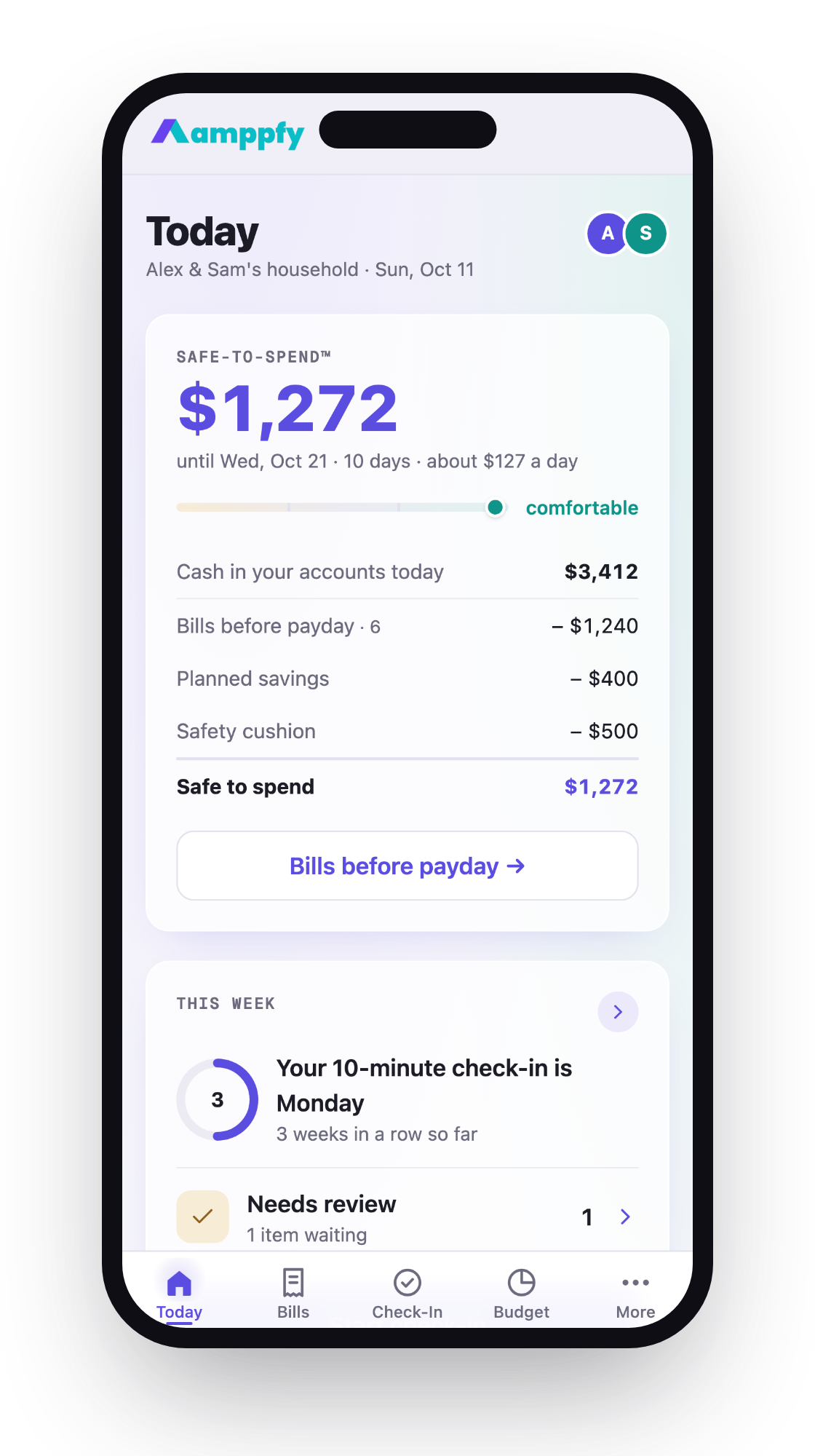
For households juggling Social Security alongside a regular paycheck, the math gets more interesting. Say your partner gets paid biweekly and your Social Security hits on the third Wednesday. You can treat the Social Security deposit as a dedicated bill-payment event: Social Security deposit – bills due before next income – savings – cushion = Safe-to-Spend™. That one-line calculation tells you exactly what’s available without guessing.
Amppfy can run that math for you automatically. Enter your Social Security payment as a recurring payday, plug in your bills, and the app shows one number: what’s safe to spend before your next deposit. It takes about ten minutes to set up, and a quick weekly check-in keeps everything current.
Frequently Asked Questions
What if I don’t know which birthday group I’m in?
Check the day of the month you were born, not the month or year. Born on the 7th of any month? You’re in the 1st-through-10th group and get paid on the second Wednesday. Born on the 25th? You’re in the 21st-through-31st group, paid on the fourth Wednesday. Your my Social Security account at ssa.gov also shows your next scheduled payment date.
Can I change my Social Security payment date?
No. The SSA assigns your payment date based on your birthday, and you can’t request a different one. The only way your date changes is if your situation changes, such as becoming eligible for SSI in addition to Social Security, which would move you to the 3rd-of-the-month schedule.
Will the 2027 COLA affect when I get paid?
The cost-of-living adjustment changes how much you receive, not when. Your payment date stays the same. If your Medicare Part B premium is deducted from your benefit, a premium increase can take part of the raise, so the change in your actual deposit can be smaller than the headline number suggests.
Do direct deposit and paper checks arrive on the same day?
Direct deposits post on the scheduled payment date, sometimes the evening before. Paper checks are mailed several days in advance to arrive by the payment date, but mail delays can push delivery a day or two later. If you’re still receiving paper checks, switching to direct deposit through ssa.gov eliminates that uncertainty.
Plan Once, Stop Worrying Every Month
The 2027 Social Security payment schedule follows the same birthday-based pattern the SSA has used for decades. Your birth date picks your Wednesday. Holidays occasionally shift a payment a day earlier. And the pre-May-1997 group still gets paid on the 3rd.
The real value of knowing these dates is what you do with them. Move bill due dates to match your deposit. Build a small buffer for months when holidays compress the gap. Keep the math visible so you always know what’s left.
If you want that number ready without a spreadsheet, get Amppfy free on iPhone or the web. Enter your balances, bills, and Social Security payday once, and you’ll see your Safe-to-Spend™ number before every deposit, no bank login required.