Your federal annuity hits your bank account on the same schedule every year, but the exact dates shift with weekends and holidays. Knowing when your OPM retirement payment lands in 2027 helps you plan bills, time withdrawals, and avoid that uneasy gap between “I think it’s coming” and “It’s here.” Whether you’re already retired or planning a late-2027 separation, this guide lays out every deposit date, how it lines up with Social Security, and the annual costs that quietly eat into your check.
When OPM Pays Federal Annuities
OPM annuity payments follow a simple rule. Your deposit arrives on the first business day of the month[1] for the benefit you earned during the previous month. January’s payment covers December. February’s covers January. The cycle repeats all year.
If the first of the month falls on a Saturday, Sunday, or federal holiday, the payment moves to the next business day. Unlike military retired pay or SSI, an OPM annuity never comes early; it comes a day or a few days late. That’s a small but meaningful difference for anyone scheduling auto-pay on rent or a mortgage.
Direct Deposit Timing
Most retirees receive funds via direct deposit. Your bank typically posts the credit by early morning on the payment date. Credit unions sometimes release funds a day ahead, but don’t count on it for planning purposes.
Interim vs. Full Payments
If you’re newly retired, OPM may issue interim payments while your case is processed. These are usually smaller than your final annuity. Plan for several months of reduced checks if you’re separating soon.
Paper Checks
A small number of retirees still receive paper checks. These are mailed several days before the payment date, but arrival depends on USPS delivery. Switching to direct deposit through OPM’s Services Online portal removes that guesswork entirely.
Every 2027 Payment Date
OPM retirement payment dates for 2027 follow the first-business-day rule. The table below shows each month’s scheduled deposit.
| Month | First of Month | Payment Date |
|---|---|---|
| January | Fri, Jan 1 (New Year’s Day) | Monday, January 4 |
| February | Mon, Feb 1 | Monday, February 1 |
| March | Mon, Mar 1 | Monday, March 1 |
| April | Thu, Apr 1 | Thursday, April 1 |
| May | Sat, May 1 | Monday, May 3 |
| June | Tue, Jun 1 | Tuesday, June 1 |
| July | Thu, Jul 1 | Thursday, July 1 |
| August | Sun, Aug 1 | Monday, August 2 |
| September | Wed, Sep 1 | Wednesday, September 1 |
| October | Fri, Oct 1 | Friday, October 1 |
| November | Mon, Nov 1 | Monday, November 1 |
| December | Wed, Dec 1 | Wednesday, December 1 |
A few things stand out. January’s payment arrives late, on Monday, January 4, because New Year’s Day is a federal holiday and the 2nd and 3rd fall on a weekend. May and August payments shift to the following Monday because the first falls on a weekend. Mark those months carefully: your deposit lands one to three days after the 1st, so bills drafted on the 1st can hit before the money does.
Keep this table somewhere you’ll actually see it. A screenshot on your phone works. So does taping it to the fridge. The point is to match these dates against your bill due dates so nothing slips through.
How It Lines Up with Social Security
Many federal retirees collect both an OPM annuity and Social Security. The two programs pay on completely different schedules, which can create odd cash flow gaps.
Social Security’s Schedule
Social Security pays based on your birth date:
- Born 1st-10th: Payment on the second Wednesday of the month
- Born 11th-20th: Payment on the third Wednesday
- Born 21st-31st: Payment on the fourth Wednesday
Your OPM annuity always arrives on or near the first of the month. Social Security lands mid-month or later. That means you could have a two- to three-week stretch between checks, depending on your birthday.
Bridging the Gap
If your bills cluster around the 15th, the gap between your OPM deposit (around the 1st) and your Social Security check (mid-to-late month) might not matter much. But if you have a mortgage due on the 1st and car insurance on the 20th, you’re essentially splitting your income across two paydays.
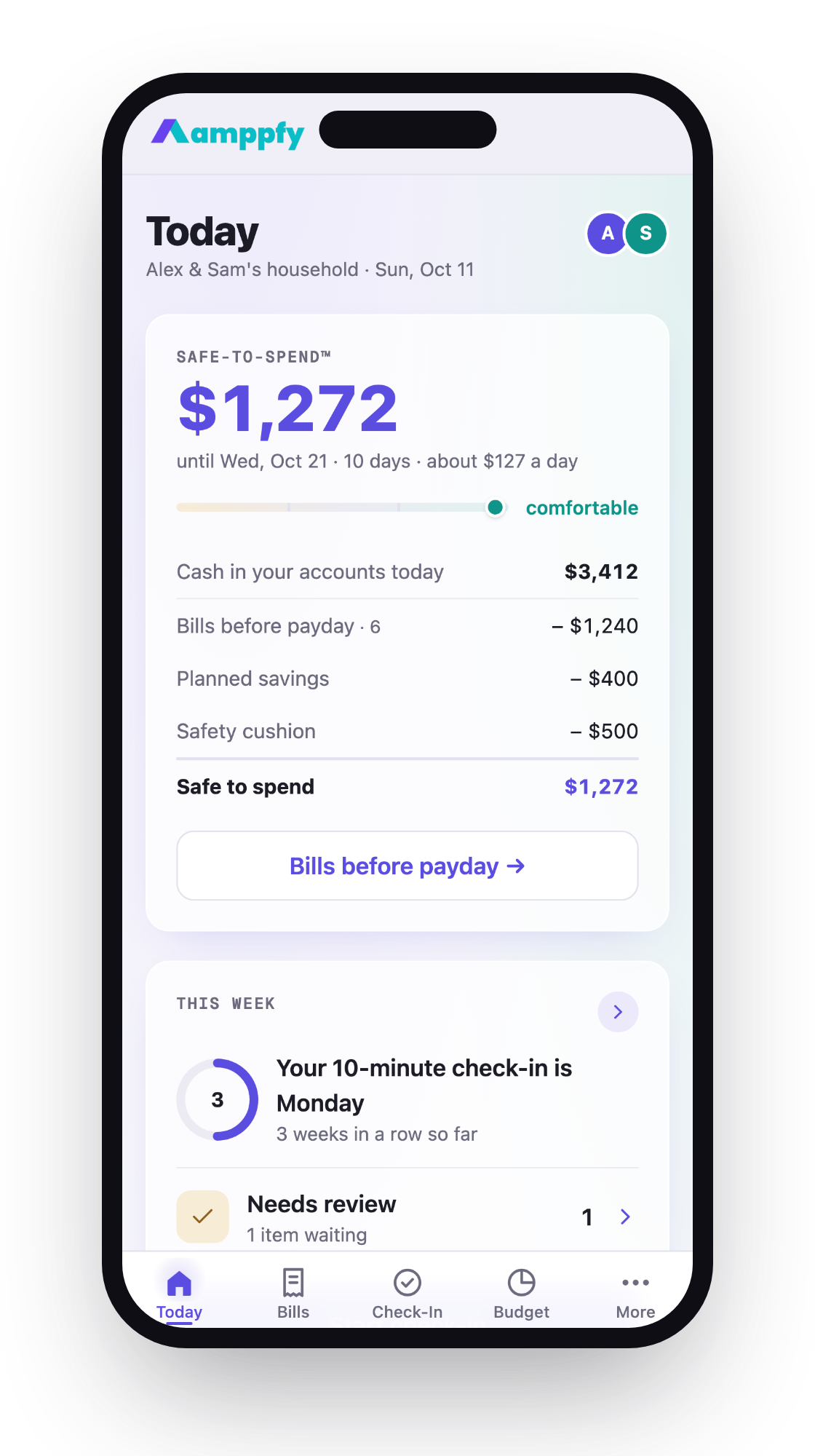
One approach: treat the OPM deposit as your “bills” paycheck and Social Security as your “living expenses” check. Assign fixed costs to the first and variable spending to the second. This mirrors how working households split paychecks across two paydays, and it’s the same logic behind tracking a Safe-to-Spend™ number: cash minus bills minus savings minus a cushion.
The COLA Split
Here’s a detail that catches people off guard. Social Security and OPM both apply cost-of-living adjustments, but FERS retirees get a reduced version. The final 2027 COLA is announced in October 2026. If it lands at 3.5%, CSRS retirees get the full 3.5%. FERS retirees get only 2.5% because of the 1-percentage-point reduction that applies when the COLA exceeds 3%. Social Security pays the full amount regardless.
One Monthly Deposit, Four Weekly Numbers
You get one OPM deposit per month. But your spending doesn’t work that way. Bills arrive weekly. Groceries happen weekly. Gas, prescriptions, and subscriptions hit at random intervals. One lump sum on the first doesn’t automatically mean you’re covered on the 28th.
Breaking It Down
Take your net annuity deposit and divide it into weekly chunks. If your net check is $3,200, that’s roughly $800 per week. Now subtract your fixed weekly obligations:
$800 weekly income – $320 rent/mortgage portion – $120 groceries – $60 insurance portion = $300
That $300 is what you can actually spend each week without dipping into next week’s share. It’s a rough version of the same math behind Amppfy’s Safe-to-Spend™ number: available cash minus bills due before your next deposit, minus savings, minus a cushion you pick.
Why This Matters for Couples
If you and your spouse both collect federal annuities, you’re getting two deposits on the same day. That’s great for cash flow on the 1st, but it can create a false sense of abundance. Two checks landing at once feels like a lot of money. By the 20th, it might not feel that way.
Splitting responsibilities helps. One person’s annuity covers housing and utilities. The other covers food, transportation, and discretionary spending. You don’t need a complicated spreadsheet. You need a clear agreement on which check pays which bills.
Watch the Calendar Quirks
In months where the payment arrives late (January, May, and August in 2027), the previous deposit has to stretch across more days than usual. April’s payment lands Thursday, April 1, and May’s doesn’t arrive until Monday, May 3: that’s 32 days between deposits. July 1 to Monday, August 2 is also 32 days. Budget accordingly.
Annual Costs Retirees Forget
Your gross annuity stays relatively stable year to year, adjusted for COLAs. But the deductions from that check don’t stay still. Several costs rise faster than the COLA, quietly shrinking your take-home pay.
FEHB Premium Increases
Federal Employees Health Benefits premiums are the biggest bite. In recent years, premium increases have often outpaced the COLA. Check your plan’s 2027 premium during Open Season. A $50-a-month increase alone can swallow most of a FERS COLA.
Required Minimum Distributions
If you turned 73 in 2026, your first Required Minimum Distribution deadline is April 1, 2027. That RMD from your TSP or IRA counts as taxable income. It could push you into a higher tax bracket or increase your Medicare Part B premiums through IRMAA surcharges. Plan the withdrawal timing carefully.
Other Deductions That Creep Up
- FEGLI (life insurance) premiums increase at ages 60, 65, and 70
- Medicare Part B premiums adjust annually based on income
- State income taxes apply in most states, and brackets shift
- Dental and vision premiums through FEDVIP change each plan year
A worked example: say your 2026 net annuity was $3,200/month. After a 2.5% FERS COLA ($80 increase) but a $50 FEHB hike and a $20 Part B adjustment, your net gain is just $10. That’s the math retirees miss. The COLA sounds generous until deductions catch up.
Planning for Late 2027 Separations
If you’re still working and eyeing a late-2027 retirement, ask your HR office which separation date works best for your annuity start date and your High-3. The answer depends on your retirement system, your leave balance, and your agency’s pay periods.
Frequently Asked Questions
What day does OPM deposit my annuity each month?
OPM deposits your annuity on the first business day of the month. When the 1st falls on a weekend or federal holiday, the payment moves to the next business day. In 2027, this affects January (paid Monday, January 4), May (Monday, May 3), and August (Monday, August 2).
Will my 2027 COLA cover my FEHB premium increase?
Probably not entirely. FERS retirees are looking at roughly a 2.5% COLA if the adjustment lands at 3.5%, and FEHB premium increases have often run higher than that. Compare your plan’s 2027 premium change with your COLA in dollars.
Can I change my tax withholding on my OPM annuity?
Yes. You can adjust federal tax withholding through OPM’s Services Online portal or by submitting a new W-4P form. Review your withholding after any COLA change or life event to avoid a surprise tax bill in April.
When should I plan my federal retirement date in 2027?
It depends on your retirement system, leave balance, and agency pay periods. Ask your HR office to run your annuity start date and High-3 for the separation dates you’re considering before you commit.
Keep Your Retirement Cash Flow Clear
Your OPM annuity payment dates in 2027 are predictable. The costs deducted from that check are less so. Print the payment table, compare it against your bill due dates, and check whether your COLA actually keeps pace with your rising premiums. That 10-minute review once a year saves real money.
If you want to see what’s actually safe to spend between deposits, get Amppfy free. Enter your balances, bills, and deposit dates once, about ten minutes, and you’ll always know your number before the next check lands.