You got the email. Your next paycheck is bigger. For about forty-eight hours, you feel like you finally have breathing room. Then the new number becomes normal, your spending shifts upward, and six months later you’re wondering where it all went. That pattern: lifestyle creep after a raise: is so common it has its own name. The good news is that a raise is still a raise. You don’t have to freeze your life in place to keep it. You just need a short plan before the money starts moving, and a simple check-in later to make sure it stuck. The steps below take less time than picking a restaurant for dinner, and they’ll put most of your raise exactly where future-you wants it.
Where raises usually go without anyone deciding
A raise doesn’t vanish in one dramatic purchase. It leaks. A slightly nicer lunch spot. A streaming tier upgrade. A “sure, why not” at checkout. None of these feel like decisions because none of them are. Your spending simply expands to fill the new balance in your account.
The math of small upgrades
Suppose your raise adds $400 per month after taxes. Here’s how quiet upgrades can absorb it:
| Upgrade | Monthly cost |
|---|---|
| Lunch out instead of packed | $120 |
| Premium streaming bundle | $22 |
| Nicer coffee habit | $55 |
| Upgraded phone plan | $30 |
| “Treat yourself” Amazon orders | $90 |
| Weekend dining bump | $80 |
| Total | $397 |
That’s nearly the entire raise, gone without a single moment of choosing. No one item looks unreasonable. The problem isn’t any one line: it’s that no line was intentional.
Why your brain cooperates with the leak
Psychologists call it hedonic adaptation. A new comfort level feels normal within weeks. Your brain recalibrates “baseline” upward, and the old baseline feels like deprivation. That’s why people earning $120,000 can feel just as tight as they did at $80,000. The raise didn’t fail them. The absence of a plan did.
According to the Federal Reserve’s 2023 Survey of Consumer Finances, the median savings rate for households earning between $50,000 and $99,999 was just 5.3%. Higher earners didn’t fare dramatically better. Lifestyle creep following a raise is a pattern that cuts across income levels.
Deciding the split before the first bigger check
The single most useful thing you can do is decide how to divide your raise before the money hits your account. Not after. Before. Once cash mingles with your checking balance, it stops being “raise money” and becomes “money.”
A simple split framework
Pick a ratio. Three common ones:
- 50/30/20 of the raise: 50% to savings or debt, 30% to spending you actually want, 20% to a financial goal like retirement or an emergency fund top-up.
- 70/30: 70% saved or applied to debt, 30% spent freely. Aggressive but still leaves room for enjoyment.
- Equal thirds: One-third savings, one-third debt payoff, one-third lifestyle. Clean and easy to remember.
There’s no perfect ratio. The point is choosing one and writing it down before the first bigger paycheck arrives.
A worked example
Say your raise is $6,000 per year, or about $375 per month after taxes. Using the 50/30/20 split:
$375 raise: $188 savings + $112 spending + $75 retirement = $375 allocated
You now have permission to spend $112 more per month. That’s real. That’s yours. And $263 is working for your future without you thinking about it again.
Make the split automatic
Set up the savings portion as an automatic transfer on payday. If your employer allows split direct deposit, send the savings share straight to a separate account. The money you never see is the money you never miss. This takes about ten minutes to arrange, and it’s the highest-return ten minutes you’ll spend this year.
Raising savings and the cushion first
Before you upgrade anything, shore up the two things that keep a raise from turning into stress later: your emergency cushion and your savings goals.
How much cushion is enough
A common target is three to six months of essential expenses. If you’re already there, great: skip ahead. If you’re not, your raise is a painless way to close the gap. You won’t feel the pinch because you never had this money before.
Here’s a quick check. Add up your monthly rent or mortgage, utilities, groceries, insurance, and minimum debt payments. Multiply by three. That’s your floor. If your savings account is below that number, direct the savings portion of your raise there first.
Stacking goals in order
Once your cushion is solid, point the savings portion toward whatever matters most to you:
- High-interest debt (anything above 7-8%)
- Retirement contributions up to your employer match
- A specific goal: down payment, car replacement, travel fund
- Extra retirement beyond the match
You don’t need to fund all four at once. Pick the top one. Fund it until it’s done or on autopilot. Then move to the next. Sequential beats scattered every time.
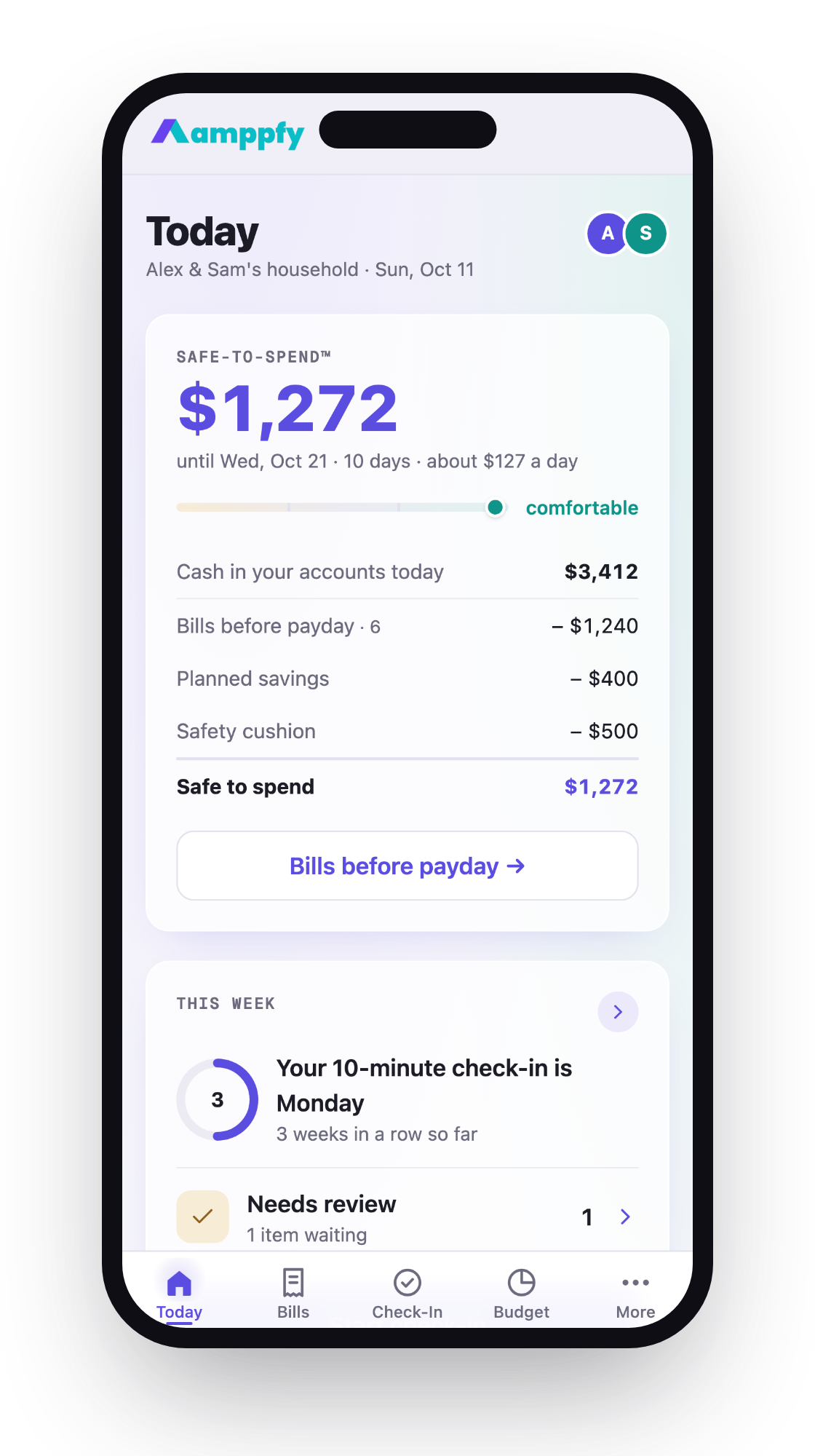
If you’re using Amppfy, your Safe-to-Spend™ number already subtracts planned savings and your chosen cushion from available cash. When you increase your savings goal after a raise, the number adjusts automatically. You see what’s genuinely available, not what’s sitting in checking.
Letting yourself enjoy part of it on purpose
Here’s the part most financial advice skips or buries in a footnote: you should spend some of your raise. On purpose. With zero guilt.
A raise you can’t feel isn’t motivating. It’s punishing. The goal isn’t to pretend the raise didn’t happen. It’s to direct the enjoyment so it doesn’t swallow the whole thing.
Choosing your upgrade deliberately
Pick one or two spending upgrades that genuinely improve your day. Not upgrades that look good on Instagram. Upgrades that you’ll still appreciate in three months.
Some examples that tend to hold their value:
- A gym membership or class you’ll actually attend
- Better groceries or a meal kit that saves weeknight stress
- A hobby budget: climbing gear, art supplies, a music subscription
- One recurring experience: a monthly date night, a quarterly weekend trip
Some upgrades that tend to fade fast:
- Subscription boxes you forget to open
- A car payment jump for a slightly newer model
- Clothes you buy because you “should” dress better now
- A bigger apartment when your current one is fine
The “wait two weeks” rule
Before committing to any new recurring expense, wait two weeks. If you still want it after fourteen days, it’s probably a real preference. If you forgot about it, you just saved yourself $30 a month for the next three years.
This rule is especially useful for couples. If you and a partner share finances, each of you can pick one personal upgrade from the raise. Discuss the shared ones together. The conversation takes fifteen minutes and prevents the slow drift where both people independently upgrade and the raise evaporates twice as fast.
Checking six months later
A plan without a check-in is a wish. Six months after your raise takes effect, spend ten minutes reviewing what actually happened.
What to look at
Pull up your bank and credit card statements. You’re looking for three things:
- Is the savings transfer still happening every pay period?
- Has any new recurring charge appeared that you didn’t consciously choose?
- Does your checking balance before payday look healthier than it did before the raise?
If all three answers are yes, your plan is working. If not, you have a specific thing to fix, not a vague sense of failure.
A simple before-and-after table
| Metric | Before raise | Six months after |
|---|---|---|
| Monthly savings transfer | $200 | $388 |
| Emergency fund balance | $2,400 | $3,528 |
| New subscriptions added | – | 1 (gym, $45) |
| Safe-to-Spend before payday | $310 | $420 |
If your numbers look like this, you kept most of your raise. The gym is intentional. Your cushion grew. Your Safe-to-Spend improved. That’s a raise that actually raised something.
Course-correcting without drama
If the numbers don’t look right, don’t panic. Open your subscriptions list and cancel anything you haven’t used in 30 days. Reset your automatic savings transfer if it got paused. Pick one spending leak to plug. That’s it. No shame spiral. Just a small adjustment.
Amppfy’s weekly check-in takes about ten minutes. You update your balances, glance at upcoming bills and subscription charges, and confirm your Safe-to-Spend number still makes sense. If a raise has quietly disappeared into new charges, that number will show it before your next paycheck.
Frequently asked questions about lifestyle creep after a raise
How much of my raise should I save versus spend?
A common starting point is saving at least half and spending the rest intentionally. The 50/30/20 split (of the raise, not your whole income) works well: 50% to savings or debt, 30% to lifestyle upgrades you chose on purpose, and 20% to long-term goals like retirement. Adjust based on where you stand with your emergency fund. If your cushion is thin, lean heavier toward savings until it’s solid.
What if my raise barely covers inflation?
If your raise roughly matches the Bureau of Labor Statistics’ Consumer Price Index increase (which was around 2.8% for the 12 months ending March 2026), your purchasing power stayed flat. In that case, treat it as a maintenance raise rather than a windfall. Focus on keeping your savings rate steady rather than increasing lifestyle spending. Even holding the line is a win when prices are rising.
Can couples prevent lifestyle creep when only one partner got a raise?
Yes, but it requires a short conversation. Decide together how the raise gets split between shared goals and personal spending. Each partner can claim a small personal upgrade. The shared portion goes to joint savings or debt. If you use a shared tool like Amppfy, both partners see the same Safe-to-Spend number, which keeps the plan visible without one person playing accountant.
What are the warning signs that lifestyle creep has already started?
Watch for these red flags: your checking balance before payday hasn’t improved despite earning more, you’ve added two or more new subscriptions you rarely use, you can’t name a specific savings goal your raise is funding, or you feel just as tight as you did before the raise. Any one of these is a signal to revisit your split and reset your automatic transfers.
Keep your raise working for you
A raise is one of the simplest ways to improve your financial position, but only if some of it actually lands in savings. The whole strategy fits on an index card: decide the split before the first bigger check, automate the savings portion, pick one or two intentional upgrades, and check back in six months. You don’t need to be perfect. You just need a plan that runs on autopilot and a brief look backward to confirm it’s still on track. Take fifteen minutes this week to set your split. Your future self will notice.