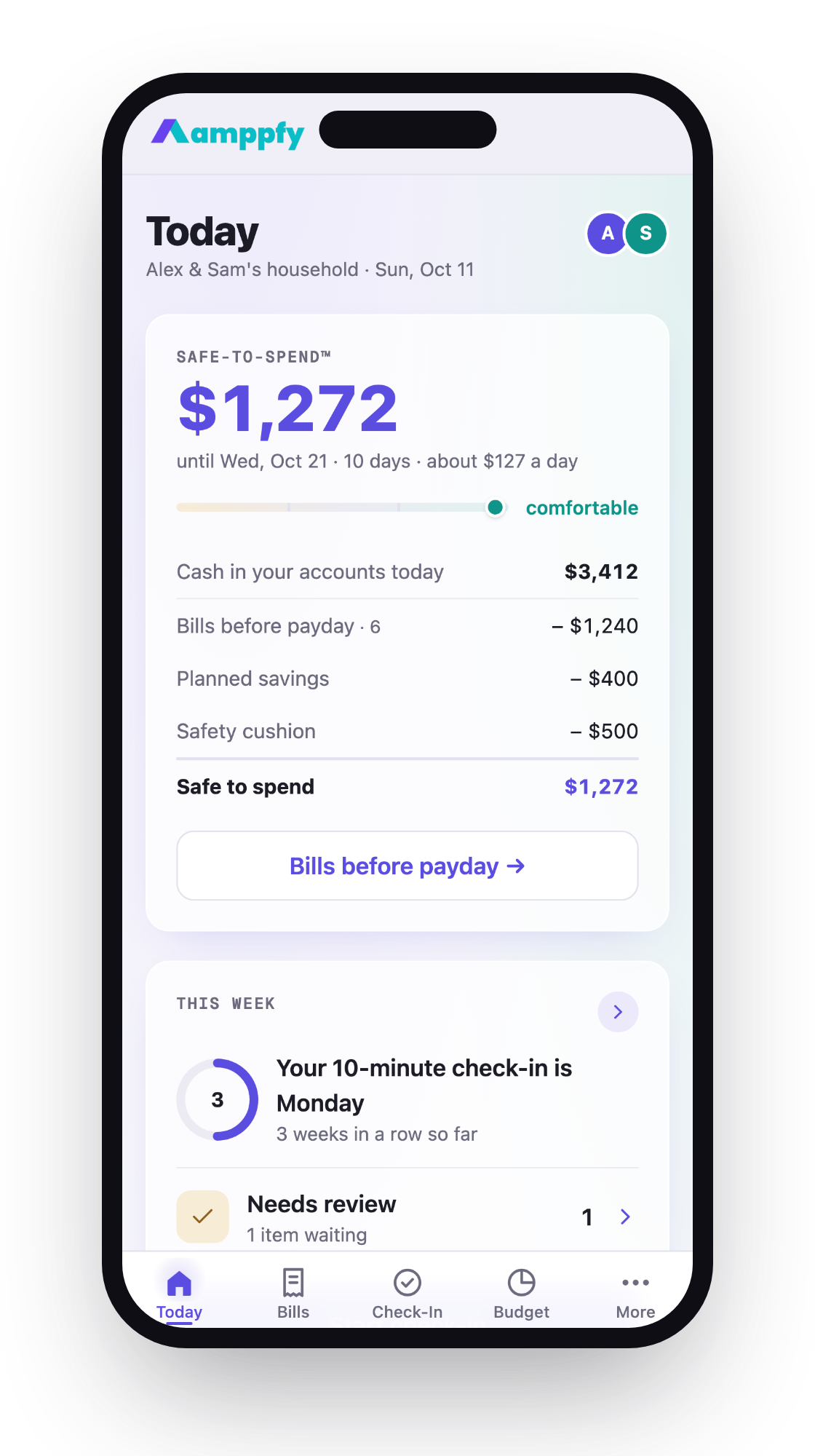
You checked your bank balance and the number is lower than it should be. Maybe it was a car repair, a birthday dinner that got out of hand, or three separate “small” purchases that added up fast. The money is gone. The pay period isn’t over. That sinking feeling is real, but it doesn’t have to run the rest of your month. Resetting your budget after you’ve spent too much is a skill, not a punishment, and it takes less time than you think.
Look at the Real Number Before Deciding Anything
The first step is the hardest: open your accounts and look. Not a guess. Not a rough idea. The actual balance sitting in your checking account right now.
Panic thrives on vagueness. When you don’t know the real number, your brain fills the gap with worst-case scenarios. Write down your current cash on hand. Then subtract what’s still owed before your next paycheck lands.
Here’s a quick example of what that math looks like:
| Line Item | Amount |
|---|---|
| Current cash on hand | $2,180 |
| Bills still due this pay period | -$940 |
| Savings you planned to set aside | -$200 |
| Safety cushion | -$150 |
| What’s actually safe to spend | $890 |
That last line is the only number that matters right now. Amppfy calls this your Safe-to-Spend™ figure: available cash minus bills due before payday, minus planned savings, minus a cushion you pick. The four-line math prints right under the number so you can see exactly where it comes from.
If your safe-to-spend number is positive, you have room. It might be tight, but you’re not in crisis. If it’s negative, you need to make moves, and the next section covers exactly which ones.
Don’t average it out
One common mistake is dividing whatever’s left by the number of days until payday and calling that your “daily budget.” That ignores the fact that your bills don’t land evenly. A $400 rent payment on day 8 doesn’t care that you budgeted $30 a day. Look at what’s due and when, not just the total.
Which Bills Are Safe and Which Need Moving
Not all bills carry the same consequences if they’re late. Once you know your real number, sort your remaining obligations into two groups.
| Priority | Examples | Why |
|---|---|---|
| Can’t move | Rent/mortgage, insurance, loan minimums, childcare | Late fees, credit damage, or loss of coverage |
| Can shift | Streaming services, gym membership, non-urgent subscriptions | Usually cancellable or pauseable without penalty |
Start with the bills that carry real penalties. Rent, utilities, car payments, and insurance premiums stay locked. These are non-negotiable.
Then look at everything else. That subscription renewal hitting in four days? Pause it. The auto-pay for a meal kit service? Skip the next box. You’re not canceling your life. You’re buying yourself a week or two of breathing room.
Check your next-charge dates
Most people forget when subscriptions actually bill. Pull up your bank statement or your Amppfy subscriptions list and note the next charge date for each recurring payment. If something bills before payday and you don’t need it this week, pause or cancel it now. Even $15 or $30 freed up can cover groceries for a couple of days.
Call before you’re late
If a bill you can’t skip is going to be tight, call the provider before the due date. Many utility companies and even some lenders will shift a due date by a few days with a simple phone call. The key is asking before you miss the payment, not after.
Adjusting the Rest of the Cycle Without Punishment
Here’s where most advice goes wrong. It tells you to “cut everything” and eat rice for two weeks. That kind of restriction usually backfires. You white-knuckle it for a few days, then spend impulsively because you feel deprived.
A better approach: pick two or three specific spending categories to reduce, not eliminate. Be precise.
- Groceries: plan meals around what’s already in your fridge and pantry. Buy only what fills the gaps.
- Transportation: combine errands into one trip. Skip the drive-through coffee on the way.
- Entertainment: swap paid outings for free ones this week. A park, a library, a movie you already own.
The goal isn’t suffering. The goal is finishing the pay period with your bills paid, your essentials covered, and maybe a little left over.
Switch your payment method
Research on spending psychology shows that digital wallets can reduce the psychological discomfort of paying[1], making it easier to tap and go without thinking. If you’ve been using tap-to-pay for everything, try switching to your physical debit card or cash for the rest of the period. The slight friction of inserting a card or counting bills creates a small pause. That pause is often enough to ask yourself, “Do I actually need this right now?”
Recalculate your safe-to-spend number
After you’ve paused subscriptions and trimmed a few categories, run the math again. Your new number might look like this:
$2,180 cash – $940 bills – $100 savings (reduced from $200) – $150 cushion = $990
You just gave yourself an extra $100 of breathing room by temporarily lowering your savings contribution. That’s not failure. That’s adjusting.
Why One Slip Does Not Undo the Plan
A single rough pay period doesn’t erase months of progress. But it can feel that way. One bad week and suddenly the voice in your head says, “See? You’re terrible with money. Why bother?”
That voice is wrong. Financial vulnerability is at its highest recorded level since tracking began in 2018[2], with 17% of U.S. households now classified as financially vulnerable. You’re not alone in this, and you’re not broken.
Think of it like a flat tire. You don’t slash the other three tires and set the car on fire. You fix the flat and keep driving. A budget works the same way. The spending already happened. You can’t undo it. But you can finish this pay period with a plan and start the next one on solid ground.
A single spending slip doesn’t undo the rest of your progress[3], even though it can feel like proof that the whole system failed. It isn’t. The system is still there. You just need to re-enter your current numbers and look at the updated picture.
What actually matters over time
Your budget is a pattern, not a single data point. One pay period where you went over doesn’t change the trend if you course-correct. What matters is the habit of checking in, adjusting, and moving forward. That’s the skill you’re building.
Learning From It at the Next Check-In
Once payday hits and the pressure eases, spend ten minutes reviewing what happened. Not to beat yourself up. To get useful information.
Ask yourself three questions:
- What triggered the extra spending? Was it planned (a car repair) or impulsive (late-night online shopping)?
- Could you have seen it coming? Some expenses are truly unexpected. Others have warning signs, like knowing your tires were worn or that a friend’s birthday was coming up.
- What’s one small change for the next cycle? Maybe it’s adding a $50 “stuff happens” line to your budget. Maybe it’s unsubscribing from a retailer’s email list.
Write down the answer to question three. Just one change. Not five. Not a complete overhaul. One adjustment you’ll actually follow through on.
Build a buffer line into your budget
If you don’t already have a miscellaneous or “life happens” category, create one. Even $25 or $50 per pay period set aside for unplanned spending can prevent the next slip from throwing everything off. This isn’t an emergency fund. It’s a pressure valve for normal life being unpredictable.
Amppfy’s weekly check-in takes about ten minutes. You update your balances, glance at your Safe-to-Spend number, and confirm your bills are on track. That small habit is what turns a one-time reset into a repeating pattern of staying ahead.
Frequently Asked Questions
How do I create a realistic budget after I’ve already spent too much this pay period?
Start with your actual bank balance, not what you wish it were. Subtract every bill still due before payday, subtract any savings you want to protect, and subtract a small cushion. The number left is what you can spend. If it’s tight, look for subscriptions to pause and meals you can make from what’s already in your kitchen. You’re not building a new budget from scratch. You’re adjusting the one you have with real numbers.
Should I skip my savings contribution to cover the gap?
Reducing your savings temporarily is a valid move. Skipping it entirely is a last resort. Try cutting the contribution in half first. If you normally save $200 per paycheck, drop to $100 for this cycle and restore it next time. The goal is to keep the habit alive, even at a lower amount, so you don’t lose momentum.
How do I stop feeling guilty about spending too much?
Guilt doesn’t pay bills or fix budgets. What helps is action. Run your numbers, make your adjustments, and move on. Remind yourself that one rough pay period is a data point, not a verdict. If the guilt keeps spiraling, write down exactly what you spent and why. Seeing it on paper often shrinks it back to its actual size.
What if my partner and I overspent together and now we’re both stressed?
Sit down with the same set of numbers. When both people can see the same safe-to-spend figure, the conversation shifts from blame to problem-solving. Decide together which expenses to pause and how to split the adjustment. Tools like Amppfy let both partners view the same number with their own login, which keeps the conversation grounded in math instead of feelings.
Your Next Ten Minutes
You spent more than you planned. That’s done. What isn’t done is the rest of your pay period, and you now have a clear path through it. Check your real balance. Sort your bills by urgency. Trim two or three spending categories. Protect your savings habit, even if you scale it back. And when payday arrives, spend ten minutes figuring out what one small change prevents this from repeating.
The reset doesn’t require a spreadsheet marathon or a shame spiral. It requires ten minutes, honest numbers, and the willingness to adjust. If you want a single number that does the math for you every time you check, Amppfy is free to start and takes about ten minutes to set up. Your next paycheck is a clean slate. Use it.