You probably didn’t notice the extra $3 on your phone bill last month. Or the $2 bump on your streaming plan. These small increases slip past because they arrive buried in emails you skim or statements you never open. Over a year, a handful of quiet $2-$5 hikes across four or five accounts can cost you $200 or more. The good news: catching a price increase on your bill before it compounds is a skill you can build in about ten minutes a week. This guide walks through where stealth hikes hide, how to spot them fast, and what to do the moment your bill goes up.
Where Silent Increases Hide: Phone, Insurance, Streaming, Internet
Not every company announces a price change with a banner headline. Most bury the notice in paragraph eight of a policy update email or a single line item on page two of your statement.
Here’s where to look first:
- Phone plans: Carriers often raise “administrative” or “regulatory recovery” fees by $1-$2 per line. Your base rate stays the same, so the total creeps up without an obvious plan change.
- Auto and home insurance: Renewals frequently include a rate adjustment. Your coverage stays identical, but the premium ticks up 5-10%. The notice arrives weeks before renewal, easy to miss.
- Streaming services: Price bumps of $1-$3 per month tend to hit during a billing cycle, not at signup anniversary. You’ll see the charge on your card statement before you see the email.
- Internet and cable: Promotional rates expire silently. A $49.99 introductory price can jump to $79.99 after 12 months with no reminder beyond fine print in your original contract.
- Gym memberships and subscriptions: Annual “rate adjustment” clauses let providers raise monthly dues by a few dollars each year.
| Category | Typical Stealth Increase | How It’s Disclosed |
|---|---|---|
| Wireless | $1-$3/line in fees | Line item on bill |
| Insurance | 5-10% at renewal | Mailed or emailed notice |
| Streaming | $1-$3/month | Email, often weeks early |
| Internet | $10-$30 after promo ends | Original contract terms |
| Gym/subscriptions | $1-$5/month | Clause in membership agreement |
The pattern is consistent: companies count on you not reading the fine print. Your first defense is knowing which bills are most likely to shift.
Comparing This Month to the Same Bill Last Cycle
Catching a price hike requires a baseline. If you don’t know what you paid last month, a new total won’t look wrong.
Keep a Simple Reference Number
You don’t need a spreadsheet with 47 columns. One number per bill is enough: the total you expect to pay. Write it on a sticky note, drop it in your phone’s notes app, or enter it in a tool that tracks expected amounts. The point is having something to compare against.
Do a Side-by-Side Check
Pull up your current statement next to last month’s. Look at three things:
- The total amount charged
- Any new line items or renamed fees
- The per-unit rate (per line, per GB, per month)
A $2 fee that didn’t exist before is easy to spot when you’re looking at two statements together. It’s invisible when you glance at a single number in your banking app.
Watch for Timing Tricks
Some increases phase in. A provider might raise your rate by $1 now and another $1 in three months. Comparing only to the prior month can miss a slow climb. That’s why checking against what you originally signed up to pay matters more than a month-over-month glance.
If you use Amppfy, the subscriptions list shows your next charge date and expected amount for each recurring bill. When the actual charge doesn’t match, the difference is obvious without digging through old statements.
The Call That Usually Gets the Old Price Back
You spotted the increase. Now what? A short phone call is often all it takes.
What to Say
Keep it simple and direct. You’re not complaining. You’re asking a question and making a request.
- State the increase you noticed: “My bill was $65 last month and it’s $72 this month.”
- Ask why: “Can you tell me what changed?”
- Request the previous rate: “I’d like to stay at the $65 rate. Is there a plan or promotion that gets me there?”
That’s it. No threats, no drama. Retention departments exist because keeping you is cheaper than finding a new customer.
When You Have More Leverage
Your position is stronger if you’ve been a customer for more than a year, you pay on time, and you can name a competitor’s price. According to a 2024 CFPB report on consumer complaint outcomes, companies resolve billing disputes in the consumer’s favor more often when the consumer provides specific account details and a clear ask.
A sample script:
- “I’ve been with you for three years and I pay on time. I see Competitor X is offering $55/month for the same service. Can you match that or keep my rate where it was?”
Most reps have a menu of retention offers they can apply immediately. If the first person says no, politely ask to speak with the retention or loyalty department. That team has broader authority to adjust pricing.
Document the Outcome
Write down the name of the rep, the date, and the new rate they promised. If the next bill doesn’t reflect the change, you have a reference point for a follow-up call.
When to Switch Instead of Negotiate
Sometimes the call doesn’t work. Or the “deal” they offer is still $10 more than what a competitor charges. Here’s how to decide whether to stay or leave.
The Switching Threshold
Calculate the annual difference. If the gap between your current rate and a competitor’s rate is $10/month or more, that’s $120/year. For most people, that’s worth the hour it takes to switch. Below $5/month, negotiation is usually the better use of your time.
| Monthly Difference | Annual Cost | Worth Switching? |
|---|---|---|
| $1-$3 | $12-$36 | Probably not: negotiate instead |
| $4-$7 | $48-$84 | Maybe: depends on switching effort |
| $8+ | $96+ | Yes: start comparing providers |
Check for Hidden Switching Costs
Before you cancel, look for:
- Early termination fees: Some contracts charge $50-$200 for leaving early.
- Equipment return requirements: Routers, set-top boxes, and modems may need to go back within a deadline.
- Introductory pricing traps: The new provider’s rate might jump after 6 or 12 months too. Read the full-term pricing before signing.
Bundle Considerations
If your internet and TV come from the same provider, dropping one service might raise the price of the other. Ask the new provider and the old one for standalone pricing before making the move.
The goal isn’t to switch constantly. It’s to know the real number you’d pay elsewhere so you can make a clear-eyed decision.
Tracking Expected Amounts So the Jump Is Obvious
The best way to catch a price increase is to make it impossible to miss. That means recording what each bill should cost before the charge hits.
Build a Bill Baseline
List every recurring charge you pay. For each one, write down:
- The provider name
- The expected monthly amount
- The billing date
- When the rate was last confirmed
This takes about 15 minutes the first time. After that, you’re just updating when something changes.
Set a Weekly Check-In
Once a week, compare actual charges to your expected amounts. This doesn’t need to be a big production. Open your bank app, scan the last seven days of transactions, and match them against your list. If a number doesn’t match, flag it and investigate.
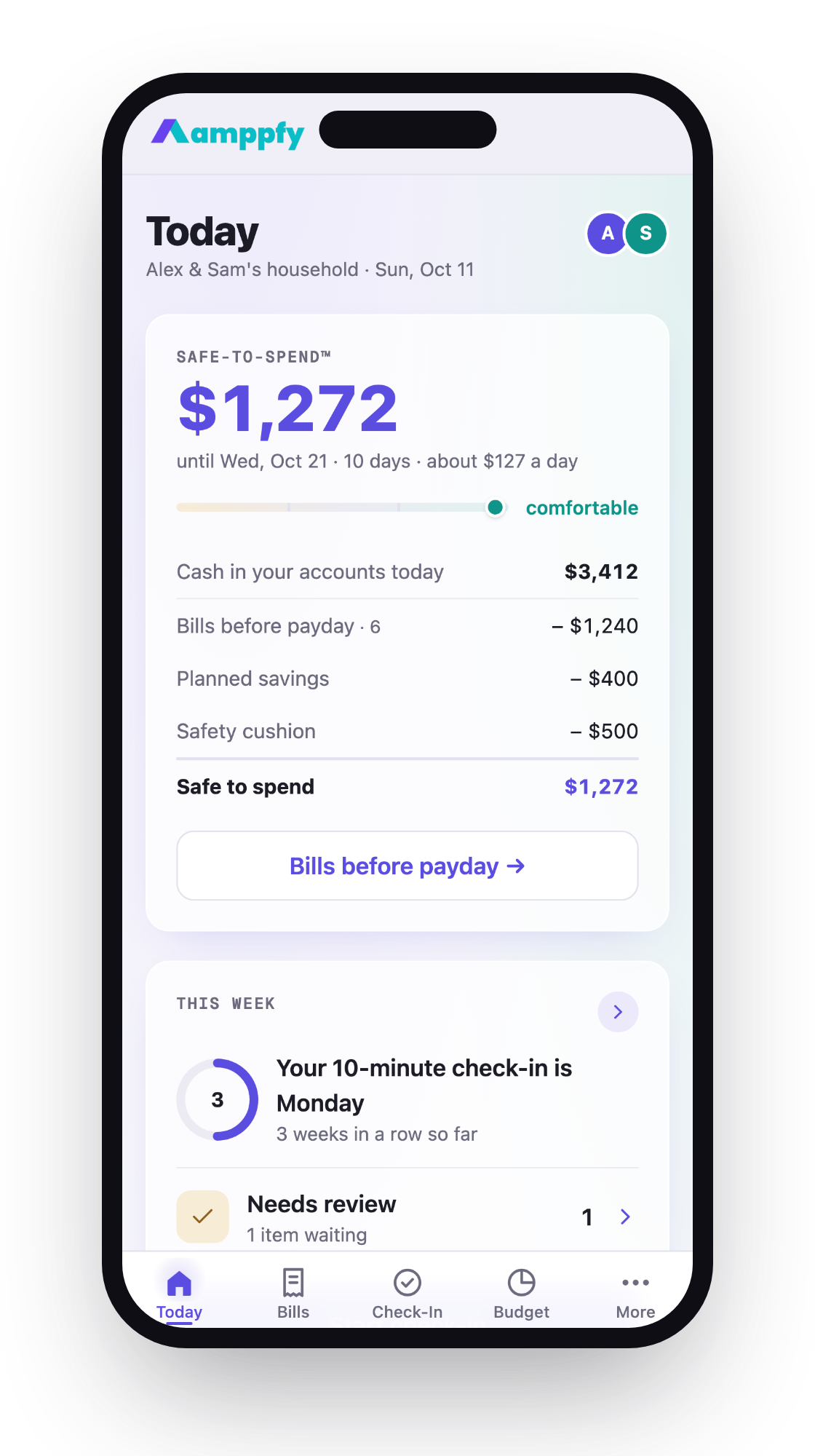
Amppfy’s bill tracking works this way by design: you enter the expected amount once, and the app shows what’s due before your next payday. When a charge comes through higher than expected, the Safe-to-Spend number shifts, and you see the math change. That’s your cue to look closer.
Automate What You Can
Set calendar reminders for annual renewals, especially insurance and internet contracts. These are the bills most likely to jump by a large amount. A reminder two weeks before renewal gives you time to shop around or call for a better rate.
Here’s a worked example of what a quiet increase looks like over a year:
$65 internet + $3 hike in March + $2 fee added in August = $70/month by December. That’s $60 more per year from just one bill. Multiply across four or five services and you’re looking at $200-$300 in increases you never agreed to.
Frequently Asked Questions
How often should I check my bills for price increases?
Once a week is enough for most people. A quick scan of your recent bank transactions against your expected bill amounts takes two or three minutes. The goal is catching a change within one billing cycle so you can act before the second charge hits.
Can I get a refund for a price increase I didn’t notice?
Sometimes. If you call within 30-60 days, many providers will credit the difference back to your account. Beyond that window, your chances drop. The sooner you spot the hike and make the call, the more likely you are to recover the overcharge.
What if my provider says the increase is mandatory and can’t be reversed?
Ask specifically for the retention or loyalty department. If they still say no, ask for the exact date your contract or commitment ends. Mark that date and start shopping for alternatives before it arrives. You’re not stuck: you’re just waiting for the right exit point.
Do price increases affect my Safe-to-Spend number?
Yes. If you’re using Amppfy, your Safe-to-Spend reflects bills due before payday. When a bill comes in higher than expected, the number drops. That drop is your early warning signal: update the expected amount, and you’ll see exactly how the increase affects what’s left for everything else.
Stop Paying More Than You Agreed To
Small, quiet price hikes are a business strategy, not a billing error. Companies count on inertia. Your counter-strategy is a short list of expected amounts and a few minutes each week to compare. When a bill goes up, you catch the price increase early, call to push back, and decide whether to stay or switch based on real numbers, not habit.
Take 10 minutes this week to write down what each of your recurring bills should cost. If you want that list to do the work for you, Amppfy keeps your expected bills, next-charge dates, and Safe-to-Spend math in one place: free on iPhone and the web at amppfy.com/app/.