Most U.S. households carry three to five streaming subscriptions at once. The monthly total feels small per service, but it quietly adds up to $50, $60, or more every month. You can rotate streaming services to save money: keep one active, binge what you want, cancel, and switch to the next. That single habit can put $400 or more back in your pocket each year. Here’s exactly how to set it up, avoid auto-renewal traps, and still watch everything you care about.
Why stacking services is the default
Every platform wants to be the one you never cancel. They release originals on staggered schedules, drop cliffhanger finales mid-season, and bury the cancel button three menus deep. The result: you sign up for a new show, forget to cancel, and suddenly you’re paying for five services month after month.
Here’s what a typical stack looks like in 2026:
| Service | Monthly Cost (Ad-Supported) | Monthly Cost (Ad-Free) |
|---|---|---|
| Netflix | $7.99 | $17.99 |
| Hulu | $9.99 | $18.99 |
| Disney+ | $9.99 | $15.99 |
| Max | $9.99 | $16.99 |
| Peacock | $7.99 | $13.99 |
Running all five ad-supported plans costs about $46 a month, or $552 a year. Go ad-free across the board and you’re closer to $84 a month: over $1,000 annually.
Most people don’t watch all five in the same month. You might binge a Netflix series for two weeks, then ignore the app for six. Meanwhile, Hulu, Disney+, Max, and Peacock keep charging. The drain isn’t one big bill. It’s five small ones you barely notice.
A 2024 Deloitte Digital Media Trends survey found that the average U.S. consumer paid for four streaming services. That number hasn’t dropped since. The habit of stacking is baked into how these platforms market themselves, and breaking it requires a deliberate system.
The rotation calendar: one in, one out
The fix is simple: subscribe to one service at a time, watch what you want, cancel before the next billing cycle, and move to the next platform. A rotation calendar keeps you on track.
How to Build Your Calendar
- List every service you actually use. Drop any you haven’t opened in 60 days.
- Rank them by how much content you want to watch right now, not someday.
- Assign each one a month or two-month window.
- Set a phone reminder three days before each billing date to decide: renew or switch.
A sample four-service rotation might look like this:
| Month | Active Service | What to Watch |
|---|---|---|
| January – February | Netflix | New season drops, backlog titles |
| March – April | Max | HBO originals, film catalog |
| May – June | Disney+ | Marvel/Star Wars releases, kids’ content |
| July – August | Hulu | Network TV catch-up, FX originals |
| September – October | Netflix | Fall releases |
| November – December | Max | Holiday specials, award-season films |
Staying Flexible
You don’t have to follow the calendar rigidly. If a show you care about drops on Peacock in March, swap it in. The point isn’t perfection. It’s having a default plan so you’re not paying for four idle services.
Keep a running list of shows you want to watch on each platform. When your month comes up, you already know what to queue. No scrolling for 30 minutes trying to find something.
Annual vs. monthly plans in a rotation
Annual plans offer a discount, usually around 15-17% off the monthly price. That sounds smart until you realize it locks you in for 12 months: the exact opposite of a rotation strategy.
When Monthly Plans Win
If you plan to rotate services and only keep each one for one or two months at a time, monthly billing is almost always cheaper overall. You pay the full monthly rate, but only for the months you actually use the service.
Here’s the math on Netflix ad-free:
- Annual plan: $179.88/year ($14.99/month equivalent)
- Monthly plan, 4 months of use: $17.99 x 4 = $71.96/year
Even paying the higher monthly rate, you save over $100 by only subscribing four months out of twelve.
When Annual Plans Make Sense
Annual billing works if one service is your household’s daily default. Maybe you have kids who watch Disney+ every single day, or your household genuinely uses Netflix 10+ months a year. In that case, pay annually for that one service and rotate the rest monthly.
A good rule: pay annual for at most one service. Rotate everything else on monthly billing. That hybrid approach gets you the annual discount where it counts and full flexibility everywhere else.
Catching the auto-renewal before it hits
The biggest risk in any rotation plan is forgetting to cancel. Platforms count on this. They make signing up a one-tap process and canceling a five-step maze.
Three Ways to Catch It
- Phone calendar alerts. Set a recurring reminder three days before each service’s billing date. Three days gives you a buffer if you’re busy.
- Subscription tracking. Amppfy’s subscriptions list shows your next charge date for each service, so you see exactly when a renewal is coming. One glance during your weekly check-in is enough to catch it.
- Use a prepaid virtual card. Some banks and fintech apps let you create a virtual debit card with a spending limit. Load it with one month’s subscription cost. When the card runs dry, the renewal fails automatically.
What to Do on Cancel Day
- Open the app or website for the service you’re leaving.
- Go to account settings, then subscription or membership.
- Select cancel. Most services let you keep access until the end of your paid period.
- Take a screenshot of the cancellation confirmation. Save it.
- Check your bank statement the following week to confirm no charge went through.
Don’t feel guilty about canceling. You can resubscribe in 30 seconds whenever you’re ready. These platforms are designed for exactly this kind of churn. They’ll welcome you back, often with a discount offer.
A worked example with four services
Here’s a real-dollar comparison for a household that currently subscribes to four ad-supported services year-round versus rotating one at a time.
The “Keep Everything” Cost
| Service | Monthly | Annual Total |
|---|---|---|
| Netflix (ad-supported) | $7.99 | $95.88 |
| Max (ad-supported) | $9.99 | $119.88 |
| Disney+ (ad-supported) | $9.99 | $119.88 |
| Hulu (ad-supported) | $9.99 | $119.88 |
| Total | $37.96 | $455.52 |
The Rotation Cost
Subscribe to one service at a time, three months each:
| Service | Months Active | Cost |
|---|---|---|
| Netflix | Jan – Mar | $23.97 |
| Max | Apr – Jun | $29.97 |
| Disney+ | Jul – Sep | $29.97 |
| Hulu | Oct – Dec | $29.97 |
| Total | 12 months | $113.88 |
The Savings
$455.52 – $113.88 = $341.64 saved per year.
Upgrade to ad-free tiers in your rotation and the math still works in your favor. Ad-free rotation across four services runs about $200 a year, compared to $840+ for keeping all four ad-free year-round. That’s over $600 in savings.
Even a less strict rotation: keeping two services active at a time instead of one: cuts the annual bill roughly in half.
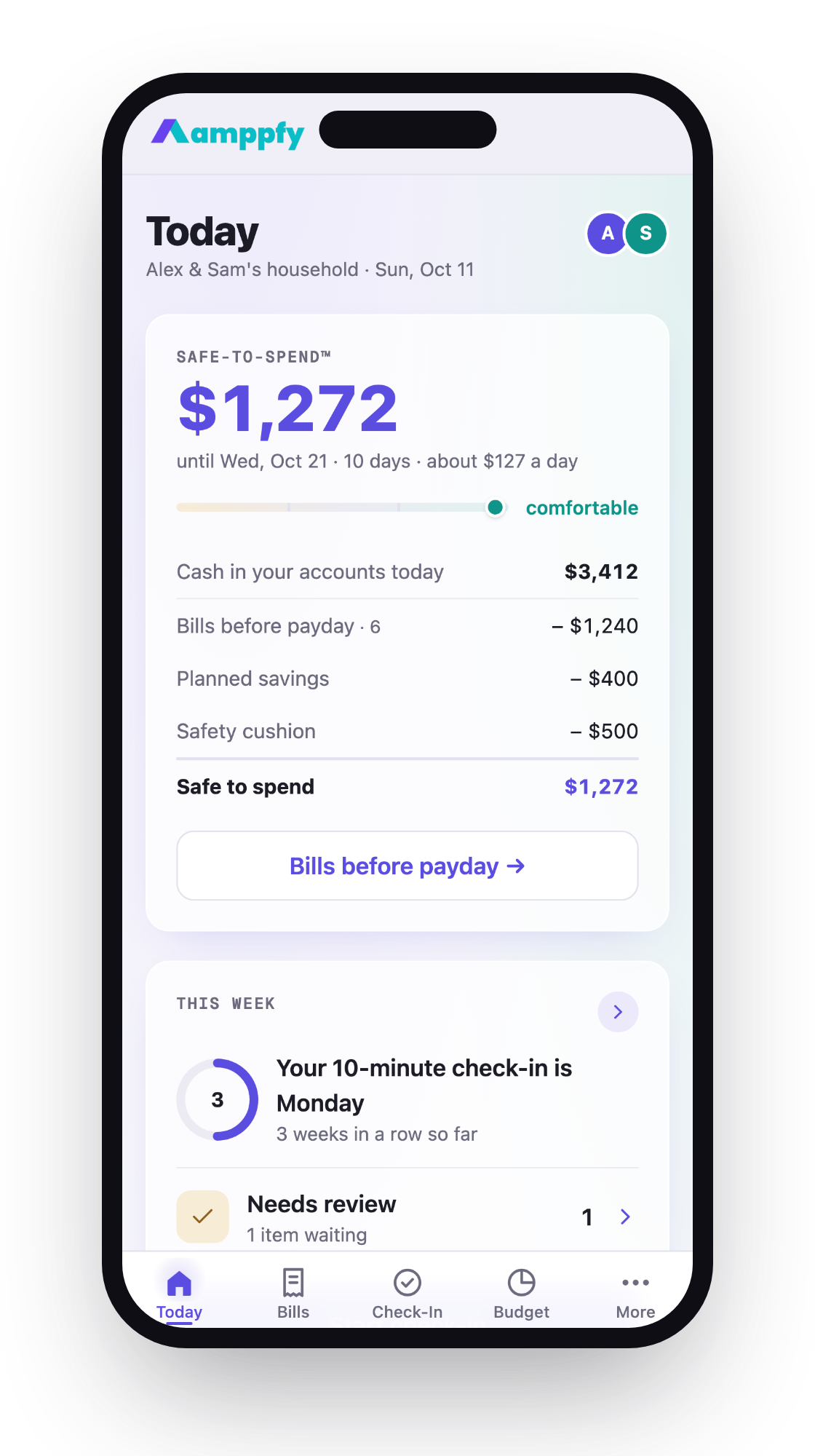
That $341 savings is real money. Redirect it toward a goal. If you use Amppfy, you could funnel that freed-up cash straight into a savings goal, and your Safe-to-Spend™ number adjusts automatically so you know exactly what’s left for the rest of the month. The line of math might look like this: $3,200 cash – $1,100 bills – $340 savings – $400 cushion = $1,360 Safe-to-Spend.
Frequently Asked Questions
Won’t I lose my watch history and profiles if I cancel?
Most major platforms keep your profile, watch history, and preferences for at least 10 months after cancellation. Netflix holds your data for 10 months. Disney+ and Max retain profiles indefinitely as of 2026. When you resubscribe, everything is right where you left it.
What about live sports or events that only air on one platform?
Subscribe to that service for the month of the event. If the NFL playoffs are on Peacock in January, make Peacock your January service. Adjust your rotation calendar accordingly. Sports are one of the few reasons to break your planned schedule, and that’s fine.
Do streaming services penalize you for canceling and resubscribing?
No. There’s no penalty, no fee, and no waiting period. In fact, many services offer returning subscribers a discounted first month. You might actually pay less by cycling in and out than by staying continuously.
How do I handle a household where different people want different services?
Build the rotation calendar together. Let each person pick their priority service and assign it to a month. If your partner wants Max in March and you want Hulu, Max wins March and Hulu moves to April. The key is that everyone agrees on the schedule upfront so no one quietly resubscribes on the side.
Start Your Rotation This Week
Rotating your streaming subscriptions is one of the simplest ways to cut household spending without giving up anything you actually watch. The strategy works because you were never watching four services at once anyway. You were just paying for them.
Pick the one service you want this month. Cancel the rest today. Set a reminder for 27 days from now to decide whether to renew or switch. That’s the whole system.
If you want one place to see when every subscription renewal hits alongside your bills and Safe-to-Spend number, Amppfy is free and takes about 10 minutes to set up at amppfy.com/app/.