Missing a quarterly tax payment doesn’t just mean a bigger bill in April. It means a penalty that grows every day you’re late. If you earn freelance or gig income in 2027, knowing your estimated tax due dates for 2027 keeps you out of that trap. The IRS expects you to pay as you earn, not all at once, and the schedule is fixed well in advance. Four payments, four deadlines, zero guesswork.
Who Needs to Pay Estimated Taxes
Not every side earner owes quarterly payments. The rule is straightforward: if you expect to owe $1,000 or more for the year[1] after subtracting withholding and credits, you’re on the hook for estimated taxes.
That covers a wide range of workers:
- Freelance designers, writers, developers, and consultants paid on 1099-NEC
- Gig drivers and delivery workers earning through apps
- Etsy sellers, tutors, and content creators with net self-employment income
- Anyone with a W-2 job plus a profitable side hustle where withholding doesn’t cover the full bill
Your obligation is based on net profit, not gross revenue. Deduct your business expenses first. If the remaining tax bill still hits $1,000, quarterly payments apply.
A few recent changes affect how much you actually owe. The Section 199A Qualified Business Income deduction can apply to eligible self-employed filers. That lowers your taxable income before you even calculate your quarterly amount. Gig workers who earn tips can also deduct up to $25,000 in qualified tips[3] from taxable income through 2028.
One more thing to track: the 1099-NEC reporting threshold rose to $2,000 starting in 2026[4], with inflation adjustments kicking in for 2027. That means some clients won’t send you a 1099 for smaller jobs. You still owe tax on that income. The IRS doesn’t care whether you got a form.
The Four 2027 Due Dates
The IRS splits the tax year into four uneven periods. Each one has a firm payment deadline. Miss it, and penalties start accruing the next day.
Here are the estimated tax due dates for 2027:
| Quarter | Income Period | Due Date |
|---|---|---|
| Q1 | January 1 – March 31 | April 15, 2027 |
| Q2 | April 1 – May 31 | June 15, 2027 |
| Q3 | June 1 – August 31 | September 15, 2027 |
| Q4 | September 1 – December 31 | January 18, 2028 |
Notice Q2 only covers two months of income, while Q3 covers three. The periods aren’t equal, so your payment amounts may vary if you base them on actual income earned rather than a flat annual estimate divided by four.
If a due date falls on a weekend or federal holiday, it shifts to the next business day. That’s why the Q4 payment is due Tuesday, January 18, 2028: January 15, 2028 is a Saturday, and Monday, January 17, 2028 is Martin Luther King Jr. Day. The first three 2027 dates fall on weekdays: Thursday, April 15; Tuesday, June 15; and Wednesday, September 15. Keep an eye on any IRS announcements that confirm or adjust these dates.
You pay using IRS Form 1040-ES. You can submit payments online through IRS Direct Pay, the Electronic Federal Tax Payment System (EFTPS), or by mailing a check with a payment voucher. Online is faster and gives you instant confirmation.
Most freelancers use one of two methods to calculate each payment. The simple approach: estimate your total annual tax, divide by four, and pay that amount each quarter. The annualized method: calculate tax on the income you actually earned in each period. The second method works better if your income is uneven, like a wedding photographer who earns 60% of annual revenue between May and October.
Setting Aside Tax From Every Deposit
Knowing the deadlines is half the job. Having the cash ready is the other half. The easiest system is to set aside a percentage of every payment you receive, the same day it hits your account.
Here’s a simple formula that works for most freelancers:
- Federal income tax: Your marginal rate (often 22% or 24% for mid-range earners)
- Self-employment tax: 15.3% on net earnings (Social Security + Medicare)
- State income tax: Varies, but 0% to 10%+ depending on your state
A common shortcut is to save 25% to 30% of every deposit. That covers federal income tax and self-employment tax for most people in the 22% bracket after accounting for deductions.
The One-Line Math
Say you receive a $5,000 client payment. At a 30% set-aside rate: $5,000 x 0.30 = $1,500 moved to a separate savings account immediately. The remaining $3,500 is yours to spend and cover business costs.
Keep your tax savings in a separate account. Don’t mix it with your checking balance. When you look at your available cash, that tax money shouldn’t be part of the picture.
Platform fees matter here too. If you’re paid through Stripe or PayPal, your 1099-K shows the gross amount before processing fees. Those fees are deductible. Calculate your set-aside on the net amount you actually received, not the gross figure on the form.
Automating the Transfer
Most banks let you set up automatic transfers triggered by deposits. Some freelancers use a simpler rule: every Friday, move 30% of the week’s income to a tax savings account. Pick a rhythm that matches how you get paid and stick with it.
Putting Tax Due Dates on Your Bill Calendar
A deadline you forget is a deadline you miss. Treat your 2027 estimated tax payments like any other recurring bill.
Here’s a practical setup:
- Add all four due dates to your phone calendar now. Set two reminders for each: one a week before, one two days before.
- Label each event clearly. “Q2 Estimated Tax Due – June 15” is better than “IRS payment.”
- Include the payment amount in the calendar note. Even if it’s an estimate, seeing “$2,400 due” in the reminder keeps you honest.
- Set a prep reminder for the last week of each quarter. Use that week to total your income, confirm your payment amount, and verify the funds are in your tax savings account.
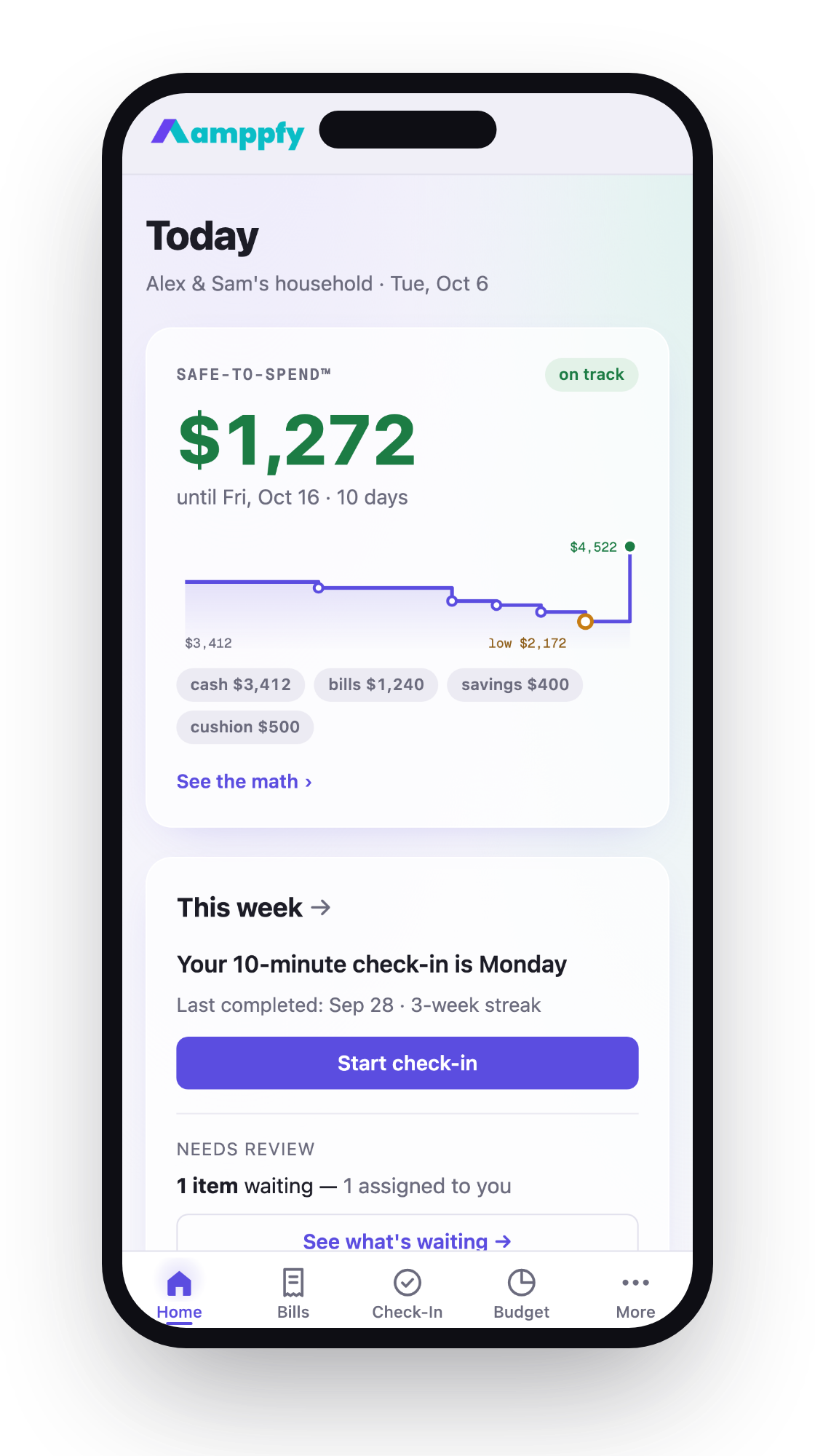
If you already use a tool like Amppfy to track bills and upcoming paydays, your quarterly tax payments fit right in alongside rent, insurance, and subscriptions. Seeing your tax bill next to your other obligations gives you a realistic picture of what’s actually Safe-to-Spend™ before your next paycheck or client payment.
Couples and Shared Finances
If you and a partner both freelance, or one of you has W-2 income while the other is self-employed, coordinate your calendars. A W-2 partner can increase their withholding through their employer to offset some of the freelancer’s tax bill. That sometimes eliminates the need for quarterly payments entirely, or at least reduces them.
File jointly? Your estimated payments are combined. File separately? Each person handles their own. Either way, both partners need to see the same deadlines and know the plan.
What to Do If You Miss a Quarter
You missed a deadline. Take a breath. This is fixable. The IRS charges an underpayment penalty, but it’s not a flat fine. It’s interest on the amount you should have paid, calculated from the due date until you pay.
Pay as Soon as You Can
The penalty stops growing the day you pay. If you’re two weeks late on a $2,000 payment, the penalty is small. If you’re six months late, it adds up. Don’t wait until the next quarter or until April. Pay now and reduce the damage.
Use Form 2210 at Tax Time
When you file your annual return, Form 2210 calculates your exact penalty. If your income was uneven and you earned less in the quarter you missed, the annualized income installment method on that form may reduce or eliminate the penalty. This is especially useful for seasonal freelancers.
Safe Harbor Rules
You can avoid penalties entirely if you meet one of these conditions:
- You paid 100% of last year’s tax liability through estimated payments and withholding (110% if your adjusted gross income exceeded $150,000)
- You paid 90% of this year’s actual tax liability through quarterly payments
- You owe less than $1,000 after subtracting withholding and credits
If you’re new to freelancing and had a W-2 job last year, your prior-year tax liability is a useful anchor. Pay that amount across four quarters and you’re protected from penalties regardless of what you earn in 2027.
Adjust Future Payments
One missed quarter doesn’t mean you’re behind all year. Recalculate your remaining payments. Spread the shortfall across Q3 and Q4. The IRS cares about total payment by year-end, not perfection in every quarter.
Frequently Asked Questions
Can I pay all my estimated taxes at once instead of quarterly?
Yes. The IRS doesn’t penalize you for paying early. You can send your full estimated annual tax with your Q1 payment in April. The downside is cash flow: that’s a large chunk of money leaving your account at once. Most freelancers prefer spreading payments across four quarters to keep more cash available throughout the year.
What if my income changes dramatically mid-year?
Recalculate your estimated tax using the annualized income installment method on Form 2210. If you earned $40,000 in Q1 and Q2 but only $10,000 in Q3, your Q3 payment should reflect the lower income. You’re not locked into paying the same amount every quarter.
Do I need to pay estimated state taxes too?
Most states with an income tax require their own quarterly estimated payments. The due dates often match the federal schedule, but not always. Check your state’s department of revenue website for specific dates and thresholds. States like Texas, Florida, and Wyoming have no income tax, so this doesn’t apply there.
How do I know if my W-2 withholding covers my side hustle income?
Run the numbers. If your W-2 withholding plus any estimated payments you’ve made will cover at least 90% of your total tax bill, or 100% of last year’s liability, you’re in safe harbor territory. You can submit a new W-4 to your employer and increase withholding to cover freelance income, which some people find simpler than making quarterly payments.
Keep Your Tax Deadlines and Your Cash in Sync
Four dates. Four payments. That’s the entire system. Write down your 2027 tax due dates now, set aside a percentage from every deposit, and treat each quarterly payment like a bill that can’t be skipped. If you miss one, pay it fast and adjust the next quarter.
Staying on top of quarterly taxes is easier when you can see what’s truly available in your accounts after bills, savings, and that tax set-aside are accounted for. If you want one clear number that answers “what can I actually spend before my next payday,” get Amppfy free. Enter your balances, bills, and payday once, about ten minutes, and your Safe-to-Spend™ number is always current.