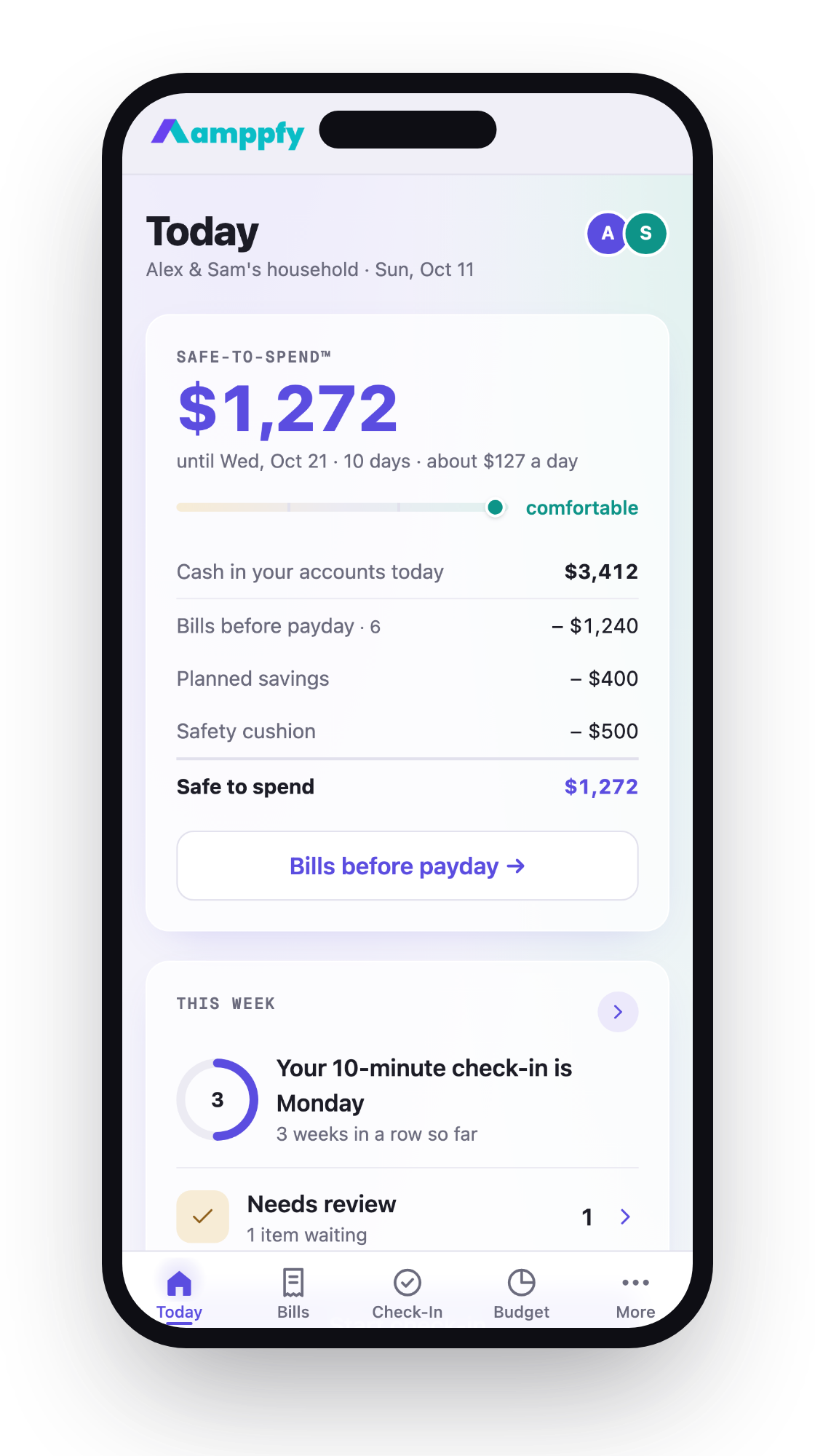


You’ve checked your bank app three times this week. The balance keeps dropping, but you can’t point to anything big. That feeling of wondering where your money goes each month hits almost everyone on a regular pay cycle. The fix isn’t a complicated spreadsheet or a three-hour weekend project. It’s a 20-minute exercise: start with what comes in, subtract what’s committed, and see what’s actually left. This article walks through that exercise in five clear steps so you can stop guessing and start knowing.
Start From Income, Not From Receipts
Most people try to figure out their spending by scrolling through transactions. That’s backwards. You need a ceiling before you count what’s under it.
Your ceiling is your take-home pay: the net deposit that lands in your account each payday. Not your salary, not your gross. The number after taxes, insurance premiums, and retirement contributions have already been pulled out.
If you’re paid biweekly, multiply one paycheck by the number of pay periods left before the month ends. If you’re paid twice a month, add those two deposits. Side income counts only if it’s consistent. A freelance check that shows up three months out of five isn’t reliable enough to plan around.
Write that number down. Here’s a sample:
| Income source | Amount |
|---|---|
| Paycheck 1 (net) | $2,850 |
| Paycheck 2 (net) | $2,850 |
| Partner’s paycheck | $1,900 |
| Total monthly take-home | $7,600 |
If you’re in a couple, decide which income goes into the shared pool. Some partners combine everything. Others each contribute a set amount to shared bills and keep the rest separate. Either approach works. The point is agreeing on one number you both trust.
That single total is your starting line. Every other step subtracts from it.
List the Bills by Group
Bills are the non-negotiable slice of your income. They repeat, they have due dates, and skipping them costs you money or access to something you need.
Group them into three buckets:
- Housing: rent or mortgage, property tax escrow, HOA fees, renter’s insurance
- Utilities and essentials: electric, gas, water, internet, phone, car insurance, minimum debt payments
- Debt service: student loans, car loan, credit card minimums
A worked example for a household earning $7,600 per month:
| Bill group | Monthly total |
|---|---|
| Housing | $2,100 |
| Utilities and essentials | $680 |
| Debt service | $460 |
| Total committed bills | $3,240 |
U.S. households spent an average of $78,535 per year in 2024[1], with housing costs rising faster than most other categories. Your own housing line is probably the largest single number on this list.
Notice we’re only counting minimums for debt. If you want to pay extra toward a credit card, that goes in the savings bucket (next step), because it’s a choice, not an obligation.
One detail that trips people up: bills don’t all land on the same date. Some hit the first week, others the last. Knowing when each bill clears matters as much as knowing the amount. Amppfy’s Budget page shows the month as four slices: Bills, Savings, Subscriptions, and Everyday spending, so you can see the timing alongside the totals.
Add What You Move to Savings
Savings is anything you move out of checking on purpose: an emergency fund transfer, a vacation sinking fund, extra debt payoff above the minimum, or a contribution to a goal like a car down payment.
This step is short but critical. If you skip it, you’ll spend the money. That’s not a character flaw. It’s just how checking accounts work: money sitting there gets spent.
Pick a flat dollar amount or a percentage of take-home. A common starting point is 10%, but any amount you can hold steady matters more than hitting an ideal number. Using our example household:
$7,600 take-home x 10% = $760 toward savings goals
If you’re building a household budget from your existing plan, treat savings like a bill: it has a date, it has an amount, and it leaves your checking account before you start spending on groceries.
Here’s the running math so far:
$7,600 income – $3,240 bills – $760 savings = $3,600 remaining
That $3,600 still has to cover subscriptions and daily life. Don’t celebrate yet.
Subscriptions: The Quiet Line
Subscriptions deserve their own line because they’re easy to forget and hard to spot in a bank statement. They charge small amounts on scattered dates, and they rarely send reminders before renewing.
U.S. adults waste an average of $21 per month on subscriptions they don’t actively use[2]. That’s $252 a year going to services you forgot you signed up for.
How to Audit Your Subscriptions in 10 Minutes
- Open your bank or credit card statement from last month.
- Search for recurring charges under $50. Flag anything you don’t recognize immediately.
- For each flagged charge, ask one question: did I use this in the last 30 days?
- Cancel anything you haven’t touched. You can always re-subscribe later.
Common categories people overlook:
- Streaming services (especially free trials that converted)
- Cloud storage upgrades
- AI tools: the average subscriber now pays for four different AI services at roughly $66 per month combined
- App subscriptions billed annually that renewed without a notification
- Gym memberships or class passes used once
What to Keep, What to Cut
Don’t cancel everything. The goal is knowing what you’re paying for and choosing to keep it. A $15 music subscription you use daily is a good deal. A $12 meal-kit add-on you paused three months ago is not.
For our example household, let’s say the subscription audit lands here:
| Category | Before audit | After audit |
|---|---|---|
| Streaming | $62 | $32 |
| Software/AI tools | $45 | $20 |
| Fitness | $30 | $30 |
| Other | $23 | $0 |
| Total | $160 | $82 |
That’s $78 per month reclaimed: almost $940 a year. Not life-changing, but not nothing either.
Updated running math: $3,600 – $82 subscriptions = $3,518 for everyday spending.
The Rest Is Everyday Spending, and What It Tells You
Everything left after bills, savings, and subscriptions is your everyday spending. Groceries, gas, coffee, dining out, clothes, gifts, haircuts, pet food. The stuff that feels invisible until you add it up.
This is where most people finally answer the question of where their money actually goes. And the answer is usually a mix of three or four categories, not one dramatic leak.
Spot Your Top Three Categories
Pull last month’s transactions and sort them roughly:
- Groceries and household supplies
- Dining out and takeout
- Gas and transportation
- Personal care and health
- Entertainment and hobbies
- Kids’ activities and school costs
- Gifts and donations
You don’t need exact totals. Round to the nearest $50. You’re looking for the top three categories that eat the most.
For most households, groceries and dining out together account for the biggest share. Transportation is usually second. Everything else splits the remainder.
The Safe-to-Spend™ Check
Here’s where the 20-minute exercise pays off. You now have a single number: what’s left for daily life after every commitment is covered.
Using our running example:
$7,600 income – $3,240 bills – $760 savings – $82 subscriptions – $500 cushion = $3,018 Safe-to-Spend™
That $3,018 is what you can spend between now and your next paycheck without falling behind on a bill, raiding savings, or relying on credit. The cushion is a buffer you choose: $200, $500, whatever lets you sleep.
Amppfy calculates this number automatically once you enter your balances, bills, and payday. It takes about ten minutes to set up, and the number updates every time you update a balance. The four-line math is always visible under the number so you can see exactly how it’s calculated.
What If the Number Is Negative?
A negative Safe-to-Spend™ means your commitments exceed your income for that pay period. That’s useful information, not a crisis. It tells you exactly how much you need to shift.
Options, in order of effort:
- Move a bill’s due date to a different pay period (call the provider and ask).
- Reduce the savings transfer temporarily.
- Cancel a subscription or two.
- Look at the top everyday spending category and set a weekly cash limit for it.
Small adjustments compound. Shifting $150 in bills to a different pay period might be all it takes.
Frequently Asked Questions
How often should I redo this exercise?
Once is enough to build the framework. After that, a quick weekly check-in (updating your balances and confirming upcoming bills) keeps the number accurate. Ten minutes a week is plenty. A full redo only makes sense when your income changes, you move, or you add a major new bill.
What if my income varies month to month?
Use your lowest recent paycheck as the baseline. Plan bills and savings around that floor. When a bigger check arrives, send the extra straight to savings or debt before it blends into everyday spending.
Should my partner and I combine everything or keep separate accounts?
Either works. The key is agreeing on which bills come from the shared pool and how much each person contributes. Couples who share a Safe-to-Spend™ number but keep personal balances private tend to have fewer arguments about small purchases.
Do I need to categorize every single transaction?
No. Sorting into rough buckets (top three categories) gives you 80% of the insight. Chasing down every $4 charge creates busywork that makes you quit. Focus on the big slices, not the crumbs.
Your 20-Minute Snapshot
The whole exercise fits on one line of math. Income minus bills minus savings minus subscriptions minus a cushion equals your Safe-to-Spend™ number. That number tells you what’s genuinely available for daily life, no guessing required.
You don’t need to log every coffee. You need to know your commitments, subtract them, and trust the remainder. If you want that number calculated and updated for you, get Amppfy free on iPhone or the web. Enter your balances, bills, and payday once, and the number stays current between paychecks.
Twenty minutes now saves you from checking your bank app with that sinking feeling later.