

Payday is circled on your calendar. Rent is due on the 1st. You open the Wells Fargo app at 6 a.m. and the balance looks the same as last night. Is something wrong, or is it just early?
Most of the stress around direct deposit comes from not knowing what “normal” looks like. Once you know how Wells Fargo handles incoming payroll, the Early Pay Day feature, and the gap between “posted” and “spendable,” the waiting gets much calmer. This guide covers what the bank actually publishes, what it doesn’t, and what to do on the rare day your money doesn’t show up.
One ground rule first: every policy detail here comes from Wells Fargo’s own website, as of October 2026. Where the bank doesn’t publish a specific time or window, this guide says so plainly. It won’t fill the gap with a guess.
What time Wells Fargo posts direct deposits
Here’s the honest answer to what time direct deposit hits Wells Fargo: the bank does not publish a fixed posting time, as of October 2026. You’ll see people online quote specific evening windows. Those come from forums and personal reports, not from Wells Fargo. Treat them as anecdotes, not a schedule.
What controls timing is a chain with three links:
- Your employer or payer: they send a payroll file to their bank, usually a day or more ahead of payday.
- The ACH network: it moves that file between banks in batches.
- Wells Fargo: once it receives the payment details, it decides when to make the funds available.
If any link runs late, your deposit runs late. If your employer sends the file early, your money can show up early.
“Early” at Wells Fargo means something specific. It refers to the Early Pay Day feature, which makes eligible deposits available before the official pay date printed on your pay stub. It does not mean a guaranteed hour, and it does not mean every deposit qualifies. A simple way to picture it: the payment is a package already sitting at the local post office. Early Pay Day lets the bank hand it over before the delivery date. But the package has to arrive at the post office first.
Does Wells Fargo pay early? The policy as published
Yes, for eligible deposits. As of October 2026, Wells Fargo’s Early Pay Day feature gives access to eligible direct deposits up to two business days early[1]. Payroll and government benefits are among the deposit types the bank lists as eligible.
Four points in the published policy matter most:
- It’s automatic. You don’t enroll or flip a switch. If a direct deposit is eligible, the feature applies on its own.
- It’s “up to” two days. Some deposits may arrive two business days early, some one, and some on the actual pay date.
- The bank controls timing. Early access depends on when Wells Fargo receives the payment information from your payer. You can’t request a specific day.
- It isn’t guaranteed. On its account pages, Wells Fargo notes it may stop providing early access at any time without notice[2], and advises you to verify funds before spending.
For full eligibility details on your specific account type, check the Early Pay Day page itself rather than relying on secondhand summaries. Eligibility language can change, and the bank’s page is the version that counts.
The practical takeaway is simple. Enjoy early money when it arrives, but plan your bills around the official pay date. If your rent autopay is set for the morning of payday, early access is a bonus, not a buffer you can count on. For more on why the same paycheck can land on different days from one cycle to the next, see why your direct deposit lands early or late and how to plan around it.
Weekends, holidays, and the first deposit from a new employer
The phrase “two business days” does a lot of work. Business days exclude weekends and federal banking holidays. So the calendar can shift your deposit in ways that feel odd until you count it out.
Weekend paydays
Say your official payday is Monday. Two business days before Monday is the prior Thursday, because Saturday and Sunday don’t count. If your payday falls on a Saturday, most employers move the pay date itself to Friday. Count backward from that adjusted date, not from the Saturday.
Holiday weeks
A Monday holiday removes a business day from the count. If payday is Wednesday and Monday is a federal holiday, “two business days early” lands on the previous Friday, not Monday. Holidays also slow the ACH network, so the whole chain can run a little behind. Wells Fargo does not publish a holiday-specific posting schedule as of October 2026.
The first deposit from a new employer
Your first paycheck is the one most likely to arrive on payday itself, or later. New payroll setups often include a test transaction or a paper check for the first cycle. Account details also need to be entered correctly. Don’t plan any bills around early access for that first deposit. Assume the official pay date, and treat anything earlier as a pleasant surprise.
Why a deposit shows as pending
Seeing a deposit marked “pending” can feel like the money is there but locked. That’s roughly right. Pending means Wells Fargo knows the payment is coming or has received it, but it hasn’t finished posting to your account.
Two balances matter here. Your ledger balance reflects posted transactions. Your available balance is what the bank lets you use right now. A pending deposit may or may not count toward your available balance yet. Look at the available figure in the app, not the line item.
Wells Fargo’s funds availability rules are laid out in its deposit account agreement. That document is the authoritative source on when different deposit types become available, as of October 2026. It’s long, but searching it for “availability” gets you to the right section in a minute or two.
A calm way to read the app:
- Available balance went up: the money is usable, even if the transaction still says pending.
- Available balance didn’t change: wait. Spending against a pending line can trigger an overdraft if the deposit is delayed.
- Pending for more than a business day past payday: move to the steps in the next section.
What to do if payday passed and nothing landed
A missing paycheck is stressful. It’s also usually fixable, and the fix almost always starts with your employer, not the bank. Work through this in order. Each step takes about five minutes.
| Step | Action | Why |
|---|---|---|
| 1. Check the date | Confirm the official pay date on your pay stub or payroll portal | Early access is “up to” two days, so earlier days don’t count as late |
| 2. Check the calendar | Look for a weekend or federal holiday in the window | Non-business days push everything back |
| 3. Check your account details | Verify the routing and account numbers in your payroll profile | One wrong digit sends the payment back |
| 4. Ask payroll | Request the date the payment was sent and the trace number | This proves whether the file left your employer |
| 5. Call Wells Fargo | Share the trace number and sending date | The bank can search for an incoming payment |
Wells Fargo’s Early Pay Day page notes that timing depends on when the bank receives payment information from your payer. So if payroll sent the file late, the bank can’t make it available sooner. That’s why step four comes before step five.
While you wait, protect your bills. If an autopay is due today, consider moving the date in the biller’s portal, or calling to ask for a few days. Most billers will work with you when you call before the due date, not after.
The deposit landed. What is actually safe to spend?
Your balance just jumped. It’s tempting to read that number as “money I have.” But part of it is already spoken for. Bills due before your next payday will come out of this same pile.
The math is short:
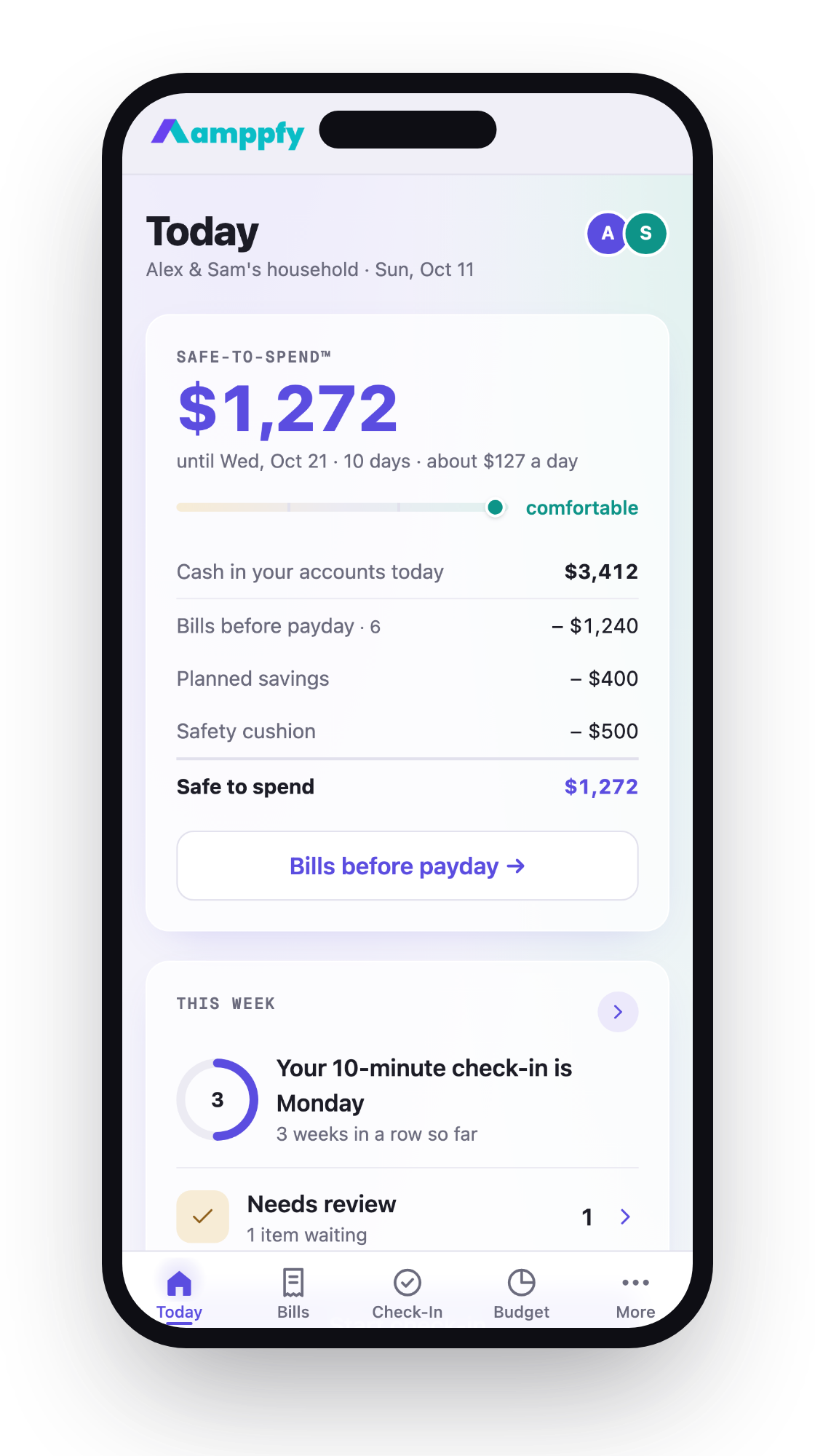
Safe-to-Spend™ = available cash − bills due before next payday − planned savings − cushion
Here’s a worked example. Your Wells Fargo paycheck of $2,400 lands on a Wednesday, two days early. Your checking account now shows $2,850.
- Available cash: $2,850
- Bills due before next payday: rent $1,450, phone $65, car insurance $140 = $1,655
- Planned savings: $200 to your emergency fund
- Cushion: $150 for surprises
$2,850 − $1,655 − $200 − $150 = $845.
So $845 is what you can spend over the next two weeks. That’s about $60 a day. That’s a very different number from $2,850, and a much calmer one to live with.
One more check matters with early deposits. Because Wells Fargo says early access can stop without notice, base your “next payday” on the official pay date, not the date money arrived last time. If you count from the early date and it doesn’t repeat, you’ll be two days short on bills.
FAQ
What time does Wells Fargo direct deposit hit on payday?
Wells Fargo does not publish a specific posting time as of October 2026. Timing depends on when your payer sends the payment and when the bank receives it. Times quoted online come from personal reports, not the bank.
Do I need to sign up for Wells Fargo Early Pay Day?
No. The feature is automatic for eligible direct deposits, including payroll and government benefits, as of October 2026. There’s nothing to enroll in.
Why did my paycheck come early last time but not this time?
Early access is “up to” two business days and depends on when Wells Fargo receives payment information. Weekends, holidays, or a later payroll file from your employer can all change the timing. The bank also says it may stop early access without notice.
Can I spend a pending deposit?
Only if your available balance reflects it. Check the available figure, not the pending line. The deposit account agreement explains Wells Fargo’s funds availability rules.
When the deposit lands, the balance on your screen isn’t the number to spend from. Bills due before the next payday come out first. Then planned savings. Then a cushion. What’s left is your real spending room for the next two weeks.
You can do that arithmetic by hand each payday. Or you can let Amppfy do it: type in your balances, bills, and paydays once, and it shows your Safe-to-Spend™ number with the four-line math underneath. It’s free on iPhone and the web, and a partner can see the same number from their own login. Take ten minutes this week to set it up at Amppfy, and the next early deposit will just be good news.