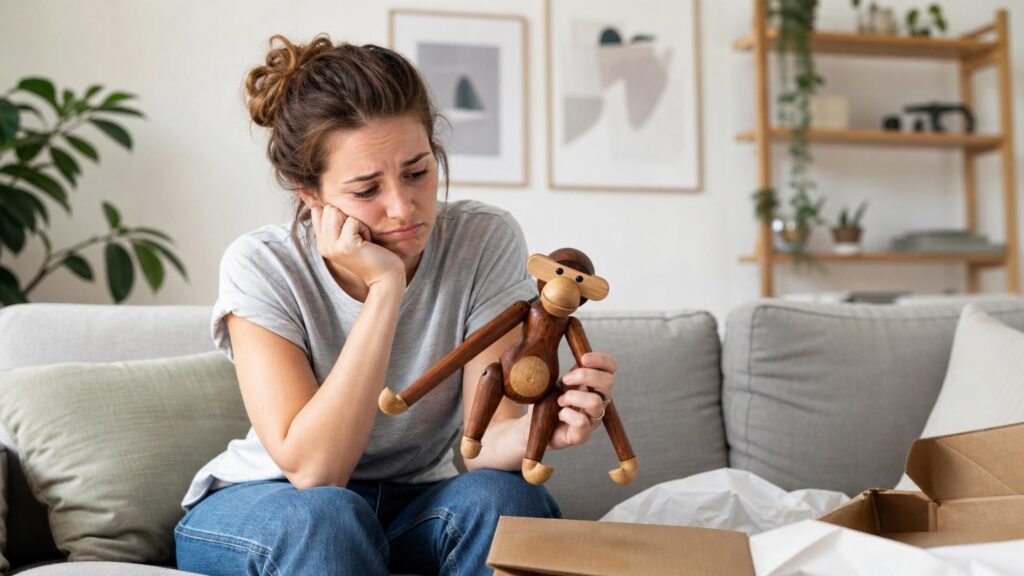
You know that feeling when you scroll past something online, think “that’s cute but I don’t need it,” and then 72 hours later it’s sold out everywhere and reselling for ten times the price? Yeah. I should have bought Punch’s IKEA monkey when I had the chance, and the sting of that missed $20 purchase has me rethinking how viral moments hijack our wallets in 2026.
Why a Sad Baby Monkey Broke the Internet (and IKEA’s Stock Room)
Punch is a baby macaque at Ichikawa City Zoo in Japan. His mother abandoned him after birth, so zookeepers raised him by hand, giving him a stuffed IKEA Djungelskog orangutan as a surrogate companion. The internet discovered Punch earlier this year when the zoo tried integrating him with other macaques. It did not go well.
Videos showed Punch being dragged and attacked by older monkeys, then fleeing back to clutch his plushie. The footage hit every emotional trigger humans have:
- Vulnerability: a tiny baby animal, alone
- Rejection: bigger monkeys bullying him
- Comfort object: a stuffed toy standing in for a mother
IKEA leaned in hard, posting an ad featuring a Punch lookalike clutching the Djungelskog and rebranding the plushie as “Punch’s comfort orangutan.” It sold out within days. The $20 toy started appearing on eBay for $100 to $350.
The 2026 Viral Product Playbook: Faster, More Expensive, More Emotional
This isn’t new. But the cycle has accelerated dramatically. Here’s what the viral-to-sold-out timeline looked like across three recent crazes:
| Product | Origin | Retail Price | Time to Sell Out | Peak Resale Price |
|---|---|---|---|---|
| IKEA Djungelskog (Punch’s orangutan) | Ichikawa City Zoo viral videos | $20 | ~5 days | $350 (listed), $100+ (sold) |
| Pieroguszki plushie | 2026 Winter Olympics, Team Poland | ~$15-20 | ~3 days | $80-120 on resale sites |
| PopMart Labubu | Celebrity endorsements (Naomi Osaka, others) | $30 | Varies by release | $150,000 (rare mint-green, auction) |
The pattern repeats because it works. A product gets an organic emotional moment, social media amplifies it, brands either capitalize or get caught flat-footed, supply vanishes, and resellers fill the gap at absurd markups.
What’s different in 2026 is the speed. TikTok and Instagram Reels compress the discovery-to-sellout window from weeks to days. The Pieroguszki plushie from the Winter Olympics went from “what’s that cute thing the Polish team is carrying?” to completely unavailable in roughly 72 hours.
The Scarcity Trap: Why Your Brain Screams “Buy It Now”
There’s real psychology behind why missing out on a $20 stuffed animal can feel genuinely painful. Behavioral economists call it the scarcity effect, and it works like a padlock snapping shut on your rational thinking.
Here’s the sequence your brain runs through:
- Social proof: Millions of people want this thing, so it must be valuable
- Loss aversion: The pain of missing out feels roughly twice as intense as the pleasure of getting it (this is well-documented in behavioral research)
- Anchoring: Once you see the $350 eBay listing, the original $20 price feels like a steal you fumbled
- Urgency: “It’s gone forever” triggers fight-or-flight responses meant for actual threats, not plush toys
I experienced every single one of these stages with Punch’s orangutan. My rational brain said “you don’t need a stuffed animal.” My emotional brain, three days later, said “you absolute fool.”
The Real Cost of Chasing Viral Merchandise
Before you spend $150 on a resale plushie, do some quick math. That money has real alternative uses:
- $150 invested in an S&P 500 index fund could grow to roughly $195-220 over five years, assuming historical average returns (though past performance doesn’t guarantee future results)
- $150 covers about a month of a streaming service bundle, a nice dinner out, or a meaningful charitable donation
- $150 on a resale toy gets you a mass-produced stuffed animal that IKEA may very well restock in two months
The Beanie Baby crash of the late 1990s remains the cautionary tale here. People spent thousands on stuffed animals they believed would appreciate in value. Most of those collections are now worth pennies on the dollar. The Djungelskog isn’t an investment. It’s a $20 toy with a temporary emotional premium attached.
Warning Signs You’re About to Overspend on a Viral Product
Watch for these red flags in your own behavior:
- You’re refreshing eBay or Mercari multiple times per day
- You’ve set price alerts for a stuffed animal
- You’re rationalizing the purchase as “it’ll be worth even more later”
- You feel genuine anxiety or sadness about not owning the item
- You’re considering buying knockoffs from unverified sellers just to fill the void
If three or more of these apply, take 15 minutes to step away from your phone. Seriously. The emotional intensity of viral FOMO fades fast, and you’ll almost certainly feel differently in a week.
Knockoffs, Scams, and the Copycat Economy
Rival sellers move fast when something goes viral. Within days of the Djungelskog selling out, Temu had lookalikes for around $12, and eBay was flooded with imitations at various price points.
The Pieroguszki story is even more instructive. The original plushies were handmade by Luft, a shop in Katowice, Poland that employs people with disabilities. When demand exploded, a $16.99 knockoff appeared online using photos stolen from Pierozek, a Polish restaurant in Brooklyn that had been selling the originals.
Before buying any viral product from a third party, ask yourself:
- Is this the real product or a copycat? Check the seller’s history and reviews
- Am I supporting the original creator? Many viral products come from small makers who deserve the revenue
- Is the markup justified? A 2x premium might be reasonable for a genuinely limited item. A 15x premium on a mass-produced IKEA toy is speculation, not shopping
How to Channel the Feels Without Emptying Your Wallet
If Punch genuinely moved you (and honestly, those videos are devastating), there are ways to act on that emotion that do more good than buying a stuffed orangutan:
- Donate to primate welfare organizations: Save the Chimps, the International Primate Protection League, and the Pan African Sanctuary Alliance all fund rescue operations and sanctuary care
- Symbolically adopt a monkey: Born Free USA and Wild Futures both offer adoption programs where your money directly supports an animal’s care
- Get a plushie with purpose: The World Wildlife Fund’s orangutan adoption program comes with a matching stuffed animal for about $60, and the money funds conservation work
- Wait for the restock: IKEA has a history of restocking popular items. The Djungelskog may return to shelves, and patience could save you $80 to $300
What Punch Taught Me About Impulse Spending in 2026
Here’s the honest truth: I regret not buying that $20 orangutan. Not because it would be worth anything, but because it would have been a fun, inexpensive way to participate in a cultural moment. The mistake wasn’t failing to speculate on a toy’s resale value. The mistake was overthinking a $20 purchase and then being tempted by a $150 one.
That’s the real financial lesson. The time to buy a viral product is when it’s at retail price and you genuinely want it. Once it sells out, the calculus changes completely. You’re no longer buying a toy. You’re paying a premium for FOMO, and that premium almost never holds its value.
Punch himself seems to be figuring this out. Recent updates from Ichikawa City Zoo show him spending less time with his stuffed orangutan and more time with older macaques who’ve taken him under their wing. Even the monkey is moving on.
Frequently Asked Questions
Can I still buy Punch’s IKEA Djungelskog orangutan at retail price?
As of mid-2026, the Djungelskog is sold out on IKEA’s website. However, IKEA regularly restocks popular items, so signing up for restock notifications is your best bet. Avoid paying inflated resale prices unless you’re comfortable treating the premium as a sunk cost with no return on investment.
Are the cheaper knockoff orangutan plushies safe to buy?
Knockoffs from platforms like Temu (around $12) or unverified eBay sellers may not meet the same safety and quality standards as the IKEA original. If you’re buying for a child, check for safety certifications. If you’re buying for yourself and don’t mind lower quality, just know what you’re getting.
How much are people actually paying for Punch’s orangutan on resale sites?
eBay listings have ranged from $50 to $350, with confirmed sales typically falling between $100 and $200. These prices will likely drop as the viral moment fades, similar to the pattern seen with Jellycat and Labubu products after their peak hype cycles.
Is buying viral plushies a good investment strategy?
No. While rare collectibles can occasionally appreciate (the mint-green Labubu sold for $150,000 at auction), this is the extreme exception. Most viral toys depreciate once hype dies down. If you enjoy collecting, buy what you love at reasonable prices. But treating mass-produced plushies as financial instruments is how people ended up with garages full of worthless Beanie Babies. For actual investment decisions, consult a licensed financial advisor who can assess your specific situation and risk tolerance.