You returned the gift. The store confirmed it. But the money still isn’t back in your account, and payday is three days away. That gap between dropping off a return and actually having the cash again can throw your whole spending plan sideways. Understanding how holiday return refund timing works helps you plan around the delay instead of guessing whether you can afford groceries this week. The refund is coming, but knowing when changes what you do right now.
How Long Store and Card Refunds Take to Post
The speed of your refund depends on how you paid and which network processes the transaction. Cash and debit refunds tend to land faster than credit card refunds, but every method has its own timeline.
| Payment Method | Typical Refund Timeline |
|---|---|
| Cash | Immediate (in-store only) |
| Debit card | 3-5 business days |
| Visa credit card | Up to 5 business days |
| Mastercard credit card | 2-3 business days |
| Store credit/gift card | Varies by retailer |
| Buy Now, Pay Later | Varies by provider |
Mastercard refunds tend to post within 2-3 business days once the merchant initiates the return[1], while Visa can take up to 5 business days. These timelines start after the retailer processes your return on their end, not when you hand the item back at the counter. Some stores batch their refund processing nightly or even weekly.
There’s also a legal backstop. Under Regulation Z, card issuers must credit your account within 3 business days of receiving the merchant’s credit statement[2]. That means the bank can’t sit on your money once the store has done its part.
Buy Now, Pay Later refunds follow a similar pattern now. The CFPB classified BNPL lenders as credit card providers, which means you have the legal right to dispute charges and demand refunds[3] under the same rules as traditional credit cards. If you bought holiday gifts through Affirm, Klarna, or Afterpay, your refund rights are stronger than they were a few years ago.
One practical note: weekends and bank holidays don’t count as business days. A return processed on a Friday afternoon might not start moving until Monday.
Pending Refunds vs. Money You Can Spend
Seeing a pending refund on your bank or credit card app feels like progress. It isn’t spendable money yet. The distinction matters more than most people realize, especially when you’re trying to figure out what’s safe to spend before your next paycheck.
A pending refund means the merchant has initiated the credit, but your bank hasn’t finalized it. Your available balance may or may not reflect it. Some banks temporarily increase your available credit when a pending refund appears. Others don’t. There’s no universal rule. The safe approach: don’t budget for a refund until the transaction status changes from “pending” to “posted.”[4]
Here’s what that looks like in practice. Say you returned a $150 coat on Tuesday. By Wednesday, your credit card app shows a pending credit of $150. Your statement balance drops, but that credit could still vanish if the merchant reverses or corrects it. Until it posts, treat your spending power as if the $150 doesn’t exist.
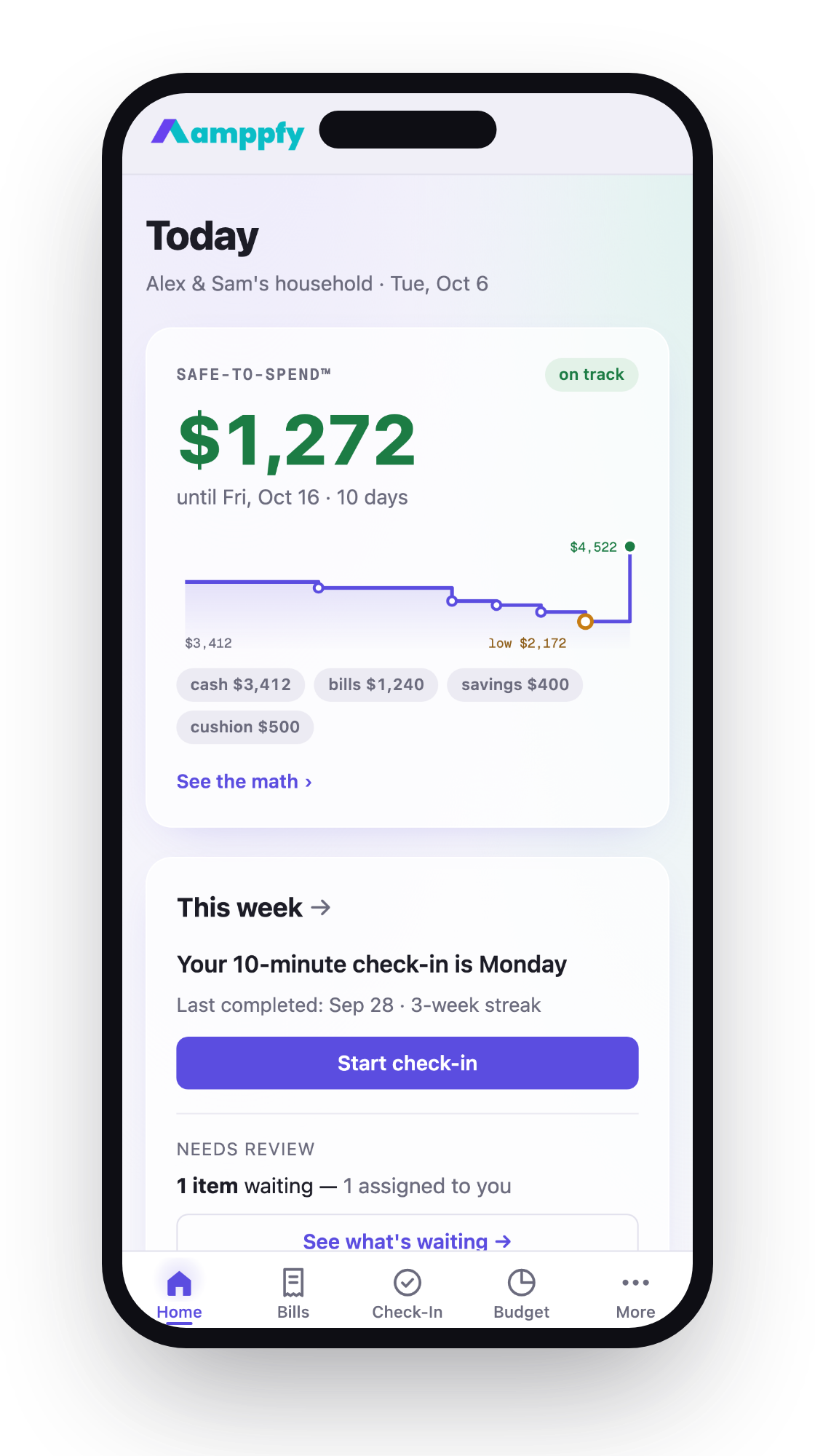
This is where a simple spending check helps. If your paycheck is $3,412, you owe $1,240 in bills before payday, you’re saving $400, and you keep a $500 cushion, your Safe-to-Spend™ number is $1,272. That $150 refund doesn’t change that number until it actually posts. Amppfy shows this math in one line so you’re not guessing.
For debit cards, the stakes are higher. A pending refund on a debit card doesn’t restore your checking balance in most cases. You could overdraft if you spend as though the money is already back. Wait for the posted transaction before adjusting your plan.
Tracking Returns So None Get Lost
One return is easy to remember. Four or five holiday returns across different stores, paid with different cards, shipped back on different days: that’s where things slip through the cracks. A single lost refund of $40 or $80 can quietly disappear if you’re not watching.
Build a simple tracking habit:
- Save every return receipt. Snap a photo with your phone immediately. Store receipts fade, and email confirmations get buried.
- Log the date, store, amount, and payment method. A note on your phone works. So does a row in a spreadsheet.
- Set a calendar reminder for 7 business days after each return. Check whether the refund has posted by then.
- Match refunds to your bank statement. Don’t assume a credit that looks right is the right one. Verify the exact amount.
For mail-in returns, track the shipping. Use the carrier’s tracking number to confirm delivery. Your refund clock doesn’t start until the warehouse receives and processes the item, which can take an extra 3-5 business days on top of the card processing time.
If you returned items to multiple retailers, a quick table on your phone keeps everything visible:
| Store | Item | Amount | Return Date | Expected Refund By | Received? |
|---|---|---|---|---|---|
| Target | Sweater | $45 | Jan 5 | Jan 14 | Yes |
| Amazon | Headphones | $89 | Jan 7 | Jan 17 | Pending |
| Walmart | Toy set | $32 | Jan 8 | Jan 18 | No |
Spending ten minutes to set this up saves you from chasing a missing refund weeks later when the details are fuzzy.
Return Windows and Holiday Extensions
Most major retailers extend their return windows during the holidays. This gives you more time, but the deadlines still sneak up. Knowing the exact dates prevents you from missing a window on a gift that didn’t work out.
Here’s what the biggest retailers offered for the 2025 holiday season:
- Last season, several large retailers extended holiday return windows into late January.
- Windows change every year and differ by product, so check this season’s policy on your receipt or the store’s returns page.
These policies reset each year, so check the current return policy before assuming last year’s rules still apply. Most retailers publish updated holiday return policies by mid-October.
Items That Don’t Follow Standard Rules
Some categories have shorter or stricter windows regardless of holiday extensions:
- Electronics often have 15-day return windows even during extended holiday periods.
- Opened software, video games, and media may only qualify for exchange, not refund.
- Final sale or clearance items are frequently non-returnable.
- Personalized or custom items are almost never eligible.
Check the receipt or product page before you buy. The return policy for that specific item might differ from the store’s general policy. If you’re buying a gift and aren’t sure the recipient will want it, ask the store about gift receipts. They make returns simpler and protect the price you paid.
Holiday return and refund timing varies by retailer and payment method, so building a buffer into your plan is smarter than counting on a specific date.
What to Do When a Refund Never Arrives
You’ve waited 10 business days. The refund still isn’t showing. Don’t panic, but don’t ignore it either. Here’s a step-by-step path to get your money back.
- Check your return receipt or confirmation email. Verify the refund was processed on the store’s end. Some retailers have a “refund status” tool on their website or app.
- Call the retailer’s customer service. Give them your order number and return tracking number. Ask them to confirm the refund was submitted to your card network. Get a reference number for the call.
- Contact your card issuer. If the retailer confirms the refund was sent, call the number on the back of your card. Ask them to trace the credit using the merchant’s reference number and the date it was submitted.
- File a dispute if needed. If the retailer can’t resolve it and 30 days have passed, you can file a billing dispute with your credit card company. Under Regulation Z, you have 60 days from the statement date to dispute a charge.
For BNPL purchases, the same dispute rights apply now. Contact the BNPL provider directly and reference your consumer rights under the CFPB’s classification rules.
Keep records of every call: the date, who you spoke with, and what they said. If you need to escalate, this paper trail matters. Most missing refunds are processing errors, not theft. They get resolved once someone on the merchant side resubmits the credit.
Frequently Asked Questions
How long should I wait before worrying about a missing refund?
Give it 7-10 business days from the date the return was processed, not the date you dropped off the item. Mail-in returns need extra time for shipping and warehouse processing. If you’re past 10 business days with no pending or posted credit, contact the retailer first, then your card issuer.
Does a pending refund count toward my available credit?
It depends on your bank. Some issuers temporarily increase your available credit when a pending refund appears, but others don’t adjust until the refund posts. The safest approach is to treat pending refunds as money you don’t have yet. Plan your spending around posted balances only.
Can I get a refund on a gift I received without the original receipt?
Most retailers will process a return with a gift receipt, typically issuing store credit rather than a cash refund. Without any receipt, policies vary. Some stores can look up the purchase using the credit card that was used, but you’d need the original buyer’s help. Check the store’s policy before making the trip.
What if the refund amount is wrong?
Compare the refund to your original purchase price, accounting for any discounts, coupons, or prorated shipping charges. Restocking fees (common on electronics) can reduce the refund amount. If the amount still doesn’t match, contact the retailer with your original order confirmation and return receipt. They can usually correct it within a few business days.
Getting Your Refund Back Into Your Plan
The gap between returning an item and seeing the money again is real. It can be a few days or a few weeks. The key moves: track every return, don’t spend pending refunds, know your deadlines, and follow up quickly if something goes missing.
Once a refund posts, update your spending picture. If you use Amppfy, that means adjusting your balance, which takes about 30 seconds, and your Safe-to-Spend™ number recalculates on its own. No guessing, no mental math. Just the number you can actually spend before payday, with the math shown underneath.
If you haven’t tried building that one-number view of your money, take ten minutes this week. Get Amppfy free on iPhone or the web, enter your balances and bills, and you’ll always know where you stand, refunds included.