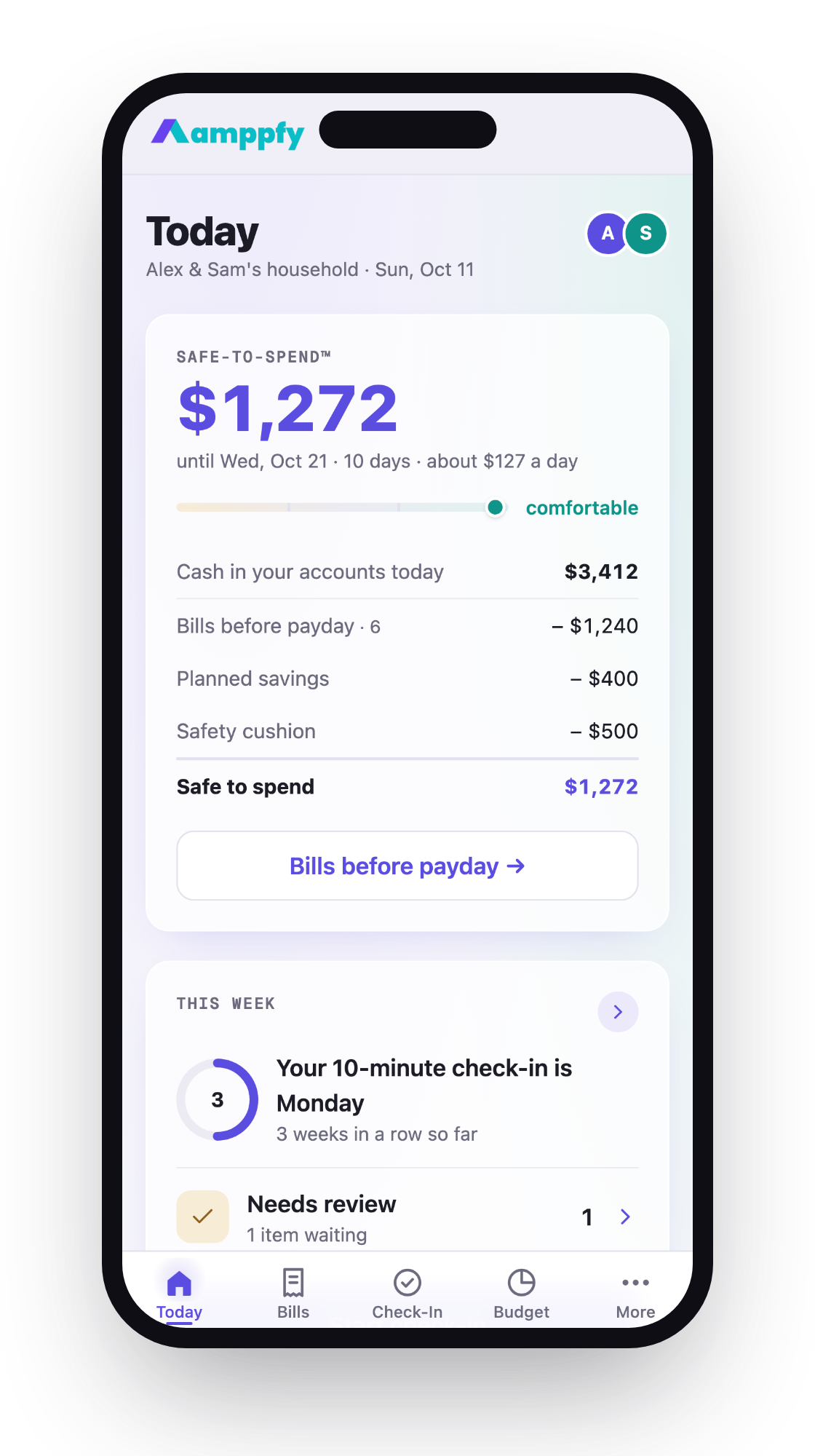
Money fights are the second leading cause of divorce in the United States, and they tend to get worse when couples avoid talking about finances altogether. My partner and I figured this out the hard way after eight years of marriage and two kids: silence about money isn’t peace, it’s a pressure cooker. What actually helped us wasn’t a single budgeting spreadsheet or a tense monthly “money meeting.” It was three financial apps that, used together, quietly defused most of our financial tension. Here’s what worked for us heading into 2026, and why the specific combination matters more than any single tool.
Why Couples Need a Money System, Not Just a Money App
The idea that one app will fix your financial life as a couple is a fantasy. I know because we chased it for years. We’d download something, use it for three weeks, then abandon it because it didn’t fit how we actually behave with money.
What finally clicked was building a small system: three apps, each handling a different source of friction. One tracks our savings goals. One splits the mental load of household spending. One forced us to confront our actual spending psychology.
Here’s how each one fits into the picture, and what 2026-specific trends make them even more relevant right now.
App #1: A High-Yield Savings App That Makes Goals Visible to Both Partners
We opened a joint high-yield savings account through Ally before we were even married. The original reason was simple: we wanted to save for travel without arguing about who was contributing what.
Fast forward to 2026, and that account has become the financial backbone of our household. Here’s how we use it now:
- Emergency fund: Our baseline safety net sits here, untouched unless something genuinely breaks
- Sinking funds: Separate “buckets” for car maintenance, home repairs, holiday shopping, and travel
- Interest reallocation: Each month, we redirect the interest earned toward whichever bucket needs a boost
How the Math Actually Works
Say you have $15,000 sitting in a high-yield savings account earning 4.25% APY (a realistic rate for many accounts in 2026). That generates roughly $53 per month in interest. It’s not life-changing money, but here’s the trick: you can point that $53 at a specific goal.
Last fall, a $1,200 car repair nearly emptied our vehicle maintenance fund. By redirecting our monthly interest payments to that bucket for four months, we rebuilt a $500 buffer without pulling a single extra dollar from our paychecks.
I also use this strategy for holiday shopping. Starting every July, I redirect interest to a holiday bucket. By December, I have a real budget for gifts, which means zero credit card debt in January. That matters: roughly 32% of holiday shoppers in 2024 were still carrying debt from the previous season’s spending, according to NerdWallet’s holiday spending report. I refuse to be in that group.
Why This Helps Your Relationship
The visibility is everything. Both of you can open the app and see exactly where your savings stand. There’s no “I thought we had more saved” argument. No guessing. When you spend from a sinking fund, it doesn’t feel like a loss because you planned for it. Nothing kills a vacation faster than the dread of paying for it after you get home.
App #2: A Shared Grocery List App That Quietly Ended Our Biggest Daily Fights
This one sounds trivial. It’s not. Before we started using a shared grocery list app, the mental load of feeding our family fell almost entirely on one person. Meal planning, list-making, remembering what we were out of: all invisible labor that bred real resentment.
We tried a few options before settling on the free version of Bring. The impact on our marriage was honestly disproportionate to how simple the tool is.
What Changed After We Started Using It
| Before Shared App | After Shared App |
|---|---|
| One person planned all meals and made the list | Either of us adds items whenever we notice we’re running low |
| Forgot the list? Wasted trip or impulse buying | List lives on both phones, always accessible |
| Duplicate purchases (three jars of peanut butter) | Real-time sync eliminates redundant buys |
| Resentment over unequal household labor | Shared responsibility without needing to discuss it |
We now maintain multiple lists: one for our weekly Aldi run, one for monthly Costco trips, and temporary lists for things like vacation supplies or party prep.
The 2026 Grocery Budget Reality
The USDA projects grocery prices will rise approximately 3.1% in 2026, a faster pace than recent years. When your food bill keeps climbing, every duplicate purchase or impulse grab at the store chips away at your budget. A shared list won’t solve inflation, but it does reduce waste and keep both partners accountable to the same spending plan.
The real-time sync feature is the key. If I’m already at the store and my partner realizes we need diapers, they add it to the list and it appears on my screen instantly. No missed items, no “why didn’t you get…” conversations later.
App #3: A Budgeting App That Exposed How We Actually Think About Money
This is the one that surprised us the most, not because it solved everything, but because it revealed a blind spot we didn’t know we had.
We tried Monarch, linking all our accounts to get a full picture of household finances in one place. The setup was straightforward. The problem? Categorizing our spending.
The Category Problem Most Couples Don’t Realize They Have
Traditional budgeting apps want you to sort spending into neat categories: groceries, home goods, entertainment, kids. But that’s not how we actually spend. We tend to think in two ways:
- By retailer: “We spent $400 at Costco this month” (which might include food, cleaning supplies, kids’ clothes, and a random impulse buy)
- By credit card cap: “We agreed to keep our joint card under $3,000 per month for shared expenses”
A single Costco run might touch five different budget categories, but it’s one transaction. And as long as we stayed under our agreed limit, we never looked deeper.
Using Monarch showed us that this approach hides patterns. When everything is lumped together by store, impulse purchases become invisible. That $40 air fryer accessory? Buried inside a “Costco” line item next to milk and toilet paper.
We Stopped Using It, But the Lesson Stuck
Here’s the honest truth: we didn’t keep Monarch long-term. The category friction made it unsustainable for our habits. But the exercise itself was valuable. It moved us from vague “we should spend less” feelings to specific “we’re spending $200 a month on stuff we don’t need at Costco” realizations.
If you and your partner have ever looked at your bank statement and genuinely wondered where the money went, even one month of tracking in a budgeting app can be eye-opening. You don’t have to commit forever. Think of it like a financial X-ray: you take it, learn from it, and adjust.
The Glue That Holds It All Together: Low-Tech Tools
Apps handle the heavy lifting, but two simple tools round out our system:
- Shared phone notes: We keep a running note for ongoing money decisions, like how to allocate a tax refund, financial goals for the year, and spending limits for trips. It’s messy and informal, and that’s why it works. Neither of us feels like we’re in a “meeting.”
- Calendar reminders: Bill due dates, subscription renewal checks, and fund transfer reminders all live on our shared family calendar. Automating the “when” means we only have to think about the “what.”
Warning Signs Your Current Money System Is Failing Your Relationship
If any of these sound familiar, it might be time to rethink your approach:
- One partner handles all financial decisions while the other stays in the dark
- You avoid money conversations because they always turn into arguments
- You regularly discover surprise charges or forgotten subscriptions
- Neither of you could name your household’s top three spending categories
- Savings goals exist in your head but not in any shared, trackable form
These aren’t just organizational problems. They’re relationship problems wearing a financial disguise. The three financial apps that helped my marriage worked because they addressed trust, visibility, and shared responsibility, not just dollars and cents.
Frequently Asked Questions
Do both partners need to use the same apps for this to work?
Yes, and that’s kind of the whole point. The value isn’t in the apps themselves but in the shared visibility they create. If only one person uses the savings app or the grocery list, you’re just digitizing the same imbalance that caused friction in the first place. Both partners should have access, notifications turned on, and a basic understanding of how each tool works.
How much do these apps cost?
Your total cost could be zero. Bring’s free version handles shared grocery lists without limitations. Ally’s savings app is free with a qualifying account. Monarch charges around $14.99 per month (or roughly $100 annually), but as we found, even a single month of use can deliver lasting insights. You could realistically run this entire system for free if you treat the budgeting app as a short-term diagnostic tool.
Can financial apps replace talking about money with your partner?
Absolutely not. Apps reduce friction and make information visible, but they can’t replace honest conversation. What they can do is give you better data to talk about. Instead of arguing over vague feelings (“you spend too much”), you can point to real numbers and make decisions together. If money conversations are consistently hostile, a financial therapist or couples counselor may be a smarter investment than any app. Consider consulting a financial advisor for personalized guidance on building a system that fits your household.
What if my partner and I have completely different spending styles?
That’s actually normal, and it’s exactly why a multi-app approach works better than a single tool. The saver in the relationship gets peace of mind from visible savings buckets. The spender gets freedom within agreed-upon limits. The shared grocery list ensures daily household spending doesn’t become a battleground. Start with the tool that addresses your biggest pain point, whether that’s unclear savings, grocery chaos, or mystery spending, and build from there. Take 15 minutes this week to download one of these apps together and set up a single shared goal. That small step often creates enough momentum to keep going.