Close Menu

    Subscribe to Updates

    Get the latest creative news from FooBar about art, design and business.

    What's Hot

    Hyatt’s Award Chart Changes Are Now Live; I’m Not Panicking

    June 27, 2026

    Hyatt’s Devaluation Isn’t the Disaster It Looked Like

    June 27, 2026

    Airbnb Expands Hotel Push With Price Match, Bigger Rebates

    June 27, 2026
    Facebook X (Twitter) Instagram
    Amppfy
    • Personal Finance
      • Know Your Money
        • Money Quiz Reveals Financial Health
        • Living Paycheck to Paycheck
        • Key Personal Finance Metrics
        • How to Map Financial Goals
        • Calculate Debt-to-Income Ratio
        • Monthly Financial Review
        • Explore More Know Your Money Resources
      • Financial Literacy
        • Responsible Credit Card Use
        • How to Maximize Employer Benefits
        • Cashflow Calendar to Pay Bills
        • Build a Rainy Day Fund
        • Investing for Beginners with $100
        • How to Avoid Predatory Lenders
        • Financial Literacy Tips
        • Explore More Financial Literacy Resources
      • Financial Wellness
        • Building Rainy Day Fund
        • Debt-Snowball vs. Debt-Avalanche
        • How to Maximize Savings
        • How to Plan for Major Purchase
        • Emergency Buffer While Paying Debt
        • How to Negotiate with Creditors
        • Explore More Financial Wellness Resources
      • Side Hustles
        • How to Make Money Online
        • Side Hustles That Fit Weeknights
        • Side Hustles for Busy People
        • How to Monetize a Hobby
        • Gig Economy Playbook
        • Freelance Pricing 101
        • Side Hustles Start this Weekend
        • Explore More Side Hustles Resources
    • Budgeting
      • Budgeting Tips
        • How to Set Up Savings Buckets
        • Financial Budget Repair Plan
        • Beginner’s Guide to Tracking Spending
        • Common Budgeting Mistakes
        • Best Budgeting Apps Compared
        • Zero-Based Budgeting
        • Best Budgeting Tips
        • Explore More Budgeting Tips Resources
      • Money Management
        • How to Build a Monthly Budget
        • How to Create a Savings Plan
        • Clever Ways to Save $500 This Month
        • Smart Grocery Budgeting
        • Cut Recurring Costs
        • Cash Back and Couponing
        • Explore More Money Management Resources
      • Fix Cashflow
        • 52-Week Savings Challenge
        • Budget Repair for Ages 18–28
        • Family Budgeting
        • Master Money Management
        • Explore More Fix Cashflow Resources
      • How to Budget and Save Money
        • Save Money on Groceries
        • Cut Household Expenses
        • How to Save $500
        • Budgeting Hacks for Beginners
        • Budgeting Apps
        • Best Budgeting Tips
    • Debt
      • Debt Free Journey
        • Payoff Strategies for Single Parents
        • How to Build Debt Payoff Calendar
        • Consolidating Debt
        • How to Plan for a Major Purchase
        • Debt-Repayment Fund for Loans
        • Debt Consolidation Pros and Cons
        • Explore More Debt Free Journey Resources
      • Debt Payoff
        • Debt Snowball vs Avalanche
        • Crush Debt Fast
        • How to Pay Off Credit Card Debt
        • Using a Balance Transfer Credit Card
        • Rolling Over 401(k) to Pay Down Debt
        • Paying Off Auto Loan Early
        • Explore More Debt Payoff Resources
      • Financial Freedom
        • Passive Income Ideas
        • Student Loans 101
        • How to Refinance Personal Loan
        • Taking Out a Personal Loan
        • When Bankruptcy Might be an Option
        • Explore More Financial Freedom Resources
    • Savings
      • Savings Tip
        • How to Rebuild Savings After Job Loss
        • 52-Week Savings Challenge
        • Smart Grocery Budgeting
        • Micro-Savings Strategies
        • Cash Back and Couponing
        • Cut Monthly Expenses
        • Explore More Savings Tip Resources
      • Emergency Fund
        • Emergency Buffer While Paying Down Debt
        • Park Your First $1,000 Emergency Fund
        • Emergency Fund Is Non-Negotiable
        • Sinking Funds vs. Emergency Fund
        • Emergency Funds
        • Explore More Emergency Fund Resources
      • Savings Goal
        • How to Build a Savings Plan
        • Short-Term Savings Goals vs Emergency Fund
        • How to Set Realistic Savings Goals
        • Micro-Savings That Add $50–$200 a Month
        • Cut Recurring Costs
        • Managing Savings During Recession
        • Explore More Savings Goal Resources
      • Savings Calculators
        • Savings Goal Calculator
        • Emergency Fund Calculator
    • Credit
      • Building Credit
        • Credit Utilization
        • Negative Marks on Credit Report
        • Pay Off Credit Card Debt
        • How to Read Credit Report
        • Building Credit as a Gig Worker
        • Knowing Credit Score Is Step One
        • Explore More Building Credit Resources
      • Credit Score
        • Truth About Credit Freezes
        • Credit Score 101
        • Improve Your Credit Score
        • How to Remove Negative Items
        • Understanding Credit Utilization
        • Leveraging Credit Score Improvements
        • Explore More Credit Score Resources
      • Credit Card
        • Credit Card Hacks
        • Best Rewards Credit Card
        • Lost or Stolen Credit Card
        • Rewards Credit Card
        • Balance Transfer Credit Cards
        • Starter Credit Cards
        • Explore More Credit Card Resources
    • Investing
      • Investing Tips
        • How to Make Money in Stocks
        • Bullish vs. Bearish
        • Roth IRA vs. Traditional IRA
        • Opening a Brokerage Account
        • How to Protect Stock Investments
        • How the Stock Market Works
        • Best Investing Tips
        • Explore More Investing Tips Resources
      • Wealth Building
        • Investing for Beginners
        • How to Start Investing
        • How Call Options Work
        • How Do Stocks Function
        • Investing 101
        • Dividend Investing for Beginners
        • Diversify Investment
        • Explore More Wealth Building Resources
      • Investing Strategy
        • How to Build Retirement Portfolio
        • Beginner’s Index Fund
        • Index Funds vs. Actively Managed Funds
        • Target-Date Funds
        • How to Rebalance Portfolio
        • Investing Mistakes New Investors Make
        • Why the Price-to-Earnings Ratio Matters
        • Explore More Investing Strategy Resources
      • Stocks
        • Best S&P 500 Index Funds
        • How to Read Stock Charts
        • Best Stocks to Weather Inflation
        • Understanding Margin Calls
        • How to Short a Stock
        • What is Swing Trading
        • Beginner’s Guide to Put Options
        • Explore More Stocks Resources
    • Home
      • Home Buying
        • First-Time Homebuyer Checklist
        • How Much Down Payment to Buy a House
        • Renting vs. Buying
        • How to Estimate Homeownership Costs
        • Qualify as First-Time Home Buyers
        • Buying a Fixer-Upper House
        • Explore More Home Buying Resources
      • Real Estate
        • Smart Ways to Use Home Equity
        • Calculate Rental Property Cash Flow
        • Starting a House Hacking Strategy
        • Investing in Real Estate Owned Properties
        • REITs for Passive Income
        • Fix-and-Flip Real Estate Opportunities
        • Explore More Real Estate Resources
      • Mortgage
        • Mortgage Playbook to Secure a Home
        • Fixed vs. Adjustable Mortgage
        • How to Refinance a Mortgage
        • Mortgage Payoff Strategies
        • Pre‑Approval to Closing a New Home
        • Mortgage Strategies in Volatile Times
        • Explore More Mortgage Resources
      • Home Insurance
        • Home Insurance Guide
        • Instant Insurance Quotes
        • Compare Home Insurance
        • Home Insurance Policy
        • Best Home Insurance Policy
        • Home Insurance Companies
        • Home Insurance Deductible
        • Best Home Insurance
    • Bank
      • Banking Tips
        • How to Read Bank Statement
        • How to Set Up Bank Account Alerts
        • Online Bank vs. Brick-and-Mortar
        • How to Open First Bank Account
        • How to Avoid Bank Fees
        • Missing Debit Card
        • Managing Multiple Banks
        • Explore More Banking Tips Resources
      • Checking Account
        • How to Choose Right Checking Account
        • Beginner’s Guide to Overdraft Protection
        • Time It Takes for a Check to Clear
        • Mobile Check Deposits
        • When to Stop a Check Payment
        • Stay Safe from Check Scams
        • Best Checking Accounts
        • Explore More Checking Account Resources
      • Savings Account
        • High-Yield Savings Account vs Treasury Bills
        • High-Yield Savings Accounts
        • Maximizing Your Savings
        • How Much Cash to Keep in Savings Account
        • Money Market Account vs. Savings Account
        • Savings Account Minimum Balances
        • Explore More Savings Account Resources
      • Maximize Your Savings
        • Banking Basics
        • Best High-Yield Savings Account
        • Maximizing Interest
        • How to Switch Banks
        • Emergency Fund Savings
        • Savings Accounts vs. CDs
        • Savings Account Fees
        • Smart Checking Accounts
        • Maximize Your Savings Resources
    • Tax
      • Tax Tips
        • Tax Deductions 101
        • Individual Retirement Account Tax Rules
        • Child and Dependent Care Credit
        • Moving Expense Deductions
        • How to File Freelancing Taxes
        • Side-Gig Income Taxes
        • Explore More Tax Tips Resources
      • Tax Strategy
        • Tax Mistakes that Trigger Audits
        • Changing Tax Withholding Mid-Year
        • Handling Back Taxes
        • Capital Gains Taxes
        • Child Tax Credit
        • Claiming the Saver’s Credit
        • Explore More Tax Strategy Resources
      • Tax Savings
        • Tax Filing for Beginners
        • Tax Software for Tax Situation
        • Tax-Advantaged Accounts for Education
        • Health Savings Accounts to Lower Tax
        • Tax Credits vs. Deductions
        • Explore More Tax Savings Resources
    • Calculators
      • Personal Finance
        • Investment Calculator
        • Compound Interest Calculator
        • Interest Rate Calculator
        • Net Worth Calculator
        • CD Calculator
      • Saving & Budgeting
        • Emergency Fund Calculator
        • Monthly Budget Calculator
        • Savings Calculator
        • Savings Goal Calculator
      • Home
        • Mortgage Calculator
        • Amortization Calculator
        • How Much House Can I Afford
        • Debt-to-Income Ratio Calculator
    • News
    Amppfy
    Home » News » Gas Prices Pause as Talks With Iran Grind On
    News

    Gas Prices Pause as Talks With Iran Grind On

    Learn how geopolitical events impact your gas budget and make smarter spending decisions this summer.
    Thomas T.By Thomas T.June 27, 2026Updated:June 27, 20269 Mins Read
    Facebook Twitter LinkedIn Email Copy Link
    Gas Prices Pause as Talks With Iran Grind On
    Share
    Facebook Twitter LinkedIn Email Copy Link

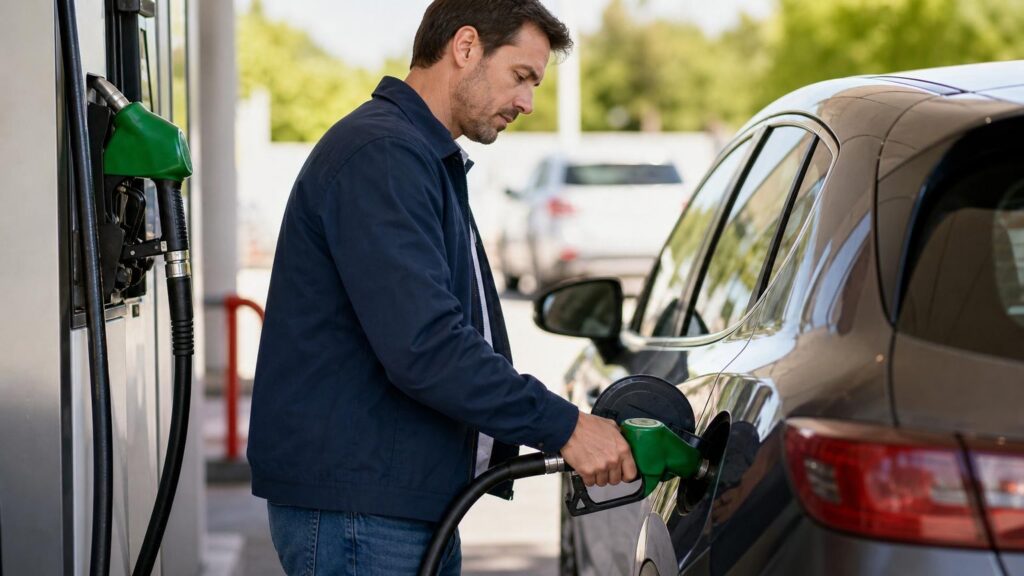
    If you’ve been wincing at the pump lately, you’re not alone. The national average for regular gas hit $4.49 per gallon as of late May 2026, up roughly 41% from where things stood just three months ago. The reason is straightforward: the U.S.-Israeli military strikes on Iran that began February 28 effectively shut down the Strait of Hormuz, and while ceasefire talks have been grinding forward, they haven’t produced a real resolution. Gas prices have paused their climb for now, but the situation remains volatile, and understanding what’s driving the numbers can help you make smarter decisions about your budget this summer.

    What Caused the 2026 Gas Price Spike in the First Place?

    On February 28, 2026, the national average for a gallon of regular gas sat just under $3. That same day, U.S. and Israeli forces launched coordinated strikes on Iranian targets. Within hours, shipping through the Strait of Hormuz, the narrow waterway that handles roughly 20% of the world’s oil supply, ground to a halt.

    The price of Brent crude, the global oil benchmark, had been trading below $70 per barrel as recently as mid-February. It quickly surged past $95 and has spiked above $100 at multiple points since. That marked the first time oil crossed the $100 threshold since Russia’s invasion of Ukraine in 2022.

    Here’s a quick snapshot of how fast things moved:

    Advertisement
    Timeline Brent Crude (per barrel) Avg. Gas Price (per gallon)
    Mid-February 2026 Below $70 ~$2.90
    Feb. 28 (strikes begin) ~$80 ~$3.00
    April 8 (ceasefire begins) ~$95 ~$3.80
    Late May 2026 ~$88-90 $4.49

    The speed of this increase caught most consumers off guard. For context, gas prices had actually been falling through most of 2025. The EIA reported that Brent crude dropped from $79 per barrel in January 2025 to $63 in December 2025, its lowest monthly average since early 2021. Pump prices were stable through summer 2025 and declined into fall and winter.

    Then everything changed in a matter of weeks.

    Where Do Things Stand With Iran Negotiations?

    A ceasefire took effect on April 8 and has been extended indefinitely, which is the good news. The bad news: on-again, off-again negotiations to reopen the Strait of Hormuz haven’t produced a concrete agreement.

    Over the Memorial Day weekend, reports surfaced about a partial deal, but the details remain murky. Making things worse, American forces struck Iranian targets Monday night, setting back whatever progress had been made.

    This pattern has become familiar:

    • Optimistic headlines emerge about a potential breakthrough
    • Oil prices dip in response (Brent recently fell below $90)
    • Something disrupts talks (a military strike, a diplomatic disagreement)
    • Prices stabilize or tick back up

    The result is that gas prices have paused rather than meaningfully declined. The International Monetary Fund cited the conflict when it cut global growth forecasts for 2026 back on April 14, warning that further escalation could bring the world economy to “a close call for a global recession.”

    Analysts at Macquarie Group have modeled a worst-case scenario: if the war continues into summer with no resolution, oil could reach $200 per barrel. That would translate to gas prices most Americans haven’t seen in their lifetimes.

    The $2 Gap: Why Your State Price Might Look Nothing Like the Average

    The national average of $4.49 hides enormous variation. State-level prices for regular gas currently range from $3.89 in Indiana to $6.11 in California, a spread of more than $2 per gallon.

    Several factors create this gap:

    • State gas taxes vary wildly, from around $0.15 per gallon in some states to over $0.60 in others
    • Proximity to refineries matters: Gulf Coast states tend to have lower prices
    • State regulations requiring specific fuel blends (like California’s) add cost
    • Transportation costs to get fuel to remote or landlocked areas

    Here’s how a few representative states compare right now:

    State Avg. Price (May 26) One Year Ago
    Indiana $3.89 ~$3.05
    Texas $4.05 ~$2.95
    New York $4.72 ~$3.35
    Washington $5.38 ~$3.85
    California $6.11 ~$4.65

    Before the conflict began, 39 states had average prices below $3. As of late May, only six states remain below $4. That shift has real consequences for household budgets, particularly for families in rural areas with longer commutes and fewer public transit options.

    The Summer Blend Factor Most People Forget About

    Even without a geopolitical crisis, gas prices typically rise in spring and summer. Refineries switch from winter-blend to summer-blend gasoline around this time of year, and the summer formulation costs more to produce.

    This seasonal switch typically adds 10 to 15 cents per gallon. In a normal year, that’s barely noticeable. In 2026, it’s stacking on top of conflict-driven price increases, making the total hit feel much sharper.

    The timing is particularly painful because:

    Advertisement
    1. Summer driving season means higher demand
    2. Refinery maintenance schedules reduce short-term supply
    3. The Hormuz situation is limiting global crude availability simultaneously

    If you’re planning a road trip this summer, factor in gas costs that could be 30-50% higher than what you paid last year for the same route.

    How the Math Actually Works: Oil Prices to Pump Prices

    A lot of people wonder why gas prices don’t drop immediately when oil prices fall. Here’s the breakdown of what actually makes up the cost of a gallon of gas, according to EIA data:

    • Crude oil cost: ~50-55% of the retail price
    • Refining costs and profits: ~15-20%
    • Distribution and marketing: ~10%
    • Federal and state taxes: ~15-20%

    So when Brent crude drops from $95 to $88 per barrel, only about half of that savings flows through to the pump price, and it takes time. Refineries buy crude weeks before it becomes gasoline, so there’s a built-in lag. Prices tend to rise faster than they fall because of this asymmetry, a phenomenon economists call “rockets and feathers.”

    Right now, crude has pulled back meaningfully from its peaks, which is why the national average has dipped from $4.53 to $4.49 over the past week. But don’t expect a dramatic drop unless negotiations produce a real, lasting agreement to reopen the Strait.

    Warning Signs That Prices Could Climb Again

    Keep an eye on these red flags that could signal another price surge:

    • Breakdown in ceasefire talks: Any military escalation could push Brent back above $100 quickly
    • Refinery disruptions: Hurricane season begins June 1, and Gulf Coast refinery damage would compound existing supply issues
    • OPEC+ production decisions: If major producers cut output while Hormuz remains restricted, the supply squeeze tightens
    • Strategic Petroleum Reserve levels: The U.S. SPR was already drawn down significantly in 2022, limiting the government’s ability to intervene

    The Macquarie Group’s $200-per-barrel projection isn’t a prediction; it’s a scenario. But even a move to $120 or $130 per barrel would likely push national gas averages past $5.

    What Can You Actually Do About It?

    You can’t control geopolitics, but you can control how much you spend on fuel:

    1. Use gas price apps like GasBuddy to find the cheapest stations near you: price differences of $0.30-0.50 between stations in the same city are common right now
    2. Consolidate trips: Plan errands in clusters rather than making multiple round trips
    3. Check tire pressure: Underinflated tires reduce fuel efficiency by up to 3%
    4. Slow down on highways: Driving 65 instead of 75 mph can improve fuel economy by 10-15%
    5. Consider fuel rewards programs: Many grocery chains offer $0.10-0.20 per gallon discounts through loyalty programs

    If you drive 12,000 miles per year in a vehicle that gets 25 mpg, the difference between $3.00 and $4.49 per gallon works out to roughly $715 annually. That’s real money, and it’s worth spending 15 minutes this week reviewing your commute and driving habits.

    The Bigger Picture for Your 2026 Budget

    Gas isn’t the only thing affected. Higher fuel costs ripple through the entire economy. Shipping costs rise, which pushes up grocery prices. Airlines pass fuel surcharges to passengers. Service businesses that rely on vehicles adjust their pricing.

    The IMF’s warning about a potential global recession isn’t hypothetical hand-wringing. Consumer spending accounts for roughly 70% of U.S. GDP, and when households redirect hundreds of dollars per month toward fuel, they cut back on dining out, retail purchases, and discretionary spending. That slowdown affects everyone.

    For your personal finances, the smartest move is to stress-test your budget against gas at $5 per gallon. If that scenario would cause real strain, now is the time to build a buffer, not after prices climb further.

    Past performance in energy markets doesn’t guarantee future price movements. The situation with Iran remains fluid, and prices could move sharply in either direction. If rising fuel costs are significantly impacting your finances, consider speaking with a financial advisor about adjusting your overall budget.

    Advertisement

    Frequently Asked Questions

    How long could gas prices stay this high?

    That depends almost entirely on the Iran situation. If negotiations produce a deal to reopen the Strait of Hormuz, oil prices could drop back toward $70-75 per barrel within weeks, bringing gas prices down to the $3.50-3.75 range. Without a deal, analysts expect prices to remain above $4 nationally through summer 2026 at minimum. The seasonal switch back to winter-blend fuel in September could provide modest relief of 10-15 cents per gallon, but that won’t offset the geopolitical premium.

    Could gas hit $5 or $6 per gallon nationally?

    It’s possible but not the most likely scenario as of late May 2026. A $5 national average would require Brent crude to sustain prices above $110-115 per barrel, which could happen if the ceasefire collapses or if hurricane season disrupts Gulf Coast refining capacity. California and several West Coast states are already above $5, and a handful could approach $7 in a worst-case scenario. The 2022 peak of $5.02 nationally remains the record, but 2026 could challenge it.

    Does the U.S. produce enough oil to avoid these price spikes?

    The U.S. is the world’s largest oil producer, but oil is a global commodity priced on international markets. When supply is disrupted anywhere, prices rise everywhere. American refineries also process different types of crude, and some are specifically configured for imported oil. Energy independence in terms of raw production volume doesn’t translate to independence from global price shocks.

    Should I lock in fuel prices through prepaid gas cards?

    Some retailers offer prepaid fuel cards or price-lock programs. These can save you money if prices continue rising, but they carry risk: if prices drop significantly due to a diplomatic breakthrough, you’d be stuck paying the higher locked-in rate. For most people, loyalty reward programs and strategic fill-ups on low-price days offer better flexibility without the downside risk.


    2025 2026 Economic Trends Economy Personal Finance News
    Share. Facebook Twitter LinkedIn Email Copy Link
    Previous ArticleHow 3 Financial Apps Helped My Marriage
    Next Article Asked on Reddit: Should I Save for My Retirement or My Child’s Education?
    Thomas T.

    Thomas is a Personal Finance Writer and Financial Content Strategist with over 10 years of experience helping individuals make smarter financial decisions. He specializes in topics such as budgeting, debt management, saving strategies, and financial behavior, translating complex financial concepts into clear, actionable guidance. His work focuses on empowering readers to build sustainable financial habits and confidently navigate their financial lives, combining data-driven insights with practical, real-world advice.

    More Like This

    Hyatt’s Award Chart Changes Are Now Live; I’m Not Panicking

    By Thomas T.June 27, 2026

    Hyatt’s Devaluation Isn’t the Disaster It Looked Like

    By Thomas T.June 27, 2026

    Airbnb Expands Hotel Push With Price Match, Bigger Rebates

    By Thomas T.June 27, 2026
    Helpful Resources

    Hyatt’s Award Chart Changes Are Now Live; I’m Not Panicking

    June 27, 2026

    Hyatt’s Devaluation Isn’t the Disaster It Looked Like

    June 27, 2026

    Airbnb Expands Hotel Push With Price Match, Bigger Rebates

    June 27, 2026

    The Guide to Citi Strata Elite’s Travel Insurance Benefits

    June 27, 2026

    Financial Clarity. Everyday Confidence.

    Facebook X (Twitter) YouTube LinkedIn
    Calculators

    Emergency Fund Calculator

    Compound Interest Calculator

    Interest Rate Calculator

    Net Worth Calculator

    Mortgage Calculator

    How Much Home Can I Afford

    Debt-to-Income Ratio Calculator

    Cost of Living Calculator

    Savings Calculator

    Savings Goal Calculator

    Monthly Budget Calculator

    Latest Resources

    Hyatt’s Award Chart Changes Are Now Live; I’m Not Panicking

    June 27, 2026

    Hyatt’s Devaluation Isn’t the Disaster It Looked Like

    June 27, 2026

    Airbnb Expands Hotel Push With Price Match, Bigger Rebates

    June 27, 2026

    The Guide to Citi Strata Elite’s Travel Insurance Benefits

    June 27, 2026
    About & Legal

    About Amppfy

    Editorial Policy

    EULA

    Terms of Use

    Acceptable Use Policy

    Privacy Policy

    Cookie Policy

    Disclaimer

    Do Not Sell or Share My Personal Information

    Acceptable Use Policy

    Disclaimer: Amppfy is committed to keeping its information transparent, accurate, and up-to-date. The information on Amppfy is provided for educational and informational purposes only and should NOT be considered financial, investment, tax, or legal advice. You should consult a qualified financial professional before making any financial decisions. This information may differ from what you find on the specific product or service provider’s website. All information, content, software, tools, products, or services on Amppfy are presented without warranty or guarantee. Please review the specific provider’s terms and conditions when evaluating products or services. By accessing Amppfy or using our AI generator tools, you acknowledge that you have read, understood, and agreed to our EULA, Terms of Use, Acceptable Use Policy, Privacy Policy, Cookie Policy, and Disclaimer. Amppfy.com uses cookies. For more information, visit Amppfy’s Cookie Policy. Amppfy may be compensated through third-party advertisers and affiliates. For more information, visit Amppfy’s Disclaimer.

    Copyright© 2026 Amppfy | All Rights Reserved

    Type above and press Enter to search. Press Esc to cancel.

    Advertiser Disclosure: Products may include affiliate links related to financial products or services. We may earn a commission at no additional cost to you. Our content remains independent and focused on helping you make informed financial decisions.
    Fact Checked
    Financial Disclaimer

    This content is for informational and educational purposes only and should not be considered financial advice. Personal finance decisions—including budgeting, saving, investing, credit, mortgages, taxes, and debt management—depend on your individual circumstances. Always consult a qualified financial professional before making financial decisions.

    Editorial Standards and Content Integrity

    Our editorial process ensures accuracy, clarity, and trust across all personal finance topics, including budgeting, saving, investing, and debt management. Content is created using credible sources such as government agencies, academic research, and established financial institutions, and may incorporate insights from industry experts when relevant. Each article is reviewed for accuracy, timeliness, and relevance before publication and updated as needed to reflect changes in financial guidelines and best practices, with the goal of providing clear, evidence-based information to help readers make informed financial decisions.

    Learn more about our editorial policy and guideline.