

Your relationship with money isn’t really about money. It’s about fear, identity, childhood memories, and the stories you tell yourself when no one’s listening. I’ve watched brilliant people earn six figures and still live paycheck to paycheck, while others earning half that amount build genuine wealth over time. The difference rarely stems from financial literacy or spreadsheet skills. It comes down to psychology.
The psychology of personal money management and building good habits in 2026 requires understanding something uncomfortable: your brain wasn’t designed for the financial world you’re navigating. You’re running ancient mental software in an environment of instant transactions, infinite spending options, and algorithms specifically engineered to separate you from your cash. The good news? Your brain can change. Neuroplasticity means you can literally rewire your financial habits, but only if you understand what you’re working with.
The Evolution of Financial Behavior in the 2026 Digital Economy
The way we spend money has fundamentally shifted in ways most people haven’t consciously registered. Twenty years ago, spending required physical action: handing over cash, writing checks, or, at a minimum, swiping a card. Each transaction had friction. That friction gave your brain time to process what you were doing.
Now? A thumbprint and three seconds. Your money moves before your prefrontal cortex finishes evaluating the decision.
Impact of Instantaneous Digital Transactions on Impulsivity
Here’s what the research shows: the time between wanting something and buying it has collapsed from days or hours to seconds. This matters because impulse control isn’t instantaneous. Your brain needs roughly 10-15 seconds to engage the rational decision-making processes that help you evaluate whether a purchase aligns with your actual goals.
One-click purchasing, tap-to-pay, and biometric authentication have eliminated that buffer entirely. You’re making financial decisions at the speed of emotion rather than the speed of thought.
The practical impact looks like this:
-
Average impulse purchases have increased 40% since contactless payments became standard
-
Mobile shopping between 10 PM and midnight accounts for a disproportionate share of regretted purchases
-
“Buy now, pay later” services have normalized debt for purchases under $100
The solution isn’t avoiding digital payments entirely. It’s engineering deliberate friction back into your system. Some people delete shopping apps from their phones. Others implement a 24-hour rule for non-essential purchases. The specific tactic matters less than the principle: you need to create space between impulse and action.
The Rise of Invisible Spending and Subscription Fatigue
The average American now maintains 12 active subscriptions, spending approximately $219 per month on recurring charges. Most people significantly underestimate this number when asked. The reason is simple: subscriptions are designed to be invisible. They’re optimized for acquisition and retention, not for your conscious awareness.
This creates what behavioral economists call “subscription fatigue”: the cumulative financial and psychological drain of managing dozens of small recurring commitments. Each individual charge seems insignificant. Together, they represent thousands of dollars in annual spending you’re making without actively choosing to.
Quarterly subscription audits have become essential financial hygiene. Set a calendar reminder to review every recurring charge and ask one question: would I actively choose to start this subscription today? If the answer is no, cancel it.
Deconstructing Your Money Script and Cognitive Biases
Identifying Childhood Financial Blueprints
Your earliest money memories created neural pathways that still influence your financial behavior. If you grew up hearing “we can’t afford that” constantly, you might either pinch pennies compulsively or overspend to prove you’ve escaped that scarcity. If money were a source of conflict in your household, you might avoid financial discussions entirely, even with yourself.
Common money scripts include:
-
Money avoidance: believing money is bad or that you don’t deserve it
-
Money worship: believing that more money will solve all problems
-
Money status: equating net worth with self-worth
-
Money vigilance: excessive secrecy and anxiety around finances
These scripts are neither right nor wrong. They’re adaptations to your early environment. The problem is that adaptations useful in childhood often become limitations in adulthood. The kid who learned to hide money from a parent who’d spend it might become an adult who can’t discuss finances openly with a partner.
Identifying your money script requires honest reflection. What did your parents say about money? What did they do? What emotions come up when you check your bank balance? The patterns reveal the programming.
Overcoming Loss Aversion and the Sunk Cost Fallacy
Your brain processes financial losses roughly twice as intensely as equivalent gains. Losing $100 feels about as bad as gaining $200 feels good. This asymmetry, called loss aversion, creates predictable irrationality in your financial decisions.
Loss aversion leads individuals to hold losing investments too long, hoping to avoid “locking in” the loss. It makes you stay in jobs you hate because leaving feels like wasting the years you’ve already invested. It makes you keep paying for gym memberships you don’t use because canceling means admitting you wasted the previous months.
The sunk cost fallacy compounds this. Money already spent is gone regardless of your future decisions, but your brain keeps trying to “recover” it by throwing good money after bad.
Practical countermeasures include:
-
Ask “if I were starting fresh today, would I make this choice?” for major decisions
-
Set predetermined exit criteria before making investments
-
Recognize that admitting a mistake is cheaper than continuing one
Neuroplasticity and Rewiring Wealth-Building Habits
Your brain physically changes as you repeatedly do and think. This isn’t motivational fluff. It’s neuroscience. The neural pathways you use most become stronger and more automatic. The ones you neglect weaken.
This means your current financial habits, good or bad, are literally wired into your brain structure. It also means you can rewire them with consistent practice.
Dopamine Management: From Consumerism to Savings Goals
Shopping triggers dopamine release, the neurochemical associated with anticipation and reward. This is why the moment before buying something often feels better than owning it afterward. Your brain is designed to seek that dopamine hit, and modern commerce has become extraordinarily skilled at triggering it.
The goal isn’t eliminating dopamine from your financial life. That’s impossible and would make saving feel like perpetual deprivation. Instead, you need to redirect dopamine toward wealth-building activities.
Strategies that work:
-
Gamify savings with visual progress trackers that show movement toward goals
-
Celebrate savings milestones with small, predetermined rewards
-
Use apps that provide immediate positive feedback when you make good financial choices
-
Create savings “streaks” that trigger the same psychological satisfaction as other habit-tracking apps
The key insight is that your brain doesn’t care what triggers the dopamine. It just wants the hit. You can train yourself to derive satisfaction from watching your net worth grow rather than from unboxing new purchases.
The Power of Financial Identity and Self-Narrative
The stories you tell yourself about who you are drive behavior more powerfully than willpower or knowledge. If you see yourself as “bad with money,” you’ll unconsciously act to confirm that identity. If you identify as “someone who builds wealth,” your decisions align with that identity.
Identity change precedes behavioral change. This is why New Year’s resolutions fail: people try to change behavior without changing the underlying self-concept.
Shifting financial identity requires small, consistent actions that provide evidence for your new story. Each time you make a choice aligned with your desired identity, you strengthen that self-concept. The person who automatically transfers money to savings isn’t exercising willpower. They’re just being who they are.
Leveraging Behavioral Architecture for Automatic Success
Willpower is a depleting resource. You have a limited amount each day, and every decision drains it. Relying on willpower for financial success means you’ll eventually run out, probably at the worst possible moment.
The alternative is to design the environment so that sound financial choices become automatic and poor ones become difficult.
Choice Architecture: Designing a Frictionless Savings Path
The path of least resistance determines most of your behavior. If saving money requires multiple steps and conscious effort, you’ll do it inconsistently. If spending money is effortless, you’ll spend effortlessly.
Flip this equation. Make saving automatic and spending deliberate.
Effective choice architecture includes:
-
Automatic transfers to savings accounts on payday, before you see the money
-
Retirement contributions that increase automatically with raises
-
Separate accounts for different purposes, making it psychologically harder to raid savings
-
Removing saved payment information from shopping sites
-
Using cash for discretionary spending categories
One study found that simply changing 401(k) enrollment from opt-in to opt-out increased participation from 49% to 86%. The same people, the same plan, the same benefits. The only difference was which choice required effort.
Using AI-Driven Nudges to Correct Spending Patterns
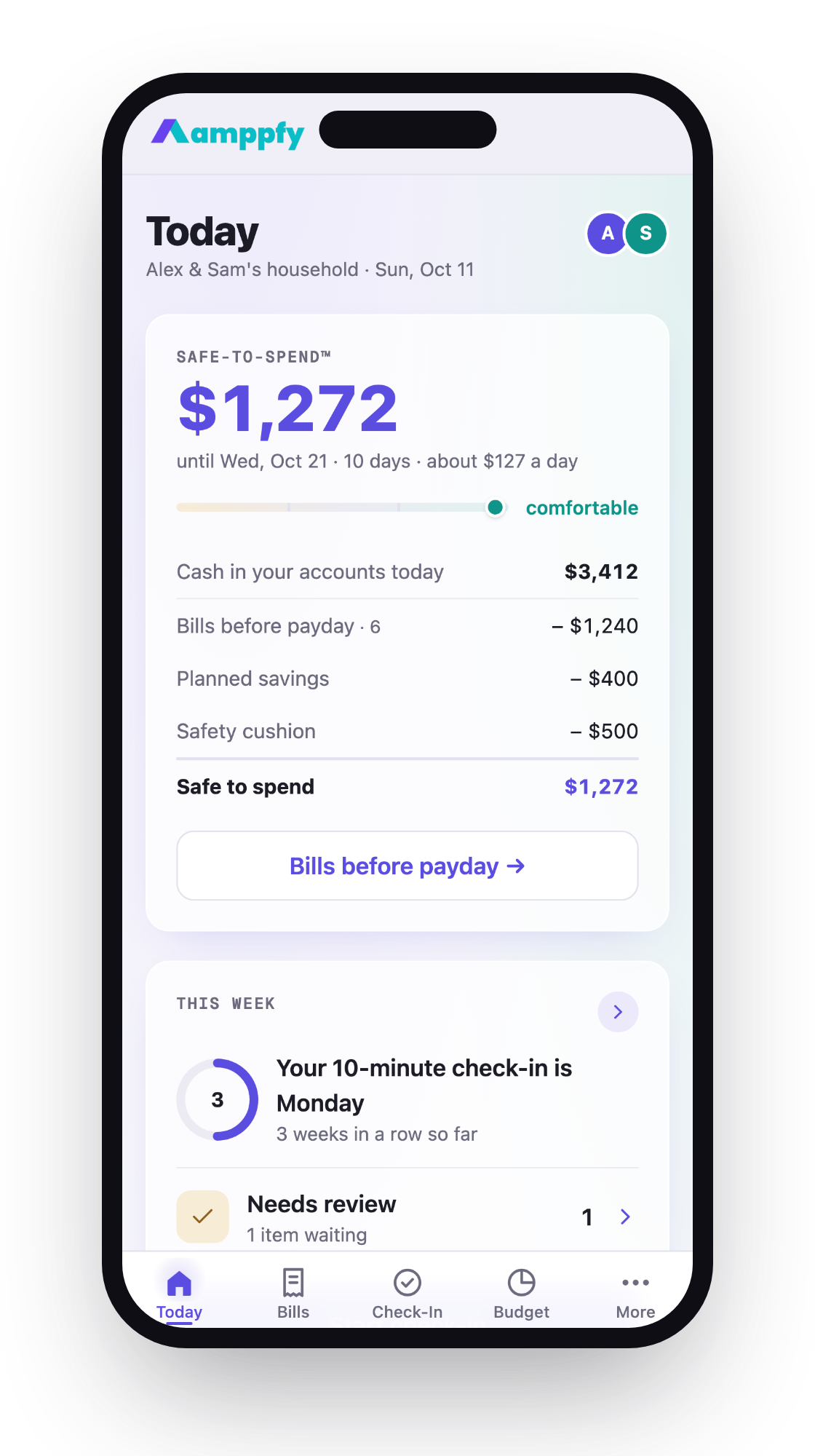
Financial technology in 2026 offers unprecedented tools for behavioral intervention. AI-powered apps can now analyze your spending patterns and deliver personalized nudges at moments when you’re most likely to make decisions you’ll regret.
These systems work by identifying your specific triggers and patterns. Maybe you overspend on weekends. Maybe work stress correlates with online shopping sprees. Maybe certain times of day or emotional states predict impulse purchases.
Smart financial apps can now:
-
Send alerts when you’re about to exceed category budgets
-
Suggest waiting periods before large purchases
-
Highlight subscription creep and unused services
-
Predict upcoming expenses based on your patterns
-
Provide real-time feedback on how purchases affect your goals
The key is choosing tools that work with your psychology rather than against it. The best financial apps feel like helpful assistants, not judgmental parents.
Emotional Regulation and Long-Term Financial Resilience
Money decisions made in emotional states are almost always worse than those made in a calm state. Fear leads to selling at market bottoms. Excitement leads to buying at peaks. Stress leads to retail therapy. Boredom leads to mindless scrolling and shopping.
Building lasting financial wellness requires developing emotional regulation skills that extend beyond finance.
Managing Market Volatility Anxiety in a High-Speed World
If you’re investing for goals decades away, daily market movements are noise. But your brain doesn’t experience them as noise. Each red number triggers a stress response evolved for immediate physical threats. Your amygdala can’t distinguish between a bear market and an actual bear.
The constant availability of financial information exacerbates this. You can check your portfolio balance every minute if you want to. Most people check far more often than serves their interests.
Practical approaches to volatility anxiety:
-
Reduce checking frequency deliberately, perhaps to weekly or monthly
-
Zoom out on charts to see long-term trends rather than daily fluctuations
-
Automate investments so market timing becomes irrelevant
-
Remember that volatility is the price of admission for long-term returns
-
Have a written investment policy statement that guides decisions during emotional moments
The goal is to create systems that prevent emotional decisions rather than relying on emotional control in the moment.
Mindfulness Practices for Conscious Consumption
Mindfulness isn’t just meditation. It’s the practice of bringing conscious awareness to automatic behaviors. In the context of spending, it means recognizing the impulse to buy before acting on it.
This doesn’t require sitting cross-legged or chanting. It requires pausing. When you feel the urge to purchase something, take three breaths and ask yourself what need you’re trying to meet. Are you hungry? Tired? Lonely? Bored? Stressed?
Often, the purchase is an attempt to solve a problem it won’t actually solve. Recognizing this in the moment allows you to address the underlying need differently.
Sustaining Financial Wellness in an Era of Infinite Choice
Building good money habits in 2026 isn’t a one-time achievement. It’s an ongoing practice in an environment designed to undermine it. The companies competing for your money have enormous resources and sophisticated psychological research backing their efforts.
Your advantage is awareness. Once you understand the mechanisms driving your financial behavior, you can work with them instead of against them. You can design environments that make good choices easy. You can rewrite the money scripts running in your background. You can build an identity as someone who manages money well.
The psychology of personal money management ultimately comes down to this: your financial life reflects your inner life. Address the psychology, and the practical pieces fall into place more easily than any budgeting app could accomplish alone.
Start with one change. Make it automatic. Let it become part of who you are. Then add another. This is how lasting financial transformation happens: not through dramatic overhauls, but through consistent small shifts that compound over time, just like the wealth they help you build.
Frequently Asked Questions
Research suggests that habit formation takes between 18 and 254 days, with an average of approximately 66 days. Financial habits often fall on the longer end because they involve emotional and identity components beyond simple behavioral repetition. The key is consistency rather than perfection. Missing one day doesn’t reset your progress, but missing two days in a row makes the third day much harder. Focus on not missing twice.
Absolutely. Your childhood experiences created your initial money scripts, but neuroplasticity means those scripts can be rewritten at any age. Many people with difficult financial upbringings become exceptionally skilled money managers precisely because they’ve had to consciously examine and rebuild their relationship with money. The awareness that comes from recognizing dysfunction is actually an advantage over those who never question their inherited assumptions.
Knowing and doing operate through different brain systems. Knowledge lives in your prefrontal cortex, but habits and emotional responses are driven by older brain structures that don’t respond to logical arguments. This is why information alone rarely changes behavior. You need to address the habit loop: the trigger, the routine, and the reward. Identify what triggers your financial mistakes, what need the behavior serves, and identify alternative routines that meet that need more constructively.
It depends on how you use them and which app you choose. For some people, detailed tracking increases financial anxiety without improving outcomes. For others, the visibility and feedback are genuinely helpful. The most effective approach is usually an automated system that requires minimal ongoing attention, rather than an app that demands constant engagement. If checking your financial app feels like a chore or triggers stress, try a simpler system or less frequent check-ins. The best financial tool is the one you’ll actually use consistently.