Your First Time Changing Banks? Here’s How to Avoid a Financial Mess
Switching your checking account sounds simple until you remember the 14 autopay subscriptions, your direct deposit, that gym membership you forgot about, and the rent payment that absolutely cannot bounce.
One missed bill during a bank switch can trigger late fees, overdraft charges, or worse: a ding on your credit report. This guide walks you through every step so you can switch checking accounts without missed bills, lost deposits, or unnecessary stress.
Why People Put Off Switching Banks (And Why You Shouldn’t)
Most people stay with a bank they dislike for the same reason they keep a phone plan they hate: the switching costs feel overwhelming. A 2023 J.D. Power survey found that only about 4% of retail banking customers actually switched their primary bank in the prior year, even though nearly a third expressed dissatisfaction.
The fear is real but overblown. The actual process takes about two to four weeks if you plan it right. What trips people up isn’t the complexity: it’s the lack of a clear checklist. They open the new account, close the old one too fast, and then spend the next month playing whack-a-mole with rejected payments.
» Switch banks seamlessly without disrupting your finances or payments: Switching Banks A Step By Step Guide To Moving Your Checking Account Without Disruption
Before You Do Anything: The 30-Day Audit
This single step prevents about 90% of switching headaches. Before opening a new account, spend one full billing cycle (roughly 30 days) tracking every transaction that flows through your current checking account.
You’re looking for three categories:
|
Transaction Type |
Examples |
Why It Matters |
|---|---|---|
|
Money coming in |
Payroll direct deposit, freelance payments, government benefits, tax refunds |
These need to be redirected to your new account |
|
Money going out (automatic) |
Rent/mortgage, utilities, insurance premiums, subscriptions, loan payments |
Missing one can mean late fees or service interruptions |
|
Money going out (manual) |
Debit card purchases, ATM withdrawals, Venmo/Zelle transfers |
Less urgent but still needs attention |
Pull your last two months of bank statements. Go line by line. I know it’s tedious, but this is where people discover the $12.99 streaming service they forgot about or the annual insurance payment that only hits once a year.
Pro tip: Create a simple spreadsheet with columns for the payee name, amount, frequency (weekly, monthly, annual), and the date it typically hits. This becomes your master switching checklist.
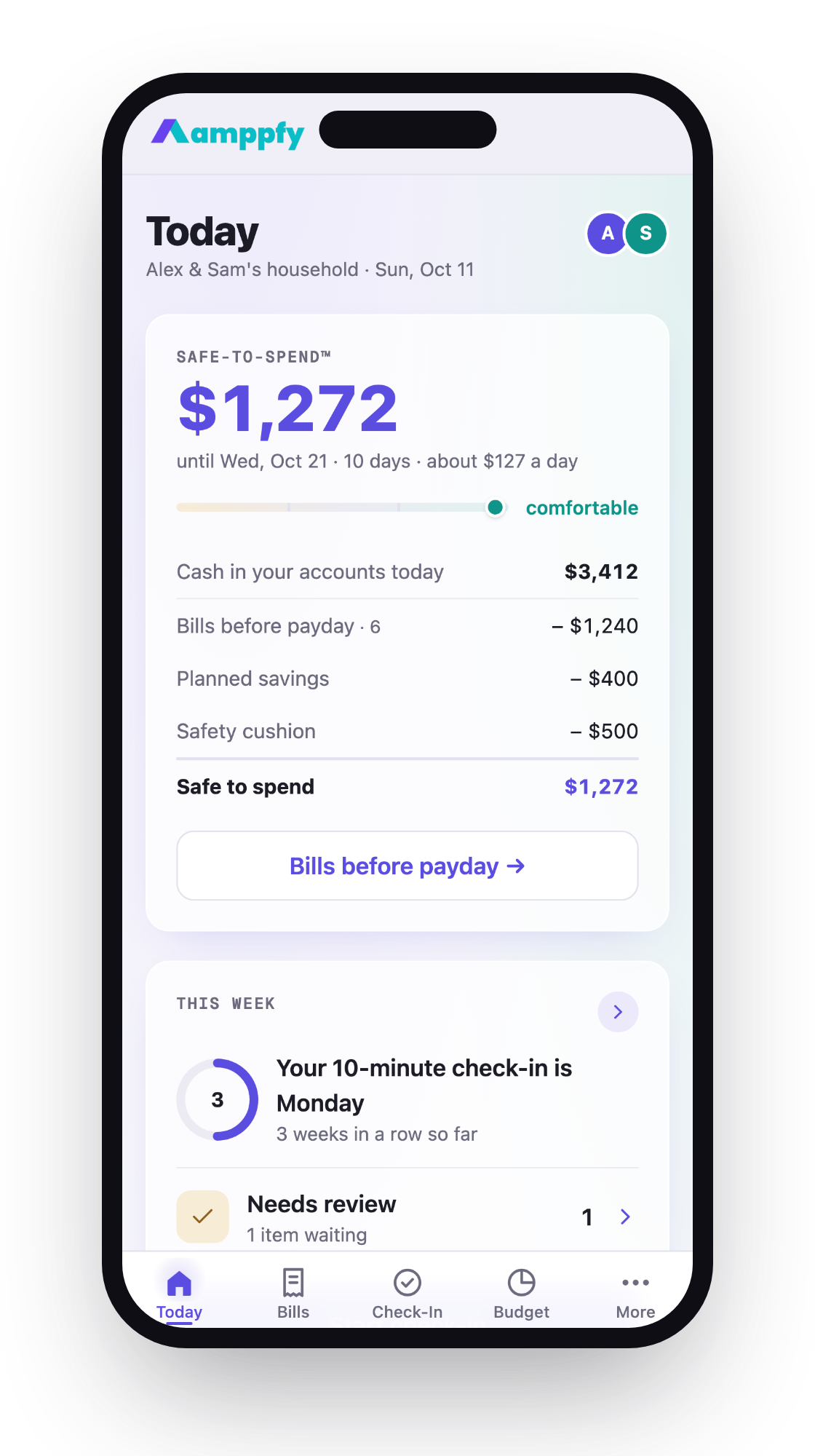
Tools like Ampffy can help you organize these recurring expenses and map out a clear action plan, which takes a lot of the guesswork out of a bank transition.
» Transfer your savings smoothly without losing interest or momentum: Switching Banks Step By Step Guide Transferring Your Savings Without Losing Interest
Pick Your New Bank First (Obviously, But Do It Right)
Not all checking accounts are created equal. Here’s what actually matters when you’re comparing options:
-
Monthly fees and waiver requirements: Some banks charge $10-$25/month unless you maintain a minimum balance (often $1,500-$5,000) or set up direct deposit
-
ATM network: If you use cash regularly, check whether the new bank has fee-free ATMs near your home and workplace
-
Zelle/Venmo/payment app compatibility: Most major banks support Zelle natively, but credit unions sometimes lag behind
-
Bill pay features: Does the new bank offer free online bill pay? Can you schedule payments easily?
-
Overdraft policies: Some banks, such as Chime and Current, offer small overdraft cushions with no fees. Others charge $35 per incident
» Find the best online bank accounts for an easy personal setup: Best Online Bank Accounts Personal Setup
The Step-by-Step Switching Timeline
Here’s the part most guides get wrong: they tell you what to do but not when. Timing matters enormously. A botched sequence is how bills get missed.
Week 1: Open the New Account and Fund It
-
Open your new checking account online or in-branch
-
Deposit enough money to cover at least one month of expenses (this is your buffer)
-
Order checks and a debit card if you need them
-
Set up online banking and download the mobile app
-
Link your new account to your budgeting tools
Do not close your old account yet. This is the most common mistake. You need both accounts running simultaneously for at least two to four weeks.
» Avoid monthly maintenance fees and keep more money in your account: Monthly Bank Maintenance Fees Finding Bank Accounts Without Them
Week 2: Redirect Your Income
Contact your employer’s payroll department (or HR portal) and update your direct deposit information. Most payroll changes take one to two pay cycles to process, so expect your next paycheck to still land in the old account.
If you receive other regular income, update those, too:
-
Social Security or government benefits (you can update your SSA direct deposit at ssa.gov)
-
Freelance client payment platforms (PayPal, Stripe, etc.)
-
Investment account distributions
-
Rental income from tenants
Week 3: Move Your Automatic Payments
This is the critical phase. Work through your spreadsheet and update each autopay one at a time. Here’s the order I’d recommend, based on the consequences of missing a payment:
-
Mortgage or rent – A missed payment here can trigger late fees of $50-$150 and potentially affect your credit
-
Car payment and insurance – Missing auto insurance can void your coverage immediately in some states
-
Credit card autopay – A missed minimum payment hits your credit report after 30 days
-
Utilities (electric, gas, water, internet) – Usually more forgiving, but reconnection fees are annoying
-
Subscriptions and memberships – Netflix won’t ruin your life if it lapses for a day, but update it anyway
After updating each one, confirm the change. Log in to each biller’s website and verify that the new payment method is showing correctly. Don’t just assume it worked.
Week 4: Verify Everything Is Working
-
Confirm your first direct deposit lands in the new account
-
Check that at least one billing cycle has been processed from the new account for each autopay
-
Review both account statements for any stray transactions
-
Update your payment information on apps like Uber, DoorDash, Amazon, and any other platforms linked to your old debit card
The Overlap Period: Keep Both Accounts Open
This is non-negotiable. Keep your old checking account open with a small balance ($200-$500) for at least 60 days after you think everything has been transferred. Here’s why:
-
Annual payments you forgot about might still try to pull from the old account
-
Some billers take two billing cycles to process payment method changes
-
Stray refunds or reimbursements might land in the old account
After 60 days with no activity, you can confidently close the old account. Call the bank or visit a branch. Ask for written confirmation that the account is closed with a zero balance. If there’s any remaining balance, transfer it to your new account first.
What to Do If Something Goes Wrong
Even with careful planning, things slip through. Here’s how to handle common problems:
|
Problem |
Quick Fix |
|---|---|
|
Autopay charged to the old account |
Transfer funds to the old account immediately to cover it, then update the payment method |
|
Direct deposit went to a closed account |
Contact your employer ASAP; the deposit will typically bounce back to the sender within 3-5 business days |
|
Late fee from missed payment |
Call the biller and explain you were switching banks; many will waive a first-time late fee if you ask |
|
Old debit card charged |
Some merchants store card info; update your payment profile on their website or app |
A quick phone call solves most of these issues. Billers deal with bank switches constantly and usually have a process in place for them.
Don’t Forget These Easily Overlooked Items
People remember to update Netflix but forget about these:
-
Tax refund direct deposit: If you filed taxes with your old account info, update it with the IRS before next filing season
-
Peer-to-peer payment apps: Venmo, Zelle, Cash App, and PayPal all store your bank info
-
Health Savings Account (HSA) or Flexible Spending Account (FSA) reimbursements
-
Parking apps and toll accounts (E-ZPass, ParkMobile)
-
Child’s school payment portals for lunch money or activity fees
-
Charitable donations set to auto-debit monthly
-
Your emergency contact list: If a family member has your old account info for emergencies, update them
A Quick Note About Switching Costs
Some banks charge early account closure fees if you close within 90-180 days of opening. Check your current account’s fee schedule before you start. The fee is usually $25-$50, which might still be worth it if your new account saves you more on monthly fees, but you should know about it up front.
If your old bank offers a free checking account, consider downgrading to that tier instead of closing entirely. Having a backup account at another institution is actually useful in emergencies.
Make the Switch Without the Stress
The reason most people dread changing banks is that they try to do it all at once or wing it without a plan. A 30-day audit, a clear timeline, and a two-month overlap period are all it takes to switch checking accounts and avoid missed bills, bounced payments, and unnecessary fees.
Your future self (the one not paying $12/month in maintenance fees at a bank they can’t stand) will thank you for spending a few hours on this now.
Frequently Asked Questions
The entire process typically takes three to six weeks if you follow a structured approach. The first week covers opening the new account, weeks two and three handle redirecting income and autopayments, and the remaining time is your verification period. Keep both accounts active for at least 60 days to catch any stragglers. Rushing the process is the number one cause of missed payments during a switch.
Opening a new checking account does not impact your credit score because banks run a soft inquiry (not a hard pull) for checking accounts. However, if you miss bill payments during the transition, those missed payments could be reported to credit bureaus after 30 days. That’s why the overlap period with both accounts open is so important: it acts as your safety net.
Many employers allow you to split direct deposit across multiple accounts. This is actually a smart transitional strategy. You could route, say, 75% of your paycheck to the new account and 25% to the old one during the first month. Once you’ve confirmed that all autopayments are being pulled from the new account, redirect 100% of your deposit. Check with your HR or payroll department for the specific form.
Many employers allow you to split direct deposit across multiple accounts. This is actually a smart transitional strategy. You could route, say, 75% of your paycheck to the new account and 25% to the old one during the first month. Once you’ve confirmed that all autopayments are being pulled from the new account, redirect 100% of your deposit. Check with your HR or payroll department for the specific form.