What Actually Happens If You Close Your Checking Account While Payments Are Still Processing
You hit “close account” and think you’re done. But three days later, your auto-insurance payment bounces, your gym charges a $25 returned payment fee, and your old bank sends you a letter about a negative balance.
Sound fun? That’s the reality of closing a checking account with pending payments still in the pipeline. Here’s how to avoid that mess, step by step, even if you’ve never switched banks before.
Why Pending Payments Don’t Just Disappear When You Close an Account
Think of your checking account like a mailbox. You can take your name off it, but letters already in transit will still show up. The same thing happens with payments.
When you authorize a payment, whether it’s a one-time bill or a recurring subscription, the transaction enters a processing window. Depending on the payment type, that window can be anywhere from a few hours to several business days. Here’s the breakdown:
|
Payment Type |
Typical Processing Time |
Risk Level If Account Closes |
|---|---|---|
|
ACH transfers |
1-3 business days |
High: often still in transit |
|
Debit card transactions |
1-2 business days |
Medium: may be pre-authorized |
|
Up to 5-7 business days |
Very high: no way to track easily |
|
|
Wire transfers |
Same day (usually) |
Low: typically completes fast |
|
Recurring auto-pay |
Varies by biller schedule |
High: next charge date may be days away |
If you close your account while any of these are still floating through the system, the payment has nowhere to land. The bank either rejects it outright or temporarily reopens your account to process it, potentially pushing your balance negative.
» Recover your money quickly and handle declined debit card charges with confidence: Debit Card Declined Charged What To Do How To Recover Your Money
The Domino Effect: What Goes Wrong and in What Order
Here’s the typical chain of events when someone closes an account prematurely. I’ve seen this play out repeatedly, and it usually follows a predictable pattern:
-
The payment bounces. Your biller (landlord, utility company, streaming service) gets a “returned payment” notification.
-
Fees stack up. The biller charges you a returned payment fee, typically $25-$35. Your old bank may also charge an insufficient funds fee if they reopened the account to attempt processing.
-
Your service gets interrupted. Miss a car insurance payment? You could have a lapse in coverage. Miss a credit card payment? That’s a late mark that will appear on your credit report after 30 days.
-
Collections enter the picture. If your old bank covered the payment and your account goes negative, they’ll want that money back. Unresolved negative balances can be reported to ChexSystems, which is essentially a credit report for bank accounts. A negative mark there can make it hard to open a new checking account for up to five years.
That last point surprises most people. A $12 Netflix charge that bounced from a closed account can snowball into a ChexSystems flag that follows you around for years.
» Change your checking account smoothly without disrupting your finances: Switching Checking Accounts A Step By Step Guide
A Step-by-Step Plan for Closing Your Account the Right Way
The good news: avoiding all of this is straightforward if you plan ahead. Give yourself about 30 days from start to finish. Rushing this process is where most problems originate.
Step 1: Pull a Complete Transaction History
Log in to your online banking and download at least 60-90 days of statements. You’re looking for:
-
Every recurring payment (subscriptions, insurance, loan payments, utilities)
-
Any recent one-time payments that might still be processing
-
Direct deposits from your employer, government benefits, or side income
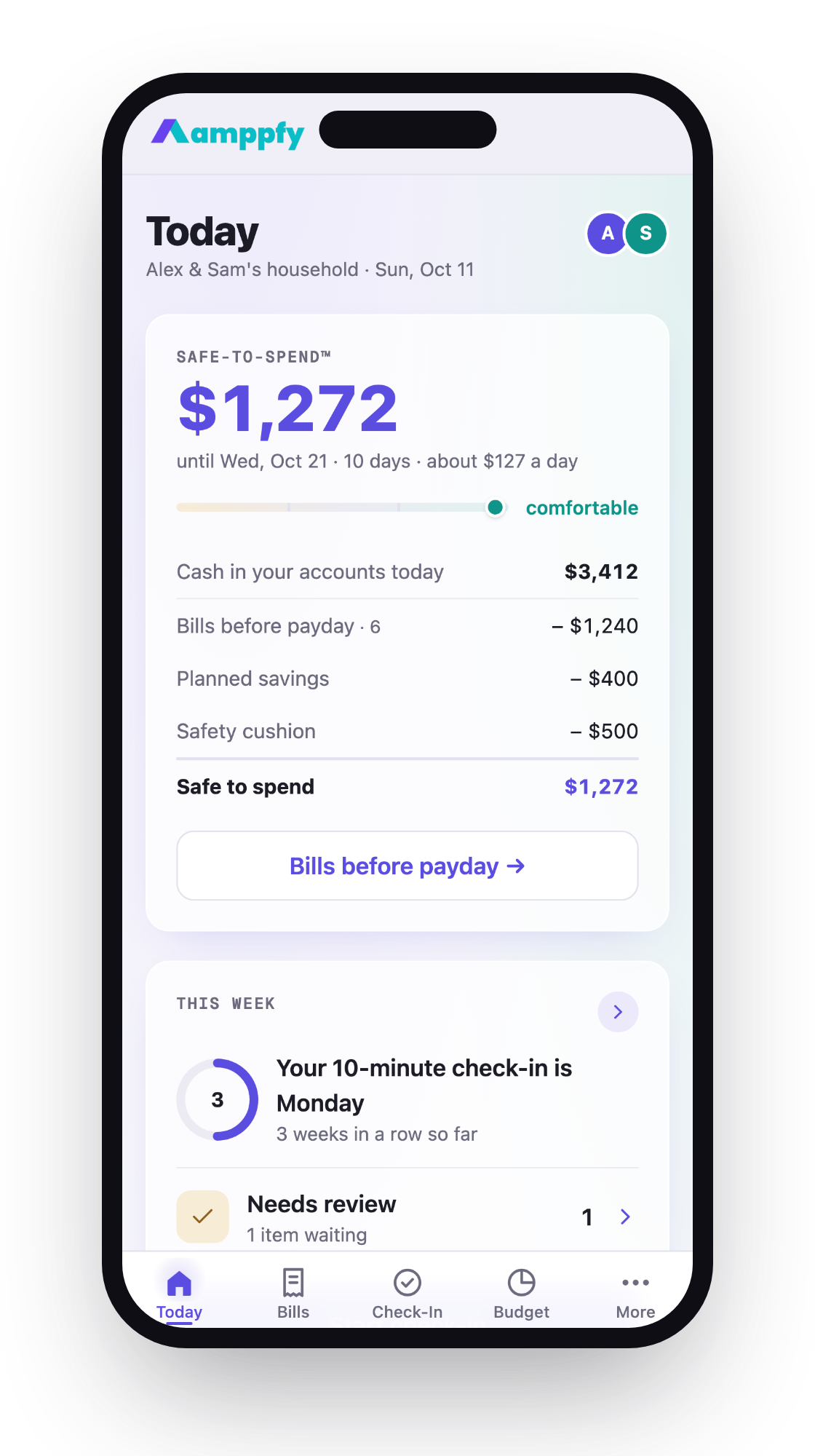
A tool like Ampffy can help you organize these transactions and create a clear checklist so nothing slips through the cracks. Having a visual map of where your money flows in and out makes the switching process far less stressful.
» Avoid returned deposit fees by understanding what happens when a check bounces: Returned Deposit Fees Explained What Happens When Check Bounces After Deposit
Step 2: Open Your New Account First
Never close your old account before the new one is fully set up and funded. You want overlap, not a gap. Ideally:
-
Open the new checking account
-
Deposit enough to cover at least one month of expenses
-
Confirm that your debit card and online access are working
-
Test a small transaction to make sure everything processes correctly
» Fix a negative account balance quickly and avoid collections: Negative Checking Account Balance How Long Before Collections How To Fix It Fast
Step 3: Redirect All Incoming Money
Switch your direct deposit with your employer. Most HR departments can process this in one to two pay cycles, so expect it to take two to four weeks. If you receive government benefits such as Social Security, update your payment information through the relevant agency’s website.
Don’t close the old account until you’ve confirmed at least one deposit has landed in the new one.
Step 4: Move Every Automatic Payment
This is the tedious part, but it’s the most important. Go through your list from Step 1 and update your payment method for each biller.
Common ones people forget:
-
Gym memberships
-
Cloud storage (iCloud, Google One, Dropbox)
-
Annual subscriptions that only charge once a year
-
Toll road accounts (E-ZPass, SunPass)
-
PayPal, Venmo, or Cash App linked accounts
-
Charitable donations set to auto-renew
For each one, log in to the service, update your bank info or card number, and confirm that the change was saved. Some billers take a full billing cycle to switch over, so starting early matters.
Step 5: Wait and Watch
After you’ve redirected everything, keep your old account open with a small buffer (around $100-$250) for at least two to four weeks. Monitor it for any straggler transactions. If nothing hits the old account for a full billing cycle, you’re likely clear.
Step 6: Close the Account
Contact your bank to officially close the account.
You can usually do this:
-
In person at a branch
-
Over the phone
-
Through secure messaging in your banking app (some banks)
Ask for written confirmation that the account is closed with a zero balance. Keep this document. If any disputes come up later, you’ll want proof.
What If You’ve Already Closed the Account and the Payments Bounced?
Don’t panic. Here’s your recovery plan:
-
Contact the billers directly. Explain the situation, provide your new payment info, and ask if they’ll waive the returned payment fee. Many will, especially for a first occurrence.
-
Check with your old bank. If the account went negative, call them. You may be able to pay the balance and have them note the account as “closed in good standing” rather than reporting it negatively.
-
Monitor ChexSystems. You’re entitled to one free report per year at consumerdebit.com. If a negative item appears, dispute it if it’s inaccurate, or pay the balance and request a goodwill removal.
-
Watch your credit reports. If a missed payment was reported to Equifax, Experian, or TransUnion, you may need to dispute or negotiate with the creditor. A single 30-day late payment can drop your credit score by 60-110 points, according to FICO data.
Special Situations That Trip People Up
Joint Accounts
If you share the account with someone else, both parties typically need to agree to close it. Any pending payments authorized by either account holder can still cause problems. Communicate clearly with your co-account holder about timing.
Accounts With Overdraft Protection
If your old account has overdraft protection linked to a credit card or savings account, the bank might cover a bounced payment and charge you interest or fees on the overdraft amount. This can happen even after you’ve requested closure if the processing window overlaps.
Business Checking Accounts
Business accounts often have more complex payment ecosystems: vendor payments, payroll, and tax withholdings. The Consumer Financial Protection Bureau (CFPB) recommends giving yourself at least 60 days for a business account transition and double that time for a personal account.
The Real Cost of Rushing This Process
Here’s a quick look at what careless timing can cost you:
|
Scenario |
Potential Cost |
|---|---|
|
One bounced ACH payment |
$25-$35 returned item fee |
|
Bank reopens account, goes negative |
$30-$38 overdraft fee per item |
|
Missed credit card payment (30+ days) |
60-110 point credit score drop |
|
ChexSystems negative report |
Difficulty opening accounts for up to 5 years |
|
Lapsed auto insurance due to missed payment |
Higher premiums upon reinstatement, potential legal issues if driving uninsured |
Add those up across two or three missed payments, and you’re looking at hundreds of dollars in fees plus long-term financial friction that makes everyday banking harder.
Your 30-Second Takeaway
Closing a checking account with pending payments still processing is one of those small financial decisions that can create outsized headaches. The fix is simple but requires patience: open your new account first, move over all payments and deposits, wait a full billing cycle, then close. Give yourself 30 days minimum. Your future self, the one not dealing with bounced payment fees and ChexSystems disputes, will thank you.
Frequently Asked Questions
Yes, most banks will not process an account closure while transactions are still pending. They’ll typically ask you to wait until all payments clear. Some banks may allow you to submit a closure request that takes effect once the pending items settle, but policies vary. Call your bank and ask specifically about their process.
A safe window is 30 days after you’ve moved all automatic payments and direct deposits. This gives enough time for monthly billing cycles to turn over and for any straggler charges to appear. If you have annual subscriptions, consider keeping a small balance and monitoring the old account for a full quarter to catch any less-frequent charges.
Closing a checking account itself does not affect your credit score, since bank accounts aren’t reported to credit bureaus. However, if the closure results in bounced payments that lead to missed credit card or loan payments, those missed payments will show up on your credit report. A negative balance sent to collections can also appear. The account closure is indirect, but the consequences can be very real.
The deposit will typically be returned to your employer’s bank. Your employer should then reissue the payment, but this can take an additional pay cycle, meaning you might go two to four weeks without that paycheck. To avoid this, confirm with your HR department that your new direct deposit information is active and that at least one pay cycle has successfully deposited into your new account before closing the old one.
This article is for informational purposes only and does not constitute financial advice. Individual circumstances vary, so consider consulting with a financial professional or your bank directly for guidance specific to your situation.