

Close Menu

    Subscribe to Updates

    Get the latest creative news from FooBar about art, design and business.

    What's Hot

    Secured Credit Cards and Credit-Builder Loans: When to Use Them

    December 28, 2025

    Best Practices for Responsible Credit Card Use (and Rewards Tips)

    December 26, 2025

    Dispute a Credit Report Item: A Step-by-Step Template That Works

    December 25, 2025
    Facebook X (Twitter) Instagram
    Amppfy
    • Personal Finance
      • Know Your Money
        • Money Quiz Reveals Financial Health
        • Living Paycheck to Paycheck
        • Key Personal Finance Metrics
        • How to Map Financial Goals
        • Calculate Debt-to-Income Ratio
        • Monthly Financial Review
        • Explore More Know Your Money Resources
      • Financial Literacy
        • Responsible Credit Card Use
        • How to Maximize Employer Benefits
        • Cashflow Calendar to Pay Bills
        • Build a Rainy Day Fund
        • Investing for Beginners with $100
        • How to Avoid Predatory Lenders
        • Explore More Financial Literacy Resources
      • Financial Wellness
        • Building Rainy Day Fund
        • Debt-Snowball vs. Debt-Avalanche
        • How to Maximize Savings
        • How to Plan for Major Purchase
        • Emergency Buffer While Paying Debt
        • How to Negotiate with Creditors
        • Explore More Financial Wellness Resources
      • Side Hustles
        • Side Hustles That Fit Weeknights
        • Side Hustles for Busy People
        • How to Monetize a Hobby
        • Gig Economy Playbook
        • Freelance Pricing 101
        • Side Hustles Start this Weekend
        • Explore More Side Hustles Resources
    • Budgeting
      • Budgeting Tips
        • How to Set Up Savings Buckets
        • Financial Budget Repair Plan
        • Beginner’s Guide to Tracking Spending
        • Common Budgeting Mistakes
        • Best Budgeting Apps Compared
        • Zero-Based Budgeting
        • Explore More Budgeting Tips Resources
      • Money Management
        • How to Build a Monthly Budget
        • How to Create a Savings Plan
        • Clever Ways to Save $500 This Month
        • Smart Grocery Budgeting
        • Cut Recurring Costs
        • Cash Back and Couponing
        • Explore More Money Management Resources
      • Fix Cashflow
        • 52-Week Savings Challenge
        • Budget Repair for Ages 18–28
        • Family Budgeting
        • Explore More Fix Cashflow Resources
      • Monthly Budget Calculator
    • Debt
      • Debt Free Journey
        • Payoff Strategies for Single Parents
        • How to Build Debt Payoff Calendar
        • Consolidating Debt
        • How to Plan for a Major Purchase
        • Debt-Repayment Fund for Loans
        • Debt Consolidation Pros and Cons
        • Explore More Debt Free Journey Resources
      • Debt Payoff
        • Debt Snowball vs Avalanche
        • Crush Debt Fast
        • How to Pay Off Credit Card Debt
        • Using a Balance Transfer Credit Card
        • Rolling Over 401(k) to Pay Down Debt
        • Paying Off Auto Loan Early
        • Explore More Debt Payoff Resources
      • Financial Freedom
        • Passive Income Ideas
        • Student Loans 101
        • How to Refinance Personal Loan
        • Taking Out a Personal Loan
        • When Bankruptcy Might be an Option
        • Explore More Financial Freedom Resources
    • Savings
      • Savings Tip
        • How to Rebuild Savings After Job Loss
        • 52-Week Savings Challenge
        • Smart Grocery Budgeting
        • Micro-Savings Strategies
        • Cash Back and Couponing
        • Cut Monthly Expenses
        • Explore More Savings Tip Resources
      • Emergency Fund
        • Emergency Buffer While Paying Down Debt
        • Park Your First $1,000 Emergency Fund
        • Emergency Fund Is Non-Negotiable
        • Sinking Funds vs. Emergency Fund
        • Emergency Funds
        • Explore More Emergency Fund Resources
      • Savings Goal
        • How to Build a Savings Plan
        • Short-Term Savings Goals vs Emergency Fund
        • How to Set Realistic Savings Goals
        • Micro-Savings That Add $50–$200 a Month
        • Cut Recurring Costs
        • Managing Savings During Recession
        • Explore More Savings Goal Resources
      • Savings Calculators
        • Savings Goal Calculator
        • Emergency Fund Calculator
    • Credit
      • Building Credit
        • Credit Utilization
        • Negative Marks on Credit Report
        • Pay Off Credit Card Debt
        • How to Read Credit Report
        • Building Credit as a Gig Worker
        • Knowing Credit Score Is Step One
        • Explore More Building Credit Resources
      • Credit Score
        • Truth About Credit Freezes
        • Credit Score 101
        • Improve Your Credit Score
        • How to Remove Negative Items
        • Understanding Credit Utilization
        • Leveraging Credit Score Improvements
        • Explore More Credit Score Resources
      • Credit Card
        • Credit Card Hacks
        • Best Rewards Credit Card
        • Lost or Stolen Credit Card
        • Rewards Credit Card
        • Balance Transfer Credit Cards
        • Starter Credit Cards
        • Explore More Credit Card Resources
    • Investing
      • Investing Tips
        • How to Make Money in Stocks
        • Bullish vs. Bearish
        • Roth IRA vs. Traditional IRA
        • Opening a Brokerage Account
        • How to Protect Stock Investments
        • How the Stock Market Works
        • Explore More Investing Tips Resources
      • Wealth Building
        • Investing for Beginners
        • How to Start Investing
        • How Call Options Work
        • How Do Stocks Function
        • Investing 101
        • Dividend Investing for Beginners
        • Explore More Wealth Building Resources
      • Investing Strategy
        • How to Build Retirement Portfolio
        • Index Funds vs. Actively Managed Funds
        • Target-Date Funds
        • How to Rebalance Portfolio
        • Investing Mistakes New Investors Make
        • Why the Price-to-Earnings Ratio Matters
        • Explore More Investing Strategy Resources
      • Stocks
        • How to Read Stock Charts
        • Best Stocks to Weather Inflation
        • Understanding Margin Calls
        • How to Short a Stock
        • What is Swing Trading
        • Beginner’s Guide to Put Options
        • Explore More Stocks Resources
    • Home
      • Home Buying
        • First-Time Homebuyer Checklist
        • How Much Down Payment to Buy a House
        • Renting vs. Buying
        • How to Estimate Homeownership Costs
        • Qualify as First-Time Home Buyers
        • Buying a Fixer-Upper House
        • Explore More Home Buying Resources
      • Real Estate
        • Smart Ways to Use Home Equity
        • Calculate Rental Property Cash Flow
        • Starting a House Hacking Strategy
        • Investing in Real Estate Owned Properties
        • REITs for Passive Income
        • Fix-and-Flip Real Estate Opportunities
        • Explore More Real Estate Resources
      • Mortgage
        • Mortgage Playbook to Secure a Home
        • Fixed vs. Adjustable Mortgage
        • How to Refinance a Mortgage
        • Mortgage Payoff Strategies
        • Pre‑Approval to Closing a New Home
        • Mortgage Strategies in Volatile Times
        • Explore More Mortgage Resources
      • Free Mortgage Calculator
    • Bank
      • Banking Tips
        • How to Read Bank Statement
        • How to Set Up Bank Account Alerts
        • Online Bank vs. Brick-and-Mortar
        • How to Open First Bank Account
        • How to Avoid Bank Fees
        • Missing Debit Card
        • Explore More Banking Tips Resources
      • Checking Account
        • How to Choose Right Checking Account
        • Beginner’s Guide to Overdraft Protection
        • Time It Takes for a Check to Clear
        • Mobile Check Deposits
        • When to Stop a Check Payment
        • Stay Safe from Check Scams
        • Explore More Checking Account Resources
      • Savings Account
        • High-Yield Savings Account vs Treasury Bills
        • High-Yield Savings Accounts
        • Maximizing Your Savings
        • How Much Cash to Keep in Savings Account
        • Money Market Account vs. Savings Account
        • Savings Account Minimum Balances
        • Explore More Savings Account Resources
    • Tax
      • Tax Tips
        • Tax Deductions 101
        • Individual Retirement Account Tax Rules
        • Child and Dependent Care Credit
        • Moving Expense Deductions
        • How to File Freelancing Taxes
        • Side-Gig Income Taxes
        • Explore More Tax Tips Resources
      • Tax Strategy
        • Tax Mistakes that Trigger Audits
        • Changing Tax Withholding Mid-Year
        • Handling Back Taxes
        • Capital Gains Taxes
        • Child Tax Credit
        • Claiming the Saver’s Credit
        • Explore More Tax Strategy Resources
      • Tax Savings
        • Tax Filing for Beginners
        • Tax Software for Tax Situation
        • Tax-Advantaged Accounts for Education
        • Health Savings Accounts to Lower Tax
        • Tax Credits vs. Deductions
        • Explore More Tax Savings Resources
    • Calculators
      • Emergency Fund Calculator
      • Compound Interest Calculator
      • Net Worth Calculator
      • Mortgage Calculator
      • Savings Goal Calculator
      • Monthly Budget Calculator
    Amppfy
    Home » CPM Marketing – Cost Per Thousand Impressions as a SEM Marketing Bidding Strategy to Drive More Visibility
    SEM Bidding Strategies

    CPM Marketing – Cost Per Thousand Impressions as a SEM Marketing Bidding Strategy to Drive More Visibility

    Complete guide to CPM marketing – cost-per-thousand impressions as an effective SEM marketing campaign bidding strategy to improve brand awareness.
    AmppfyBy AmppfyNovember 3, 2024Updated:August 17, 20258 Mins Read
    Facebook Twitter Pinterest LinkedIn Email Copy Link
    Share
    Facebook Twitter LinkedIn Pinterest Email Copy Link

    Understanding CPM Marketing – Cost Per Thousand Impressions

    CPM, or cost-per-thousand impressions, is a popular metric used in search engine marketing to measure the cost of placing ads on various online platforms. It is an effective SEM strategy to achieve successful ad campaign results and helps advertisers optimize marketing budget allocation for maximum target audience reach.

    What is CPM Marketing?

    The “Impression” in cost-per-thousand impressions stands for the number of times visitors see an advertisement, regardless of the ad being clicked on by visitors. The industry standard for paid impressions is measured in increments of every one thousand views. Hence, the “M” in CPM is used to represent 1000.

    Advantages of CPM Marketing

    One of the benefits of using CPM as a metric is that it allows advertisers to compare the costs of different advertising platforms against each other. For example, when placing ads on Facebook and Instagram, you can use CPM to determine which platform will maximize return for your marketing dollars.
    Another benefit of CPM is that it provides a clear idea of how much advertisers will pay for an ad to be shown a thousand times. This helps marketers make more informed decisions about budget allocation while better understanding how far the marketing budget can stretch.

    Disadvantages of CPM Marketing

    CPM is a useful metric for measuring the potential reach of an ad, as it provides insight into how many people the ad could potentially be seen by. CPM is commonly used in SEM text ads, display, video, and social media advertising, but it may not be the best metric for every campaign.

    For example, if the goal is to drive conversions rather than simply increase brand awareness, consider using a metric like pay per click (PPC) or cost per acquisition (CPA) instead.

    When using CPM to measure the cost of an ad campaign, it is important to remember that the metric only accounts for impressions, not clicks or conversions. This means that while a high CPM may indicate a wider reach, it does not necessarily guarantee a high return on investment for a campaign.

    Optimize the SEM Bidding Strategy with CPM Marketing

    When optimizing SEM bidding strategy with CPM, keep in mind the following tips to help you set realistic expectations on campaign results while maximizing the effectiveness of the CPM marketing campaign.

    Top 4 Tips on Optimizing SEM Bidding Strategy with CPM Marketing

    1. Set an achievable targeted impression goal: Before starting an SEM campaign, it is vital to set a realistic impression goal to determine how much you should be bidding and how long to run the campaign.
    2. Choose the right bidding type: There are several bidding types, including eCPC, vCPM, CPM, and CPA. Each has its advantages and disadvantages. Choosing the one that aligns with the campaign objectives and goals is crucial.
    3. Run A/B testing of different ad creatives: To maximize the effectiveness of the SEM campaign, test different ad creatives to determine which ones resonate best with the target audience and generate the most clicks or impressions.
    4. Use targeting options based on the audience persona and behavior: To ensure that your ad is seen by the right people, choose targeting options based on the audience persona and behavior. This includes targeting by demographics, interests, and behaviors.

    Explore Different SEM Bidding Strategies for CPA Marketing

    While CPM marketing is a powerful bidding strategy, it’s not the only one available. Let’s explore additional SEM bidding strategies to use in conjunction with CPM marketing.

    Cost-Per-Click (CPC)

    CPC is often used interchangeably with PPC or pay-per-click (SEM-R2D4). CPC, or the cost-per-click model, is another one of the most common bidding strategies in which the advertiser pays for every click on the ad. This model is best for businesses looking to drive traffic to their website or increase brand awareness.

    Cost-Per-View (CPV)

    CPV is a pay-per-view model that applies to video ads. CPV is when advertisers pay for every view of the video ad. This model is best for businesses looking to drive video views or promote their products and services via marketing channels such as YouTube.

    Analyze the Target Audience by Utilizing CPM Marketing for More Targeted Campaigns

    CPM advertising allows advertisers to segment the target audience. Leverage Google Ads platform data to understand the target audience and adjust the ad targeting and bidding accordingly. Segmenting the target audience creates more specific and relevant ads to optimize campaign results and maximize ROI.

    For example, if you are selling sports equipment, target audiences who have expressed an interest in sports or fitness. This ensures that the ads are seen by relevant audience who are more likely to engage with your product or service offering, increasing the chances of a click-through and conversion.

    Relevance is Key to Making Effective Use of the CPM Marketing Budget

    Creating tailored and relevant ad messaging (SEM-R2D2) for specific target audience segments, such as visitors with specific interests, ages, or locations, increases the probability of potential customers clicking through on the ad and seeing the campaign offer.

    For example, if you are selling a product that is popular among a specific age group, customize the ad copy to specifically target audience of that defined age group.

    Craft Effective Ad Copy for CPM Marketing

    Compelling ad copies must be concise, clear, and captivating to entice clicks and improve campaign performance. Here are the top tips for crafting ad copies that drive conversion rates.

    Top 4 Tips on Crafting Effective CPM Ad Copies to Drive Conversion Rates
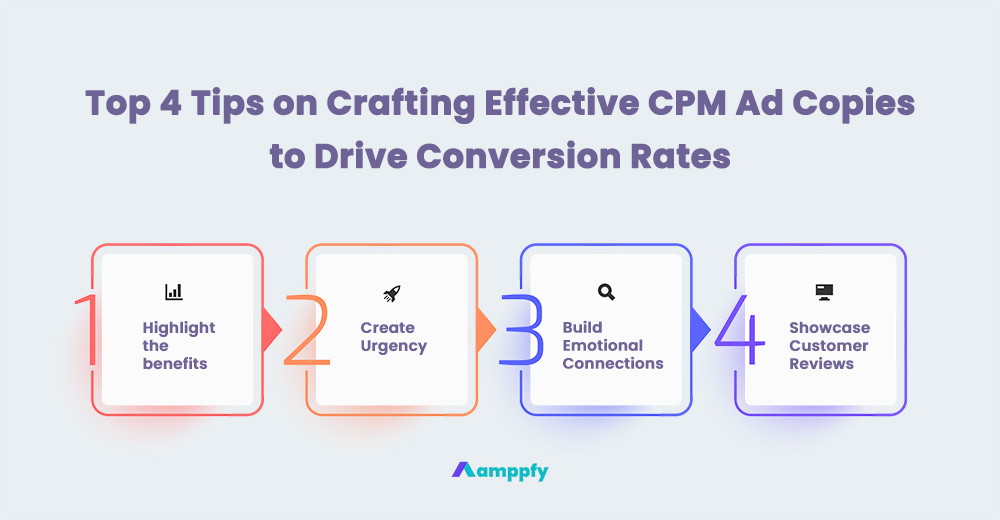
    Top 4 Tips on Crafting Effective CPM Ad Copies to Drive Conversion Rates

    1. Highlight the benefits of the product or service
    2. Create urgency with time-limited offers
    3. Build emotional connections and use persuasive language
    4. Showcase customer reviews and positive social proof

    Track Performance and Measure ROI with CPM Marketing

    Tracking the performance, measuring the ROI of the CPM campaigns, and adjusting the campaign strategies accordingly are essential to the success of SEM marketing.
    The following CPM marketing metrics should be tracked on a frequent basis:

    • Impressions
    • Clicks
    • Conversions
    • CPM cost

    Use Google Analytics, Google Ads, or Facebook Ads Manager to track campaign performance using conversions, website traffic, and revenue metrics. By consistently monitoring and adjusting the bidding strategy, the chances of achieving a positive ROI significantly increase. Over time, you can better gauge which specific ad creatives and targeting options perform the best and leverage this data to optimize future ad campaigns.

    Set the Right Budget with CPM Marketing

    Setting the right SEM budget can be challenging with CPM marketing. The marketing budget advertisers allocate to CPM campaigns depends on several factors, such as the size of the target audience group and the level of competition in the industry. Here are a few useful tips to follow.

    Top 3 Tips for Setting the Right Budget with CPM Marketing
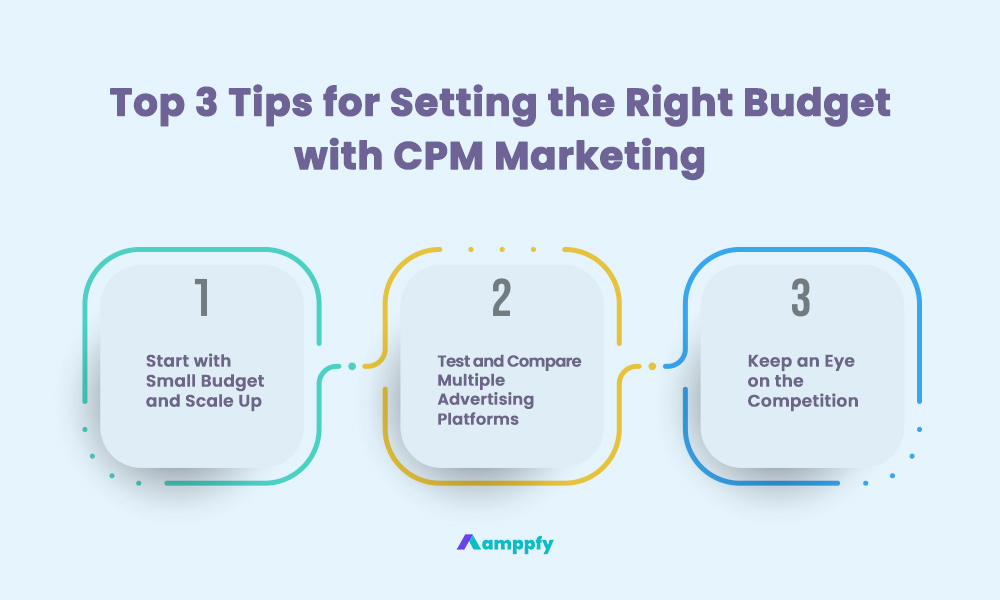
    Top 3 Tips for Setting the Right Budget with CPM Marketing

    1. Start with small budget and scale up as you see successful performance and positive engagement
    2. Test and compare multiple advertising platforms and ad creatives to find the most cost-effective combination
    3. Keep an eye on the competition and adjust the ad spending to align with the bidding behavior

    Adjust SEM Bidding Strategy for Maximum Performance in CPM Marketing

    The bidding strategy for CPM campaigns should be constantly monitored and realigned based on performance metrics and insights from your audience analysis. Consistent optimization and improvement of the bidding strategy is the key to achieving better campaign performance. Here are four tips to follow.

    Top 4 Tips on Adjusting and Realigning SEM Bidding Strategy

    1. Lower or pause the bids for underperforming ads
    2. Increase the bids for top-performing ad groups
    3. Adjust bids depending on the level of competition and the time of day
    4. Keep testing and experimenting with ad creatives and targeting options

    Find the Right Balance between Cost and Reach with CPM Marketing

    When it comes to CPM campaigns, finding the sweet spot between cost and reach can be tricky. The goal is to get the most reach for the least marketing dollars spent, but it is not always possible, especially in competitive markets. Try the following tips.

    Top 3 Tips on Finding the Right Balance Between CPM Marketing Cost and Reach

    1. Adjust the ad targeting options to reduce irrelevant impressions and increase the chance of engagement
    2. Keep refining the target audience segment based on their behavior and interests to increase relevancy
    3. Test different bidding types – CPM, CPA, eCPC, and vCPM – to understand which one is the most suitable for your campaign goals and marketing budget

    Strategies for Growing Brand Awareness with CPM Marketing

    CPM marketing is also an effective method to boost brand awareness while broadening the reach of the potential target market. Here are four strategies for using CPM to achieve your brand awareness goals.

    Top 4 Strategies for Leveraging CPM Marketing to Increase Brand Awareness

    1. Use video ads to create compelling brand stories that capture attention and entice engagement
    2. Keep your branding consistent on ad creatives across all advertising platforms
    3. Run retargeting campaigns to remind the audience of the brand, products, or services
    4. Focus on building meaningful emotional connections with your audience to establish brand loyalty
    SEM SEM Bidding Strategies SEM Marketing
    Share. Facebook Twitter Pinterest LinkedIn Email Copy Link
    Previous ArticleCPA Marketing – Cost Per Acquisition as an Effective SEM Marketing Bidding Strategy to Control Marketing Spend
    Next Article Introduction Guide to SEM Marketing Campaign Strategy and SEM Pay Per Click Advertising
    Amppfy

    Amppfy helps everyday people gain financial clarity with practical how-tos and easy-to-use tools for personal finance, budgeting, saving, and smarter money decisions.

    More Like This

    Complete Guide to Google Ads Location Targeting to Optimize SEM Marketing Campaign Performance

    By AmppfyNovember 3, 2024

    Complete Guide to SEM Marketing Ad Scheduling to Improve SEM Marketing Campaign Outcome and Drive More Visitor Engagement

    By AmppfyNovember 3, 2024

    How to Choose High-Intent PPC Keywords to Optimize SEM Marketing Campaigns

    By AmppfyNovember 3, 2024
    Helpful Resources

    Complete Guide to Google Ads Location Targeting to Optimize SEM Marketing Campaign Performance

    November 3, 2024

    Complete Guide to SEM Marketing Ad Scheduling to Improve SEM Marketing Campaign Outcome and Drive More Visitor Engagement

    November 3, 2024

    How to Choose High-Intent PPC Keywords to Optimize SEM Marketing Campaigns

    November 3, 2024

    What is Search Engine Marketing? SEM FAQs

    November 3, 2024

    Financial Clarity. Everyday Confidence.

    Facebook X (Twitter) YouTube LinkedIn
    Calculators

    Emergency Fund Calculator

    Compound Interest Calculator

    Net Worth Calculator

    Mortgage Calculator

    Cost of Living Calculator

    Savings Goal Calculator

    Monthly Budget Calculator

    Latest Resources

    Secured Credit Cards and Credit-Builder Loans: When to Use Them

    December 28, 2025

    Best Practices for Responsible Credit Card Use (and Rewards Tips)

    December 26, 2025

    Dispute a Credit Report Item: A Step-by-Step Template That Works

    December 25, 2025

    How Credit Scores Are Calculated — What You Can Actually Improve Fast

    December 24, 2025
    About & Legal

    About Amppfy

    EULA

    Terms of Use

    Acceptable Use Policy

    Privacy Policy

    Cookie Policy

    Disclaimer

    Do Not Sell or Share My Personal Information

    Acceptable Use Policy

    Disclaimer: Amppfy is committed to keeping its information transparent, accurate, and up-to-date. The information on Amppfy is based on our best knowledge and the most objective research and analysis. This information may differ from what you find on the specific product or service provider’s website. All information, content, software, tools, products, or services on Amppfy are presented without warranty or guarantee. Please review the specific provider’s terms and conditions when evaluating products or services. By accessing Amppfy or using our AI generator tools, you acknowledge that you have read, understood, and agreed to our EULA, Terms of Use, Acceptable Use Policy, Privacy Policy, Cookie Policy, and Disclaimer. Amppfy.com uses cookies. For more information, visit Amppfy’s Cookie Policy. Amppfy may be compensated through third-party advertisers and affiliates. For more information, visit Amppfy’s Disclaimer.

    Copyright© 2025 Amppfy | All Rights Reserved

    Type above and press Enter to search. Press Esc to cancel.